- Type
- Lesson plan
- Topics
- ScienceComputer Science
- Grade
- Primary (Grades 3-5)
- Ages
- Ages 8-10
How does energy transfer from one place to another through light, sound, heat, and electricity?
Overview
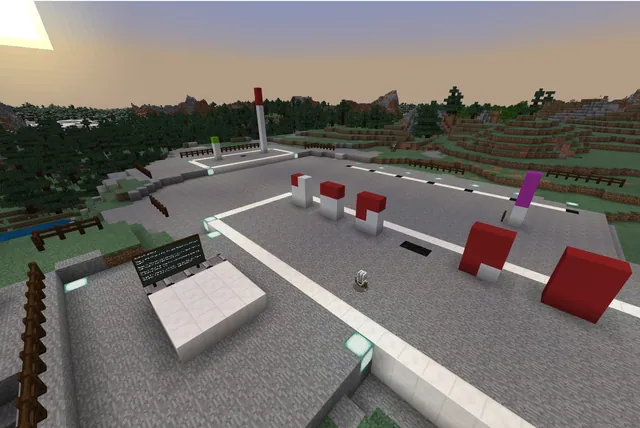
energy moves from place to place through light, sound, heat, and electrical currents. By observing these processes in action, students learn to connect physical science principles to real-world phenomena like plant growth, sound travel, and thermal energy movement.Using a pre-built Minecraft world, students work through three stations positioned around a central spawn area. Learners use relative coordinate commands to build a greenhouse roof, program an Agent to plant trees, clone and tune a redstone note block loop, and trigger dispensers at sunset to model heat transfer.
Learning objectives
By the end of this lesson students will be able to:
- Construct a glass greenhouse roof using the fill command with relative coordinates to demonstrate light energy capture.
- Program the Agent to plant trees around a structure using repeat loops and movement commands.
- Clone and test a redstone note block circuit to observe electrical and sound energy transfer.
- Explain heat energy transfer by observing fire charges ignite wooden logs and release smoke into the atmosphere.
Blocks and items used in this lesson
 Agent
 Note Block
 Fire Charge
 Glass
 Obsidian
 Chest
Key vocabulary
- energy transfer
- The movement of energy from one object, place, or system to another.
- relative coordinates
- Position values preceded by a tilde that measure block distances from the player's current location.
- fill command
- A chat or code command used to place blocks throughout a specified coordinate area.
- clone command
- A command that copies a set of blocks from one defined space and places them into another.
Before class
Lesson sequence
- Orientation and Coordinates
Introduce the driving question. Explain that students spawn facing north and must greet the NPC. Point out the three stations: the greenhouse to the east, the wood pile to the south, and the note blocks to the west. Review relative coordinates, explaining that ~0 ~0 ~0 represents the player's position, the first coordinate handles east (positive) and west (negative), the second handles up and down, and the third handles south (positive) and north (negative).
- Station 1: Greenhouse & Light Energy
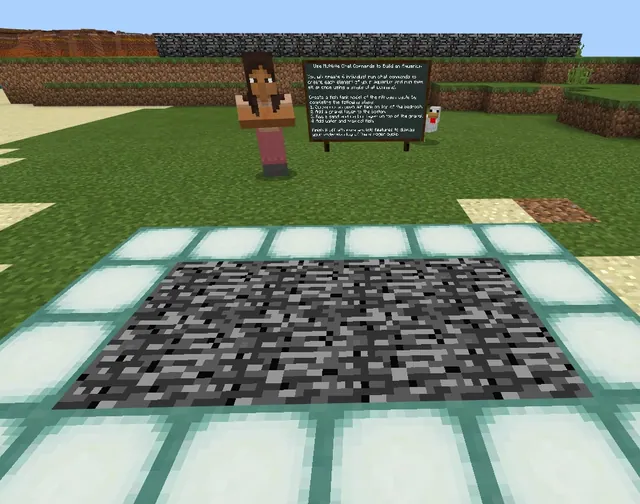
Students head east and fly to the obsidian block on the southwest corner of the greenhouse roof. They write a chat command to fill the roof with glass from ~0 ~0 ~0 to ~21 ~0 ~-21. If needed, students create an undo command by swapping glass for air.
Next, students stand on the northwest ground obsidian block, teleport their Agent, give it saplings, and run code to move forward by 6, place a sapling back, and turn left, repeated across all four sides.
- Station 2: Note Blocks, Sound & Electricity
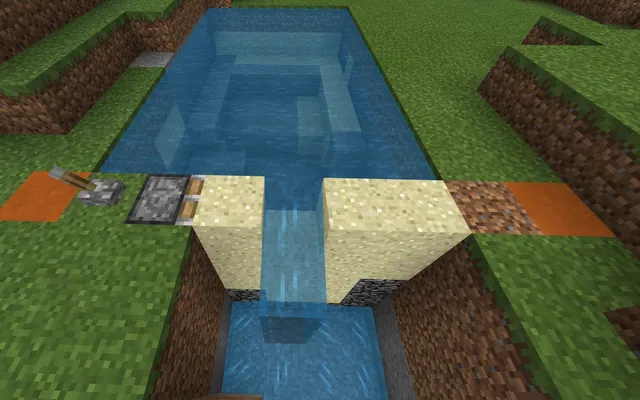
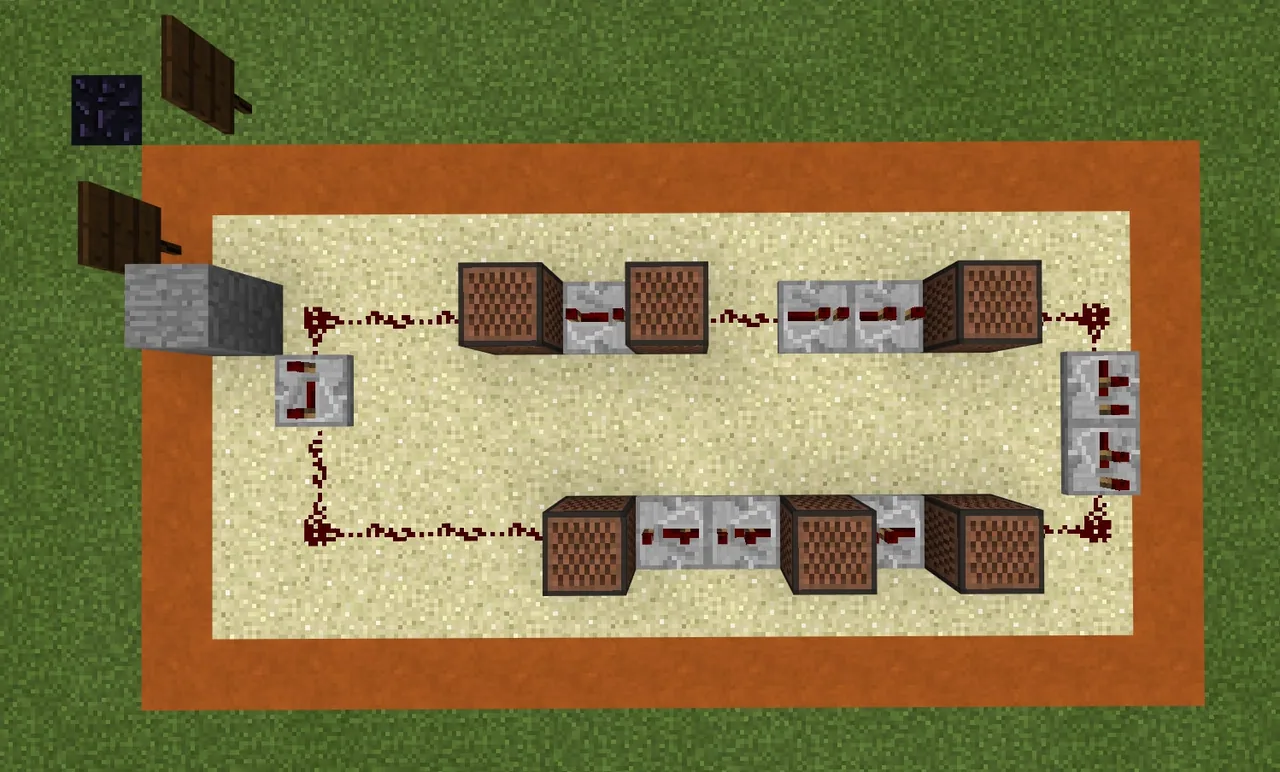
Students move west to the note block station, attach a button to the east face of the designated stone block, and press it to hear the tune. Explain that electricity travels over wire and sound diminishes with distance.
Standing on the southeast obsidian block, students run a clone from command to duplicate the station. On their cloned version, students adjust note pitches and redstone timings, and note how the volume drops as they walk away.
- Station 3: Wood Pile & Heat Energy
Students travel south to the wood pile. They collect fire charges from chests and place at least one into each dispenser beneath the inverted light sensors. When ready, students run /time set sunset. As darkness triggers the dispensers, students observe heat transfer from fire charges to logs, to the roof, and into the atmosphere as smoke.
- Reflection and Group Discussion
Bring students together to discuss their findings across all three stations. Ask them how electricity transferred energy between blocks, how the wood fire models heat transfer, and how a daylight sensor illustrates light energy transfer.
Assessment: success criteria
- The student creates a complete glass roof on the greenhouse using the relative fill command.
- The student codes the Agent using repeat loops and direction turns to plant trees around the greenhouse.
- The student successfully clones the note block station and observes that sound volume decreases over distance.
- The student accurately explains how heat transfers from fire charges into logs, roof blocks, and the atmosphere.
Differentiation
Provide a written reference card of coordinate commands and practice writing the 'undo' air fill command together before starting.
Have students experiment with redstone repeater timing on their cloned note block station to alter beat tempo and determine maximum audible distance.
Knowledge check
5 questions to check understanding after the lesson. Tap an answer to see if it is right; the score appears at the end.
1In the relative coordinate system used in this lesson, what does a positive first number represent?
Answer: A. The source states that the first coordinate reflects east/west orientation, with east being positive and west being negative.
2What happens to the volume of the note block tune as a player walks further away from it?
Answer: C. The source notes that sound energy diminishes over distance, meaning the volume decreases as students move away.
3Which chat command do students enter to trigger the inverted light sensors at the wood pile?
Answer: B. Students are instructed to type /time set sunset to make night fall and activate the inverted light sensors.
4How can students create an 'undo' command if they make a mistake with the fill command?
Answer: A. The source explains that students can copy the command, name it 'undo', and change the block type from glass to air.
5What component is placed on top of each dispenser at the wood pile station?
Answer: D. The source states that an inverted light sensor sits atop each dispenser to activate it when night falls.
Resources
- Lesson package (.zip)Everything the author attached to this lesson in one download.
- World FileWorld file for student use
- Lesson PlanLesson plan in Word format.
Part of the Code for STEM curriculum
This is lesson 7 of 20 in Code for STEM.
- 3-D Fractions
- Aquarium
- Build a Dam
- Canyon Arch Bridge
- Chicken or the Egg
- Creeper Tower Test
- Energy Transfer
- Forces
- Hour of Code: AI for Good
- Minecraft Code Town
- Molecules
- Number Line Railroad
- Plate Motions
- Road Construction Ahead
- Scale
- Slope
- Surface Area and Perimeter
- Units of Measurement
- Walled Fortress
- Wave Properties
Frequently Asked Questions
Can students complete these activities in pairs?
Yes, the source indicates that the activities are best completed either by individual students or by students working together in pairs.
How do students stop the repeating tune at the note block station?
Students can stop the continuous loop by breaking the redstone circuit found on top of any sand block in the setup.
Where are the three learning stations located relative to spawn?
From the spawn point facing north toward the NPC, the greenhouse is to the east, the wood pile is to the south, and the note blocks are to the west.
Adapted from Energy Transfer by John Miller on Minecraft Education, last updated Jun 6, 2022. This classroom version, the timings and the quiz were written by 9Minecraft Education.