- Type
- Lesson plan
- Ages
- Ages 8-13
How can city leaders balance energy production, economic growth, and environmental health when designing a sustainable power grid?
Overview
Modern power grids face a critical transition from finite, polluting fossil fuels toward clean, self-replenishing energy sources. In this lesson, students explore the core trade-offs between different power generation methods by examining how cost, electricity output, and environmental pollution influence a growing community.
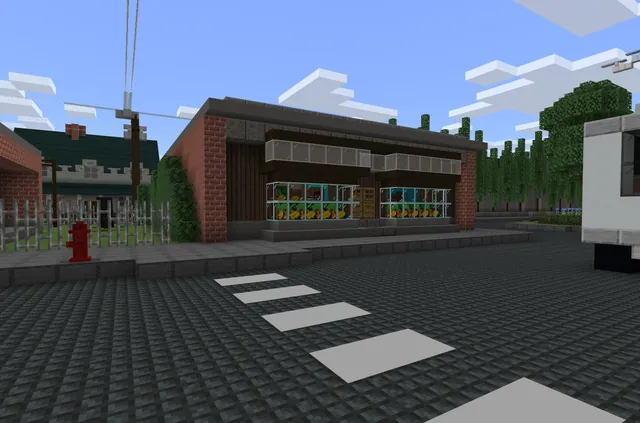
Taking on the role of city mayor in a single-player Minecraft world, each learner must expand their town while monitoring live indicators for energy reserves, pollution levels, population, and overall city rating. As they choose among six energy sources, build civic structures, and invest tax revenue, students observe the real-world challenge of maintaining a reliable, clean energy supply.
Learning objectives
By the end of this lesson students will be able to:
- Identify common renewable and non-renewable energy generation methods.
- Compare energy sources based on operational cost, electrical output, and pollution.
- Explain why battery storage is required for intermittent energy sources like wind and solar.
- Evaluate the impact of urban buildings and green spaces on atmospheric greenhouse gases.
Blocks and items used in this lesson


Key vocabulary
- Renewable Energy
- Energy produced from naturally replenishing resources such as sunlight, wind, and flowing water.
- Non-Renewable Energy
- Energy sources like fossil fuels that deplete Earth's finite resources and emit harmful pollutants or waste.
- Energy Transition
- The global shift from an energy infrastructure dependent on fossil fuels to one powered by renewables.
- Intermittent Power
- Energy sources that fluctuate based on natural conditions, such as sunlight availability or wind speed.
- Photosynthesis
- The biological process by which trees and green plants absorb carbon dioxide, helping reduce greenhouse gases.
Before class
Lesson sequence
- Class Discussion and Context
Introduce the concept of electricity generation by asking where current power originates and reviewing the drawbacks of fossil fuels and nuclear plants. Define renewable resources and discuss the purpose of the modern energy transition.
- Mayor Briefing at Town Centre
Have students load into their single-player worlds and assemble at the town centre. Direct them to read the in-game briefing books and locate the live city dashboard displaying energy level, pollution, population, and overall rating.
- City Development Simulation
Students construct their cities by choosing from six power generation options and eight building types. As citizens move in and consume power, students collect automated tax revenue and reinvest it, deciding whether to prioritize clean energy or traditional fuels.
- Blackboard Comparison and Reflection
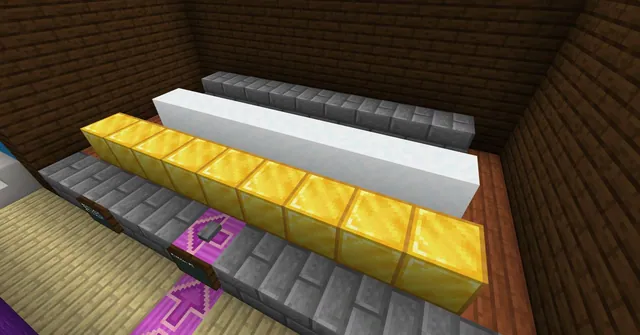
Gather the class to populate the comparison table on the board. Prompt students to analyze why battery storage is necessary despite zero net power output, and discuss how adding parks and forests reduces city greenhouse gases through photosynthesis.
Assessment: success criteria
- Students can correctly categorize selected energy options as renewable or non-renewable.
- Students rank or compare power sources accurately regarding relative cost, output, and pollution levels.
- Students articulate why intermittent renewable sources rely on energy storage solutions like batteries.
- Students explain how green spaces help offset city pollution grades through photosynthesis.
Differentiation
Allow students to work alongside a peer to read the in-game stat books and record the stats of the six energy types on paper before building.
Challenge students to achieve the highest possible city rating using only zero-emission energy sources combined with strategic green space placement.
Knowledge check
5 questions to check understanding after the lesson. Tap an answer to see if it is right; the score appears at the end.
1What is a major environmental disadvantage of generating electricity by burning fossil fuels?
Answer: B. Burning fossil fuels emits carbon dioxide, which pollutes the air and drives global climate change.
2Why is battery storage essential in an electrical grid that relies heavily on solar and wind power?
Answer: C. Renewable sources like solar and wind fluctuate with weather and time of day, making energy storage necessary to provide steady electricity.
3Where in the LUMEN challenge world can students view real-time data on their city's pollution and energy levels?
Answer: C. Live statistics tracking pollution, energy, population, and overall rating are displayed in the town centre.
4How do parks and forests help improve the environmental rating of a student's city?
Answer: B. Plants and trees take in carbon dioxide during photosynthesis, reducing the city's greenhouse gas burden.
5How do players fund new power plants and buildings in the LUMEN City Challenge?
Answer: B. Taxes are collected automatically from the population and provide the funds needed to construct new structures.
Resources
- Tables 1 & 2Power source and building type tables.
- Lesson worldOpens the world page in Minecraft Education (sign-in with a school account may be needed).
Frequently Asked Questions
Do students need to construct their cities together on a shared multiplayer server?
No. The lesson is designed for single-player mode, where each student acts independently as the mayor of their own city to make individual planning decisions.
Do students need to memorize exact numeric ratings for each power source?
No. Assessment focuses on relative comparisons across cost, energy output, and pollution rather than exact figures.
Adapted from LUMEN City Challenge by Minecraft Education on Minecraft Education, last updated May 23, 2025. This classroom version, the timings and the quiz were written by 9Minecraft Education.