How does food travel from the farm to the store, and why should every stage of production be sustainable?
Overview
Food does not simply appear on store shelves; it arrives through a complex network of producers, processors, and supply chains. When consumers buy an item, they are actively supporting the entire production cycle behind it. To maintain healthy ecosystems, every phase of this journey—from field management to packaging and waste disposal—needs to operate sustainably.
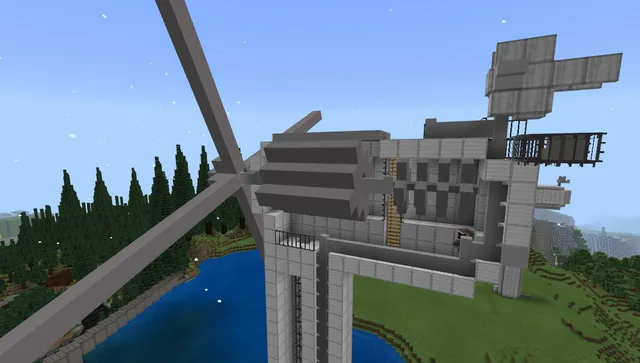
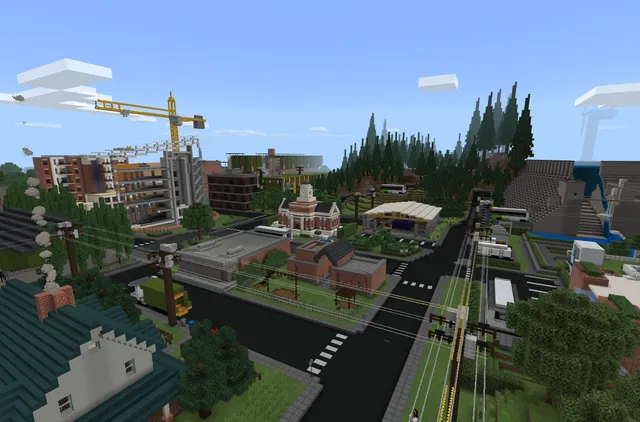
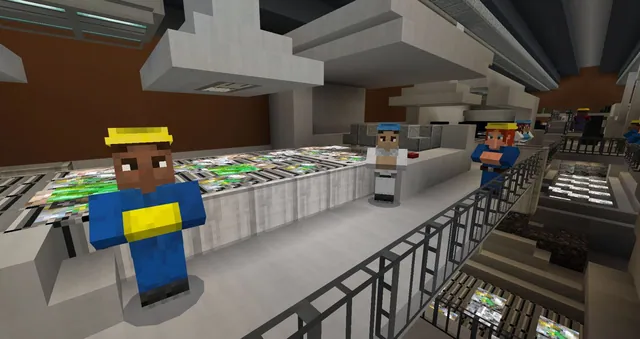
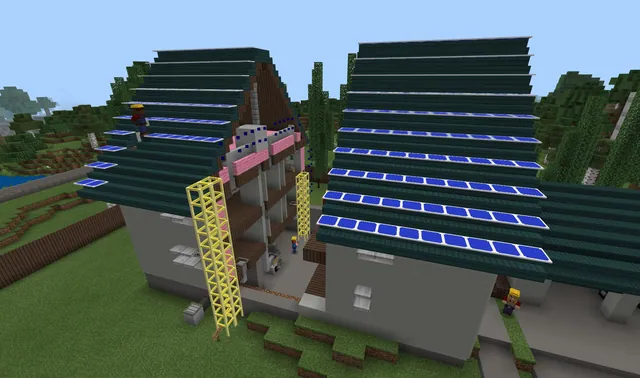
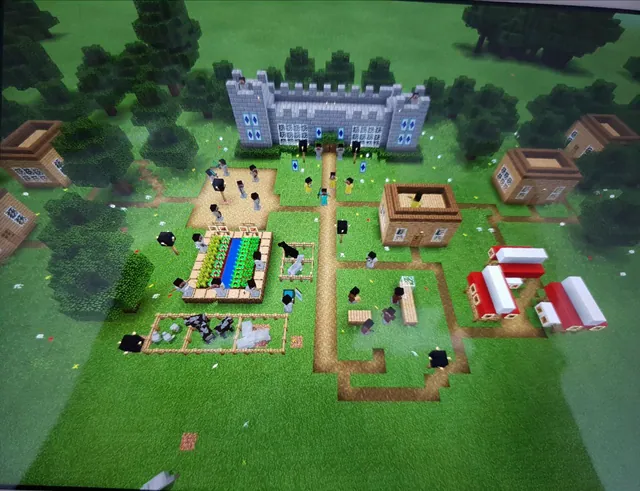
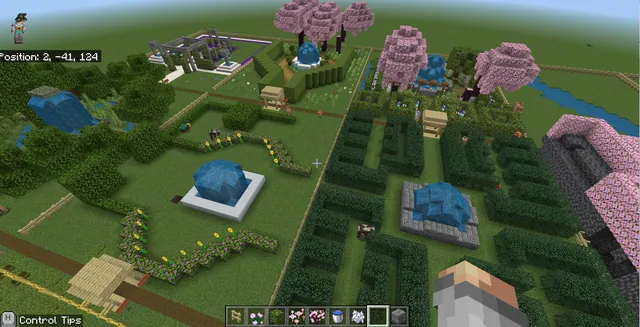
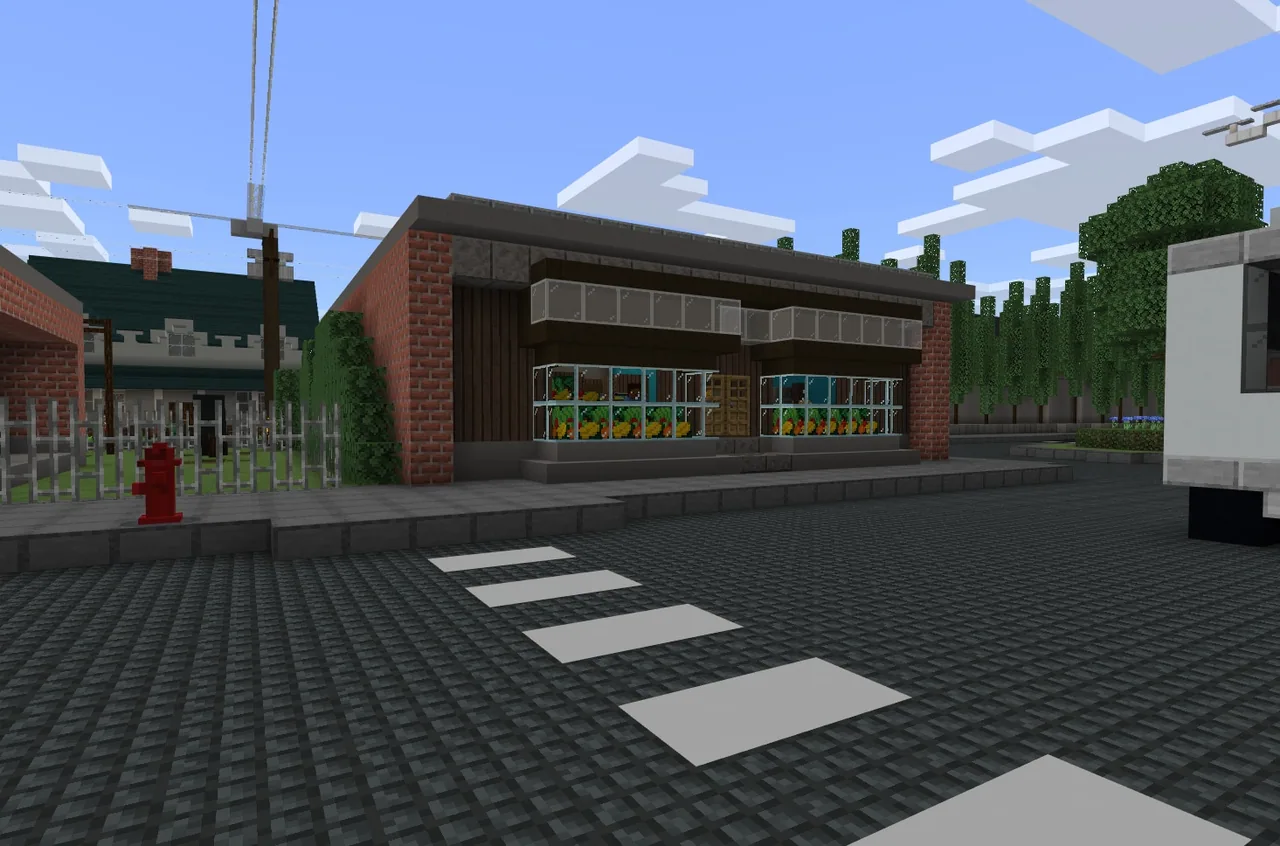
In this lesson, students navigate a Minecraft world that brings this supply network to life. Starting at a local grocery store, students trace the food production process through a sustainable farm, an organic waste facility, and a material recycling center before arriving at a packaging shop and honey stand, examining how each step demonstrates environmental responsibility.
Learning objectives
By the end of this lesson students will be able to:
- Explain the roles of producers and consumers in an economic and ecological system.
- Define sustainability and explain its importance to modern food systems.
- Describe how soil conservation, crop rotation, and waste recycling support sustainable supply chains.
- Evaluate how consumer purchases influence production and distribution methods.
Blocks and items used in this lesson
 Honey Bottle
 Farmland
Key vocabulary
- Producer
- An individual, business, or organism that creates, grows, or supplies goods.
- Consumer
- A person or organism that purchases, uses, or eats products.
- Sustainable
- Methods and practices that meet current needs without depleting natural resources or harming future environments.
Before class
Lesson sequence
Suggested timing: about 60 minutes in total.
- Concepts and Vocabulary15 min
Introduce or review the terms producer and consumer through a group sorting exercise or guided discussion. Next, screen a video explaining sustainability, then have students share working definitions, real-world examples, and why sustainable practices are essential.
- Honey Jar Prediction Prompt10 min
Display a glass jar of local honey to the class. Ask students to write down their predictions regarding how both the honey and the container traveled from the farm to a grocery store, noting how each step along the route could follow sustainable practices.
- In-World Production Tour25 min
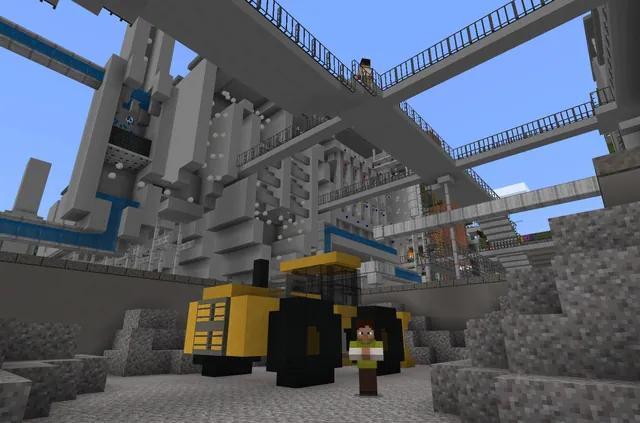
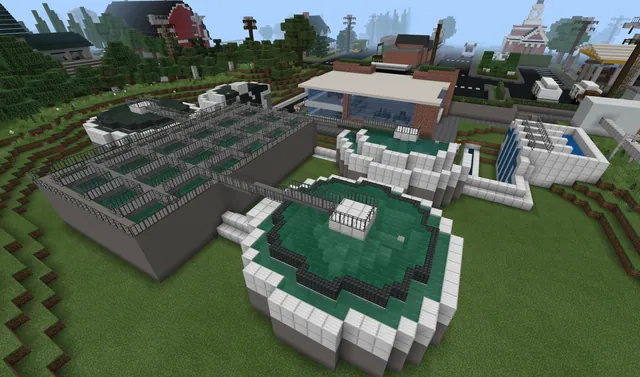
Launch the Minecraft world. Students begin at the town grocery store, then navigate through the farm to inspect soil conservation, crop rotation, and water protection. They proceed through a waste facility turning waste into fertile soil, a recycling center turning used packaging into new containers, and a packaging shop preparing items for sale.
- Debrief and Action10 min
Convene as a whole group to compare students' initial predictions against the systems modeled in Minecraft. Discuss the idea that purchasing a product supports its entire production lifecycle, and brainstorm practical ways to encourage sustainable consumption habits.
Assessment: success criteria
- Students accurately describe the distinct roles of producers and consumers.
- Students define sustainability and explain its significance in food systems.
- Students trace the stages of food production from raw materials on a farm to packaged goods in a grocery store.
- Students explain how individual purchasing choices directly impact production methods.
Differentiation
Provide a guided note-taking sheet with visual prompts for producer, consumer, and each stop along the supply chain route.
Have students propose specific improvements to the in-game farm or waste center to reduce water pollution or improve recycling efficiency even further.
Knowledge check
5 questions to check understanding after the lesson. Tap an answer to see if it is right; the score appears at the end.
1What is the primary role of a producer in a food supply chain?
Answer: B. Producers are responsible for growing, making, or supplying goods to consumers.
2What process does the waste facility in the Minecraft world demonstrate?
Answer: A. The waste facility shows students how waste products can be repurposed into fertile soil.
3What agricultural practices do students learn about while visiting the farm?
Answer: D. The farm area highlights soil conservation, crop rotation, and addressing water pollution.
4Why is it important to consider what you buy at a grocery store?
Answer: C. When people purchase a product, they are voting with their money to encourage the whole system that produced it.
5What is the function of the recycling plant visited during the lesson?
Answer: A. The recycling plant demonstrates how old packaging is collected and converted into new packaging materials.
Resources
- Complete Lesson Plan
- Lesson worldOpens the world page in Minecraft Education (sign-in with a school account may be needed).
Part of the Sustainability curriculum
This is lesson 6 of 7 in Sustainability.
- Alternative Energy
- Dependable Forests
- It’s Good to Be Green
- Outflow Order
- Radical Recycling
- Sustainable Food Production
- Sustainable Home
Frequently Asked Questions
What should I do if I cannot find a local jar of honey for the warm-up?
You can display a digital photo or presentation slide of locally produced honey in a glass jar to prompt the class prediction exercise.
Which facilities are included in the Minecraft world tour?
The tour starts at a grocery store, visits a farm, explores a waste facility and a packaging recycling plant, and concludes at a packaging shop and honey stand.
What age group is this lesson plan intended for?
The resource is designed for all ages, allowing teachers to scale introductory sorting activities and discussions to fit primary or secondary students.
Adapted from Sustainable Food Production by Minecraft Education on Minecraft Education, last updated Sep 15, 2023. This classroom version, the timings and the quiz were written by 9Minecraft Education.