- Type
- Lesson plan
- Ages
- Ages 11-13
How can sustainable materials and energy-efficient designs reduce a home's impact on the environment?
Overview
Sustainable home design balances the use of responsibly sourced materials with energy-efficient construction methods to lessen environmental harm. By understanding how choices such as thermal insulation, strategic ventilation, and renewable power systems operate together, students discover practical ways residential structures can minimize everyday resource consumption.
Using Minecraft Education, learners explore a demonstration home and interact with non-player characters to investigate sustainable elements firsthand. Students observe visual representations of airflow and insulation, inspect rooftop solar installations, and study how passive features reduce reliance on heating systems before creating their own physical models.
Learning objectives
By the end of this lesson students will be able to:
- Identify sustainable building materials including bottom ash, lumber, and glass.
- Explain how insulation, ventilation ducts, and window treatments improve energy efficiency.
- Analyze how solar panels and efficient house features reduce energy demand on local power plants.
- Construct a physical model home using solid structural materials and insulation to manage thermal transfer.
Blocks and items used in this lesson

Key vocabulary
- Sustainable
- Causing little to no damage to the natural environment so that an activity or resource can continue over time.
- Efficiency
- The effective use of energy so that little to no power is wasted.
- Insulative
- Having the quality of reducing or blocking the transfer of heat, electricity, or sound.
- Ducts
- Channels, tubes, or pipes used to circulate air for heating, cooling, or ventilation.
- Surplus
- An extra amount of an asset or resource remaining after all needs have been met.
Before class
Lesson sequence
- Class Introduction and Concept Discussion
Show the introductory sustainability video to the class. Have students gather in small groups to discuss what they believe the word sustainable means, then record their thoughts on the board. Introduce the formal definition: causing little or no environmental damage so that it can continue long term.
Repeat this reflection process with the word efficiency, defining it as using energy effectively so little to none is wasted. Have groups brainstorm and share a list of materials in their own households that might be sustainably sourced or energy efficient.
- Minecraft Eco-Home Walkthrough
Direct students to enter the world and begin taking structured notes. Guide them through the sequence of NPC stations:
- Garage Area: Meet the character to the right of the garage to examine sustainably sourced materials like bottom ash, lumber, and glass.
- Front and Side Entry: Learn why energy efficiency matters, then step through the side door to watch how blue droplets (representing air particles) react against the wall insulation.
- Interior Systems: Talk to the ventilation NPC to examine ductwork, then move upstairs to learn about window film and smart blinds.
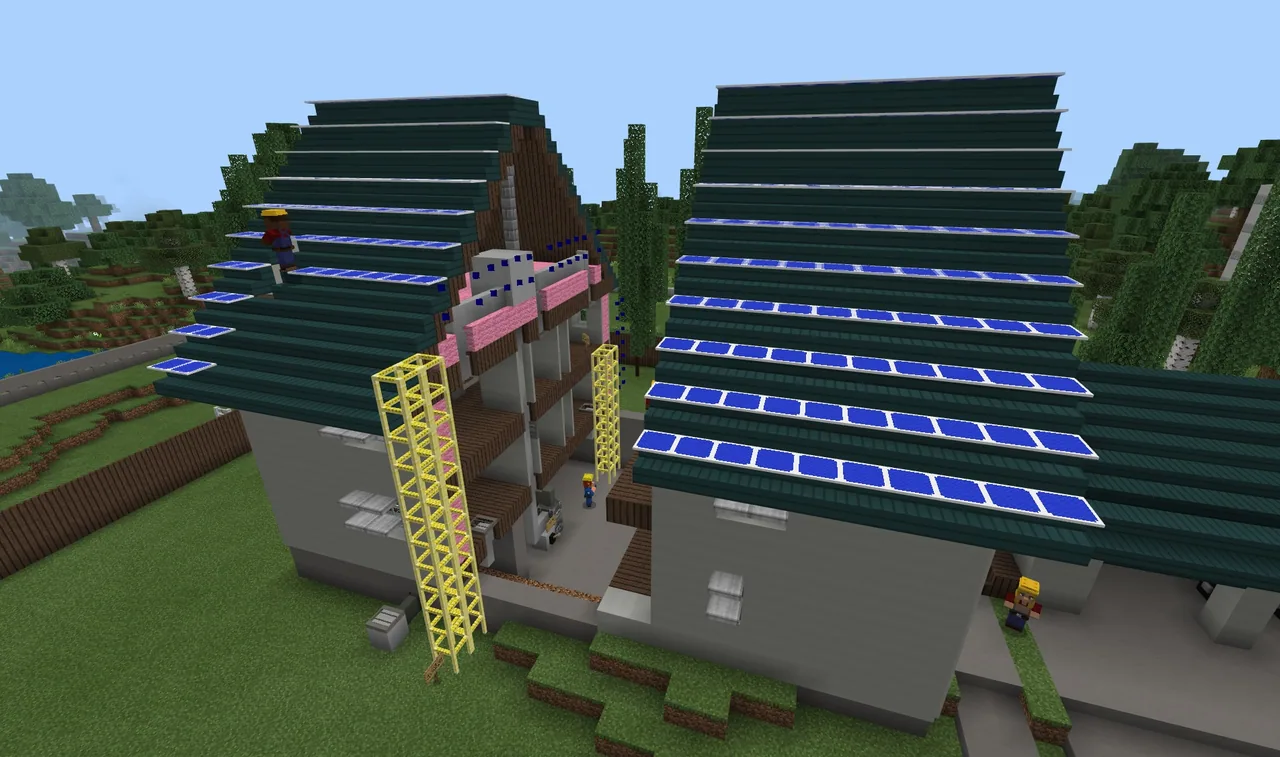
- Scaffolding and Basement: Climb the exterior scaffolding on the front left to inspect solar panels, then head to the basement furnace to see how efficiency features reduce power draw from the city power plant before catching the bus.
- Hands-On Model Construction
Group students and distribute the prepared building kits. Challenge each team to design and construct a physical model of an energy-efficient home incorporating solid surfaces (walls, floors, and roofs) and insulative elements.
Have students use their thermometers and assembly supplies (scissors, tape, glue) to complete and evaluate the thermal design of their structures.
Assessment: success criteria
- Students can correctly identify sustainable construction materials such as bottom ash, lumber, and glass.
- Students can describe how insulation, ductwork, and window treatments prevent energy waste.
- Students construct a physical model house that incorporates solid surfaces and insulation measured with a thermometer.
Differentiation
Provide a guided note-taking organizer listing each NPC location and guiding questions about airflow and insulation.
Ask advanced learners to propose additional modern smart features that could be added to the Minecraft house to optimize power usage.
Knowledge check
5 questions to check understanding after the lesson. Tap an answer to see if it is right; the score appears at the end.
1Where does the Minecraft house tour begin when exploring sustainable building materials?
Answer: C. The lesson directs students to begin their exploration to the right of the garage to learn about bottom ash, lumber, and glass.
2What do the blue droplets inside the house visually represent during the insulation demonstration?
Answer: B. The source notes that blue droplets represent air and show what happens when airflow encounters insulation.
3According to the lesson, what is the definition of a sustainable practice or material?
Answer: D. The teacher introduces sustainable as causing little or no damage to the environment so that it can continue for a long time.
4What concept does the basement furnace NPC explain to students?
Answer: A. The furnace NPC explains energy draw from the local power plant and how house features reduce the furnace's runtime.
5Which energy-saving items are highlighted when visiting the upstairs NPC?
Answer: B. The source states that upstairs an NPC discusses window film and smart blinds.
Resources
- Complete Lesson Plan
- Lesson worldOpens the world page in Minecraft Education (sign-in with a school account may be needed).
Part of the Sustainability curriculum
This is lesson 7 of 7 in Sustainability.
- Alternative Energy
- Dependable Forests
- It’s Good to Be Green
- Outflow Order
- Radical Recycling
- Sustainable Food Production
- Sustainable Home
Frequently Asked Questions
What items belong in the hands-on project kits?
Each kit requires solid surface materials for the walls, floor, and roof, insulating materials, a thermometer, and crafting fasteners such as tape, glue, and scissors.
What specific sustainable materials are featured inside the Minecraft home?
The Minecraft tour explicitly introduces bottom ash, lumber, and glass as sustainably sourced building materials near the garage station.
Adapted from Sustainable Home by Minecraft Education on Minecraft Education, last updated Sep 15, 2023. This classroom version, the timings and the quiz were written by 9Minecraft Education.