- Type
- Lesson plan
- Ages
- Ages 8-13
How can understanding recycling processes help us use recyclable materials to solve everyday problems?
Overview
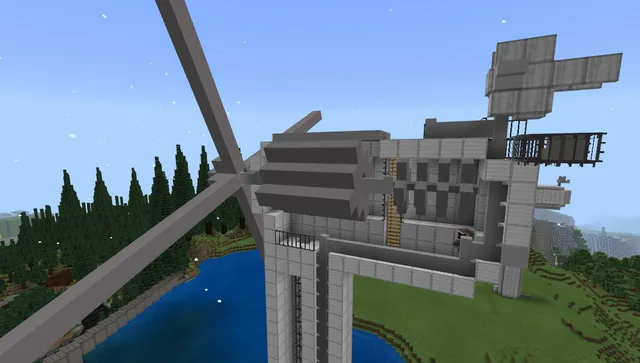
Students investigate the importance of recycling, how materials are processed, and how everyday items can be diverted from waste streams. Through introductory games, multimedia resources, and virtual exploration, learners discover what materials can be recycled across a community.
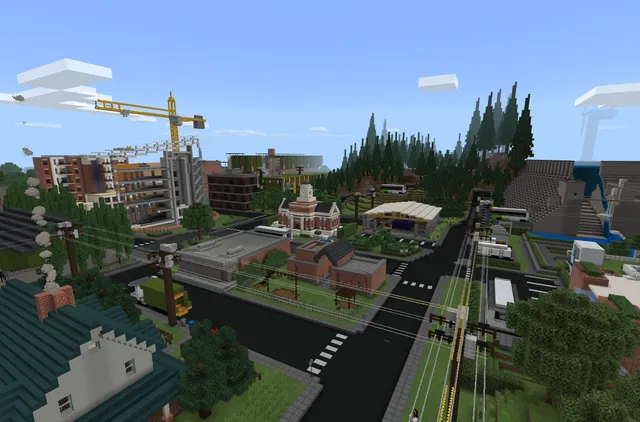
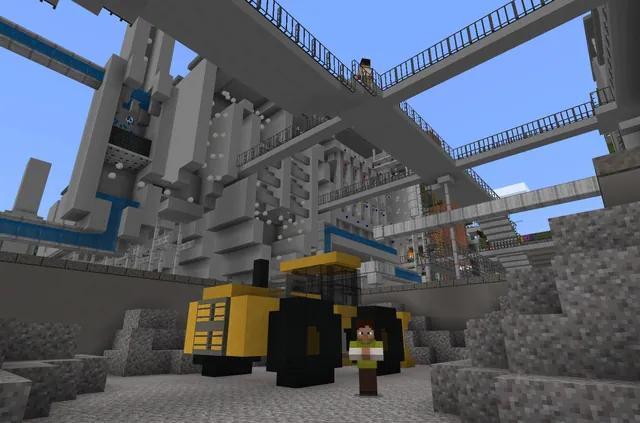
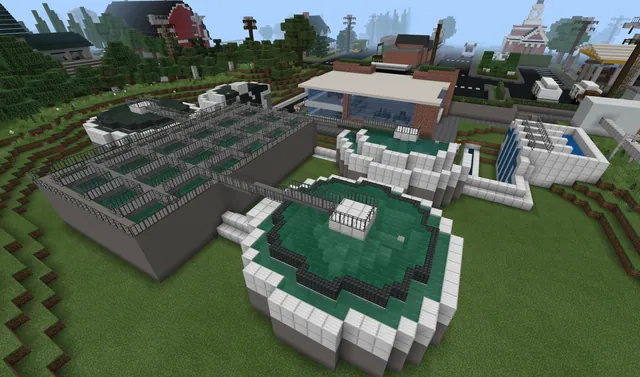
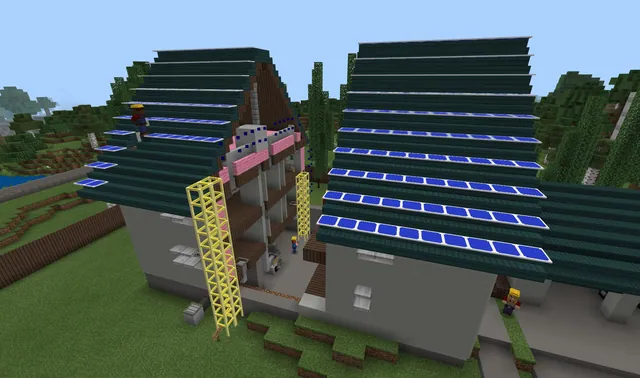
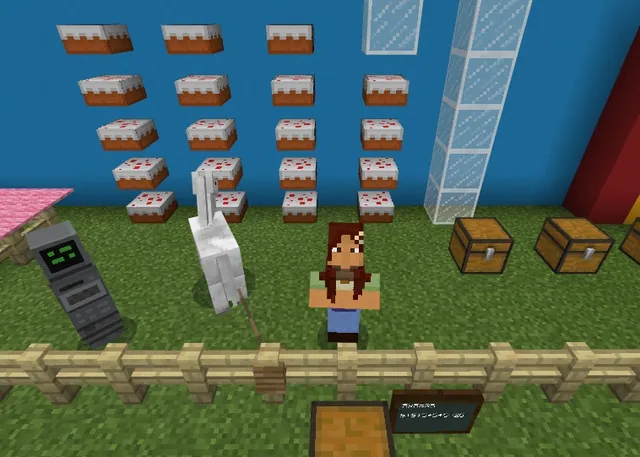
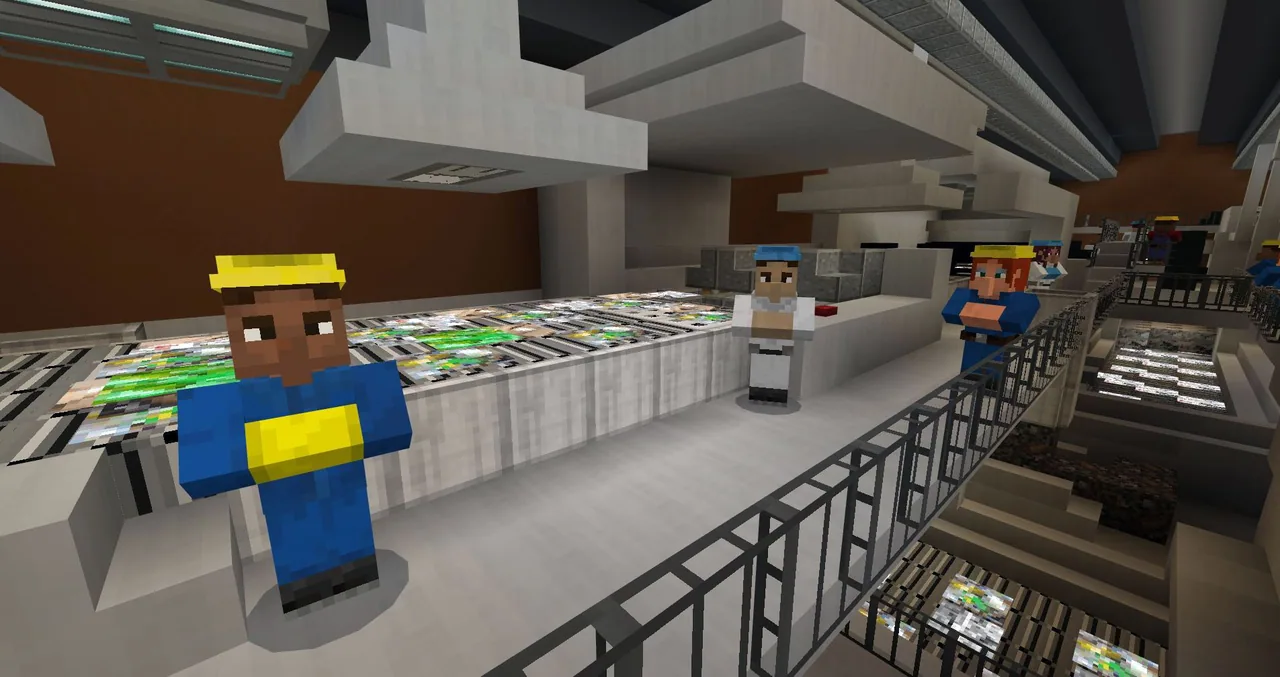
Inside the Sustainability world, students survey various city buildings to identify recyclable materials and inspect the virtual recycling center. After comparing the virtual facility with real-world recycling operations, students design and label a practical solution to a daily problem inside a Blocks of Grass world before building it with physical recyclables.
Learning objectives
By the end of this lesson students will be able to:
- Identify recyclable materials found across different locations within a city environment.
- Compare a virtual recycling center to real-world recycling operations and informative texts.
- Write a summary explaining what recycling is, why it matters, and how items are processed.
- Design a labeled Minecraft prototype using up to five recyclable materials to solve an everyday problem.
Blocks and items used in this lesson


Key vocabulary
- recycling
- The process of collecting, sorting, and processing used materials to manufacture new products.
- prototype
- A preliminary model or build created to demonstrate and test how an idea works.
Before class
Lesson sequence
- Introduction & Background
Facilitate a Kahoot! quiz to build background knowledge, followed by a discussion connecting the facts to students' daily lives. Have students play Recycle Roundup on individual devices or conduct an aluminum can tower-stacking challenge in teams of two to four.
- Video & Article Comparison
Show the virtual tour video of an operational recycling center, pausing to let students record observations in the first column of their three-column notes. Have students read the Wonderopolis article and record details in the second column.
- City Exploration
Direct students in pairs or small groups to explore the Sustainability world, visiting houses, schools, grocery stores, and offices while bypassing the recycling center. Students note potential recyclable items in their science journals before sharing findings on a whole-class anchor chart.
- Recycling Center Investigation
Students return to the Sustainability world to explore the virtual recycling center. They record observations about the sorting and processing systems in the third column of their note-taking sheets to compare with earlier sources.
- Prototyping & Presenting
Students write a summary synthesizing their evidence. Next, they sketch a solution to a home or school problem using no more than five recyclable materials, build and label a prototype in a Blocks of Grass world, and present the final build in class or via Flipgrid.
Assessment: success criteria
- Written summary accurately defines recycling, argues its importance, and describes processing steps using evidence from the video, text, and Minecraft world.
- Three-column notes and journal entries detail recyclable materials identified across city locations and facility components.
- Minecraft prototype in the Blocks of Grass world addresses a real problem, incorporates at most five recyclable items, and includes explanatory labels.
- Student presentation on Flipgrid or in class clearly demonstrates how the physical or modeled solution functions.
Differentiation
Provide pre-written cloze notes for the video and article, and offer the supplemental home recycling article to assist students during city exploration.
Organize a classroom tournament bracket for Recycle Roundup and require students to include multi-step mechanics in their prototype labeling.
Knowledge check
5 questions to check understanding after the lesson. Tap an answer to see if it is right; the score appears at the end.
1When first exploring the Sustainability world, which location are students instructed to skip until later?
Answer: B. Students first examine everyday community buildings for recyclable goods, saving the recycling center for their second in-world task.
2What is the maximum number of recyclable items allowed in the student problem-solving design?
Answer: C. The project guidelines restrict student designs to no more than five recyclable items.
3How do students structure their notes across the multimedia research phase?
Answer: A. Students use a three-column document to compare the video tour, the Wonderopolis text, and the Minecraft world exploration.
4In which Minecraft world do students build the prototype of their recycling invention?
Answer: D. Students build their prototype inside their own Blocks of Grass world after getting their sketch approved.
5What objective must teams achieve during the optional hands-on introductory challenge?
Answer: B. The optional challenge asks student teams to build the tallest freestanding tower of aluminum cans within a time limit.
Resources
Part of the Sustainability curriculum
This is lesson 5 of 7 in Sustainability.
- Alternative Energy
- Dependable Forests
- It’s Good to Be Green
- Outflow Order
- Radical Recycling
- Sustainable Food Production
- Sustainable Home
Frequently Asked Questions
Where should students share their finished invention demonstrations if class time is limited?
Teachers can set up a Flipgrid topic where students record video explanations and demonstrations of their problem-solving inventions.
What should I do if students struggle to brainstorm recyclable items in the city?
You can share the article titled How to Recycle Everything in Your Home to help prompt their thinking during the city exploration phase.
Adapted from Radical Recycling by Minecraft Education on Minecraft Education, last updated Sep 16, 2023. This classroom version, the timings and the quiz were written by 9Minecraft Education.