- Type
- Lesson plan
- Grade
- Early years (Pre-K to Grade 2)Primary (Grades 3-5)Middle school (Grades 6-8)High school (Grades 9-12)
- Ages
- All ages
- Duration
- 3 hours
- Level
- Beginner
How can collaborative design and inclusive planning create a functional event site for diverse athletes?
Overview
In this lesson, students step into the roles of event planners and designers tasked with preparing a host village for the Blocklympics and Parablocklympics. Working in collaborative groups within a larger team, learners coordinate their efforts to transform an unprepared village into a fully functioning athletic and cultural venue. The project mirrors real-world event planning and entrepreneurship, requiring students to balance artistic expression with functional criteria.
Using Minecraft Education, student squads tackle five designated build zones: a central ceremonial torch and statue, a two-sided gold medal, an original playable mini-game, an opening and closing ceremony stadium, and an accessible craftlete village. Throughout the design process, learners consult local village input and incorporate accessible architecture, ensuring spaces accommodate both Blocklympic and Parablocklympic participants.
Learning objectives
By the end of this lesson students will be able to:
- Construct artistic exhibits, artifacts, and structures tailored for a large-scale athletic event.
- Incorporate feedback and local village input into group architectural designs.
- Apply critical thinking and collaboration to coordinate five distinct build zones within a larger team.
- Design accessible accommodations that meet the physical needs of Parablocklympic craftletes.
- Present a completed event prototype and explain the artistic and functional reasoning behind the design.
Blocks and items used in this lesson


Key vocabulary
- Craftlete
- An athlete from the biomes participating in the Blocklympic or Parablocklympic games.
- Parablocklympics
- A major sporting event designed for craftletes with diverse physical abilities.
- Prototype
- A working three-dimensional model created to demonstrate and test an event design or concept.
- Inclusive Design
- Building spaces that are accessible to all people, such as providing wide spaces and limiting stairs.
Before class
Lesson sequence
Suggested timing: about 180 minutes in total.
- Project Briefing and Team Setup20 min
Introduce the event scenario: the craftletes are arriving, but the host village is completely unprepared. Divide students into larger groups of 10 to 15, then assign smaller squads to each of the five core sites: the Torch and Statue, Medal Design, Event Design, Stadium Build, and Craftlete Village. Review the rubric expectations and emphasize the importance of inclusive design for Parablocklympic athletes.
- Site Survey and Concept Planning25 min
Have squads enter the world to locate their build zones, such as the water-surrounded central torch site marked by a sign, the beachside village, and the stadium grounds. Teams gather local input from the village and sketch their plans, deciding on features like Redstone lighting mechanisms, rules for new sporting events, and ramp-accessible pathways.
- Collaborative Event Construction100 min
Students construct their assigned zones according to specific criteria:
- Torch / Statue: Build a 3D statue on the island featuring biome or village motifs and an operational torch powered continuously or by a Redstone switch.
- Medal Design: Decorate both faces of a giant gold medal, dedicating one side to the Blocklympics and the reverse to the Parablocklympics.
- Event Design: Create an original racing or skill mini-game and place in-game boards detailing rules and victory conditions.
- Stadium Build: Construct an arena for sports and ceremonies complete with a main stage, lighting or fireworks, and an active surrounding entertainment district.
- Craftlete Village: Build beachside lodging and entertainment with wide walkways, limited stairs, and accessible layouts suitable for all craftletes.
- Demonstration and Final Walkthrough35 min
Teams test their sports mini-games to verify rules and playability. Students then present their completed zones through an in-person guided tour or a recorded video walkthrough, explaining how their builds incorporate local input and meet both artistic and accessibility requirements.
Assessment: success criteria
- Student builds reflect local community ideas and village input.
- Craftlete Village and surrounding sites incorporate accessible features, such as limited stairs and ample room for movement.
- The mini-game site features legible rules and clear victory criteria posted on boards.
- Small squads collaborate smoothly to deliver a unified venue across all five designated project zones.
- Students clearly articulate their artistic choices and functional designs during their walkthrough or video presentation.
Differentiation
Assign struggling learners to focused decorative tasks, such as designing one side of the two-sided gold medal or crafting signs for event rules.
Challenge advanced students to engineer complex Redstone lighting and firework systems for the stadium or build a toggleable ignition switch for the ceremonial torch.
Knowledge check
5 questions to check understanding after the lesson. Tap an answer to see if it is right; the score appears at the end.
1Where is the ceremonial torch and statue site located in the host world?
Answer: C. The source specifies that the torch and statue site is central to the area, surrounded by water, and marked with a sign.
2What design requirement is specified for the gold championship medal build?
Answer: A. The lesson instructions state that the two-sided gold medal must feature Blocklympics artwork on one face and a Parablocklympics design on the reverse.
3How should student teams ensure the Craftlete Village is accessible to Parablocklympians?
Answer: B. The source instructs students to limit stairs, offer ample room for navigation, and create modern housing that works for all craftletes.
4What must be included at the Event Design site along with the playable mini-game?
Answer: C. The source requires students to build a demonstratable mini-game and post rules on boards that explain how a clear winner is decided.
5Besides hosting a competitive sporting event, what is the main purpose of the Stadium Build?
Answer: C. The teacher notes explain that the stadium is built for one event and, more importantly, to host the opening and closing ceremonies.
Resources
- Lesson package (.zip)Everything the author attached to this lesson in one download.
- Student and Teacher RubricSuitable for Student and Teacher reference
- Presentation - Planning a Successful EventFor anticipatory sets prior to building
- ISTE Student StandardsApplicable ISTE Student Standards
- National Core Art StandardsApplicable National Core Art Standards
- Canadian Curriculum ConnectionsSome Canadian curriculum connections
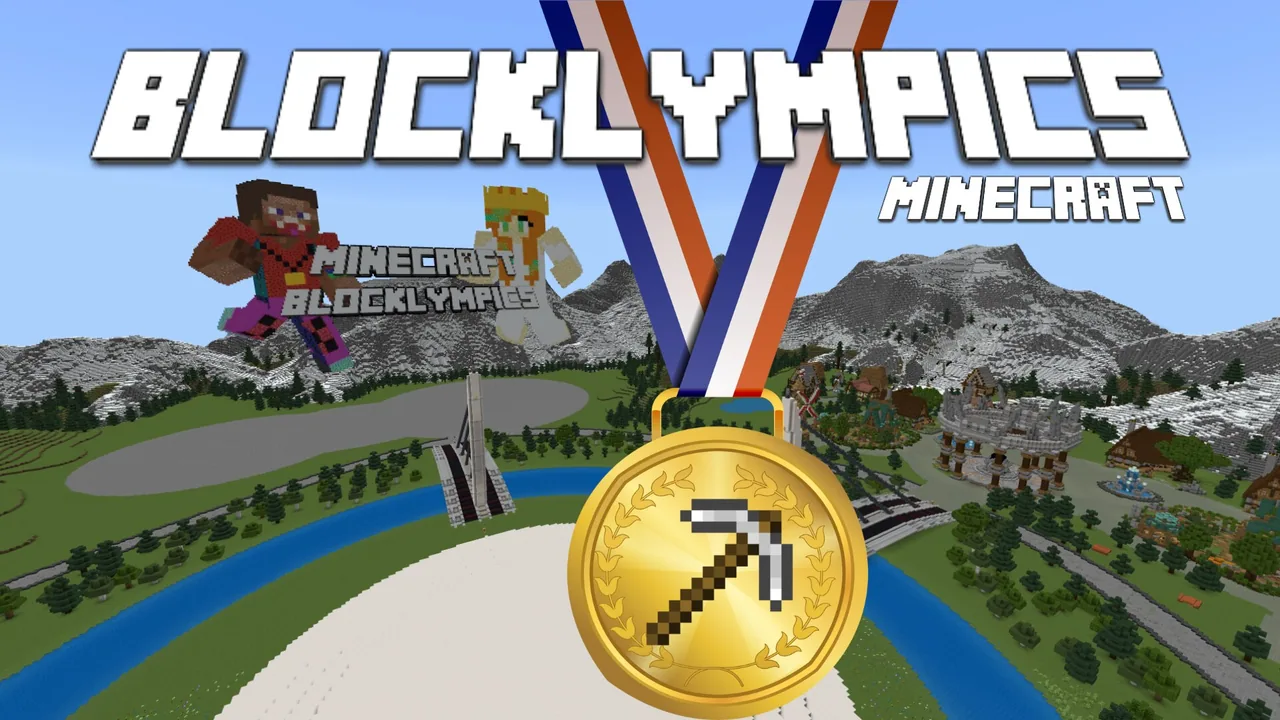
- Blocklympics Title ImageTitle Image
- Craftlete Village ImageCraftlete Village Image
- Medal Design and Event Build Site ImageImage of Medal Design and Event Build Site
- Stadium Build Site ImageStadium Build Site Image
- Torch and Statue Site ImageTorch and Statue Site Image
- Host Village ImageHost Village Day Image
- Host Village Night ImageHost Village Night Image
Frequently Asked Questions
What is the recommended student group size for this building project?
The source recommends working in teams of 10 to 15 students, which allows the class to split into smaller squads dedicated to each of the five major construction zones.
How can students present their finished event sites for evaluation?
Students can present their prototype either through an in-person guided tour or by submitting a recorded video walkthrough, which is supported by the included rubric.
Can students use Redstone in the build challenges?
Yes. The source notes that students can leave the ceremonial torch burning continuously or incorporate a Redstone switch to toggle the flame on and off dramatically, as well as using Redstone for stadium lighting and fireworks.
Adapted from The Blocklympics and Parablocklympics Experience by Logics Academy on Minecraft Education, last updated Aug 29, 2023. This classroom version, the timings and the quiz were written by 9Minecraft Education.