- Type
- Lesson plan
- Ages
- Ages 6-10
- Duration
- 30 min
- Level
- Beginner
- Includes
- Quiz: 5 questions
How do animal traits and behaviors help species survive, and why is wildlife conservation necessary?
Overview
Understanding the diversity of life on Earth requires examining how animals adapt their diets, physical structures, and behaviors to survive in different environments. By studying wildlife traits and ecological balance, students discover how species interact with one another and why habitat protection remains essential for global biodiversity.
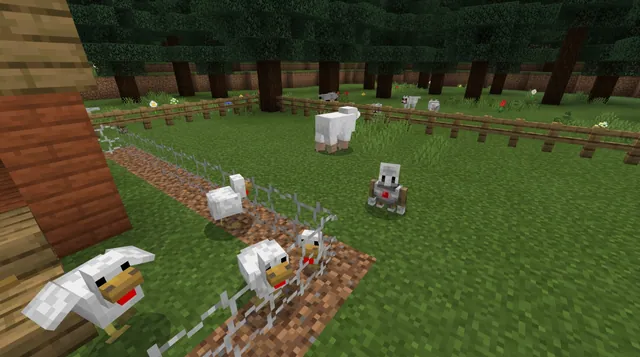
In this lesson, learners tour an interactive zoo world featuring dozens of animal exhibits. By speaking with in-game expert guides, students gather factual details on more than fifty species, analyzing physical features, social groupings, and environmental challenges directly within simulated habitats.
Learning objectives
By the end of this lesson students will be able to:
- Identify key physical traits, diets, and natural habitats for various animal species.
- Classify animals into groups such as mammals, birds, or reptiles, and as herbivores, carnivores, or omnivores.
- Describe animal behavioral adaptations including defense mechanisms and social structures.
- Explain how environmental challenges and human activities impact wildlife and ecosystem balance.
Blocks and items used in this lesson


Key vocabulary
- Herbivore
- An animal that feeds primarily or exclusively on plants.
- Carnivore
- An animal that feeds primarily or exclusively on the flesh of other animals.
- Omnivore
- An animal whose diet naturally includes both plants and other animals.
- Biodiversity
- The variety of different living species found within an ecosystem or habitat.
- Conservation
- The protection and preservation of wildlife and natural resources from harm or destruction.
Before class
Lesson sequence
Suggested timing: about 30 minutes in total.
- Introduction to Animal Classification5 min
Introduce the session by discussing how scientists categorize animals based on physical structures and diets. Review terms such as herbivore, carnivore, and omnivore, and explain that students will explore a virtual zoo to collect real-world animal facts.
- Exhibit Exploration and Guide Interviews15 min
Students navigate through the zoo exhibits to observe different species. Instruct learners to speak with the in-game expert guides to read and record in-depth facts about physical characteristics, diets, and habitats across various animal groups.
- Behavior and Conservation Study5 min
Direct students to focus on how animals behave, identifying whether species are solitary or herd-based and examining defense tactics. Have students note any mentions of habitat loss or human impacts affecting those animals.
- Class Reflection and Review5 min
Conclude the lesson by inviting students to share one interesting species they documented. Discuss why maintaining biodiversity matters and how communities can help protect threatened wildlife habitats.
Assessment: success criteria
- Students accurately identify and classify selected animals into correct dietary and biological groups.
- Students describe specific animal behaviors, including social living arrangements and defense mechanisms.
- Students explain how human actions and environmental challenges affect wildlife ecosystems.
Differentiation
Provide a guided recording sheet listing three specific animals for the student to find and document with a peer.
Ask advanced learners to contrast solitary animals with herd animals and explain how each social structure helps the species survive.
Knowledge check
5 questions to check understanding after the lesson. Tap an answer to see if it is right; the score appears at the end.
1Which term describes an animal that feeds exclusively or primarily on plants?
Answer: B. Herbivores are organisms that consume plant matter rather than meat.
2How many animal species are featured in the downloadable zoo world?
Answer: D. The lesson source specifies that students can learn about more than 50 species.
3What is the primary function of the expert guides inside the zoo?
Answer: A. Students chat with the expert guides to learn in-depth facts about the species.
4Which of the following represents an animal behavioral trait rather than a physical trait?
Answer: C. Social structures, such as being solitary or living in herds, are behavioral adaptations.
5Why is wildlife conservation an essential area of study?
Answer: B. Conservation efforts aim to protect species and ecosystems from environmental threats and human disruption.
Frequently Asked Questions
What age group is this zoo activity suitable for?
The lesson is structured for young learners aged 6 to 10 years old across early and middle primary grades.
Do students need advanced gaming skills to participate?
No, the experience is designed for beginners and focuses on walking through exhibits and reading information from guides rather than complex gameplay or building.
Adapted from Zoo by Shapescape ApS on Minecraft Education, last updated May 23, 2025. This classroom version, the timings and the quiz were written by 9Minecraft Education.