How can we mine resources safely and efficiently without getting lost or trapped?
Overview
Mining is more than simply digging holes into the ground; it requires careful planning to extract resources efficiently and avoid dangerous hazards such as cave-ins or getting trapped. In this lesson, students discuss the meaning of efficiency and compare real-world mining techniques with virtual extraction to understand why structured navigation is essential.
Using Minecraft, students put these principles into practice by digging a measured staircase mine entrance, carving out a central hub lit by torches, and mining uniform branch tunnels. This structured layout helps learners master basic controls, gather essential ores, and navigate safely back to the surface.
Learning objectives
By the end of this lesson students will be able to:
- Explain why planned mining methods are safer and more efficient than digging random holes.
- Excavate a stepped staircase entrance to create a reliable access route into a mine.
- Construct a central square chamber marked with directional torches at the base of the stairs.
- Dig one-by-three branch tunnels to gather target amounts of cobblestone, coal, and iron ore.
- Seal off mining tunnels safely when encountering hazards such as lava, water, or open caves.
Blocks and items used in this lesson


Key vocabulary
- Mining
- The process of digging into the ground to extract useful rocks and minerals.
- Efficient
- Working in a way that gets the job done without wasting time, energy, or materials.
- Trench
- A long, narrow ditch cut into the ground.
- Ore
- A natural rock that contains valuable minerals or metals like iron or coal.
Before class
Lesson sequence
- Starter Discussion and Time Estimation
Begin by asking students what mining is and show images of real-world mines using Google. Discuss why miners do not simply dig large open holes, highlighting hazards like cave-ins and getting trapped.
Introduce the concept of efficiency and connect it to lesson time. Prompt students to estimate how long each activity will take and have them demonstrate these time segments using the hands of a clock.
- Activity 1: The Staircase Entrance
Model how to dig a trench 10 blocks long, jump down to dig a 9-block trench, jump down for an 8-block trench, and continue this pattern down to 1 block. Students follow this demonstration to construct a stepped staircase that serves as the entrance and exit of their mine.
- Activity 2: Central Staging Chamber
Demonstrate how to excavate a large square room at the base of the staircase while leaving the floor intact. Show students how to place a torch on either side of the bottom stairs so the exit remains clearly visible. Students then excavate their own central room and place their exit torches.
- Activity 3: Branch Tunnels and Gathering
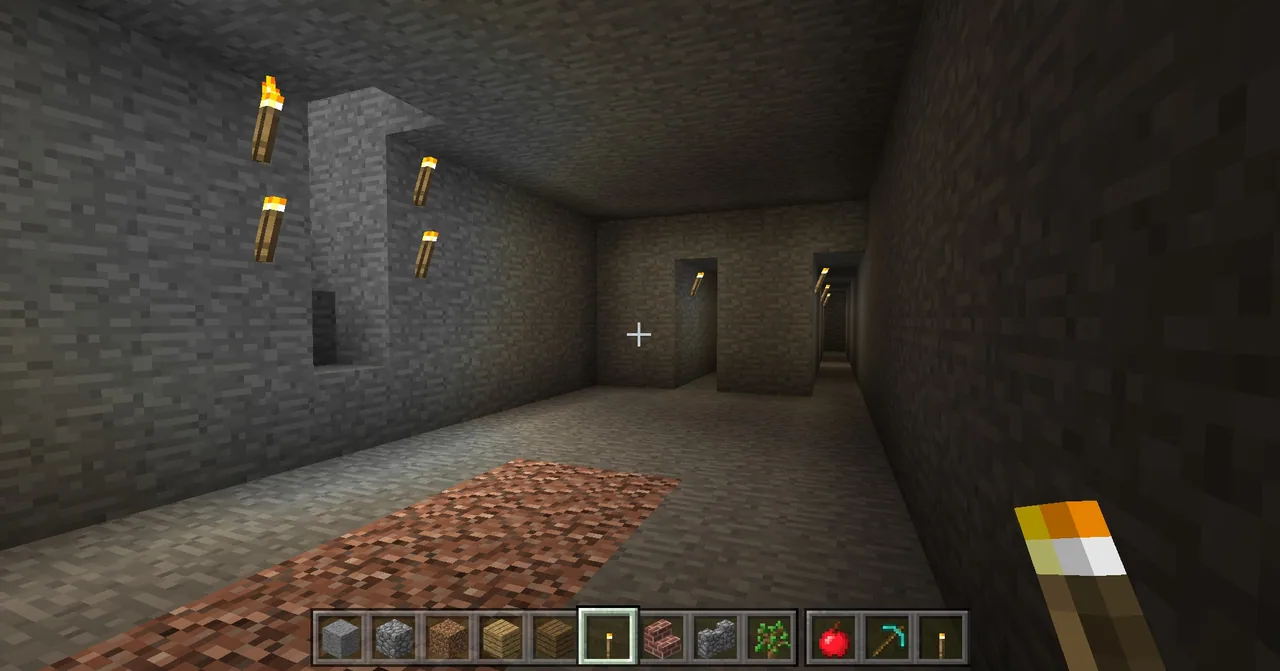
Demonstrate digging a tunnel 1 block wide and 3 blocks high straight out from one wall of the central chamber, placing torches as it gets dark. Explain that if miners breach an open cave, water, or lava, they must seal the opening with blocks, return to the main room, and start a new tunnel.
Students dig their tunnels until they gather 150 cobblestone, 50 coal, and 50 iron ore.
- Plenary and Peer Check
Have students swap seats to inspect a partner's mine layout and confirm that tunnels and staircases were constructed correctly. Conclude with a group discussion reflecting on what parts of the mining process were challenging.
Assessment: success criteria
- All students can construct a basic mine, gather required cobblestone, and explain what steps they took.
- Most students can collect cobblestone, coal, and iron ore while explaining how they built their mine.
- Students immediately seal tunnel walls when encountering open caves, water, or lava.
- Some students expand their mining network using ladders, minecarts, and tracks while justifying their layout choices.
Differentiation
Use the gamerule command to disable drowning and fire damage for learners who experience frequent player deaths.
Assign tiered extension challenges such as collecting diamonds, gold, and redstone, adding ladder shafts, or laying minecart tracks throughout the tunnels.
Knowledge check
5 questions to check understanding after the lesson. Tap an answer to see if it is right; the score appears at the end.
1Why is it dangerous to simply dig a large, random hole when mining?
Answer: B. The opening discussion emphasizes that digging random holes can trap players and mirrors real-world cave-in dangers.
2How do students build the stepped entrance staircase in Activity 1?
Answer: D. The teacher demonstrates digging a 10-block trench, stepping down to dig 9 blocks, and repeating down to 1 block to form a stepped exit.
3Where should torches be placed inside the central square chamber to mark the exit?
Answer: A. Activity 2 specifies placing a torch on either side of the staircase base so miners can easily locate the way out.
4What dimensions are required for the exploratory branch tunnels?
Answer: C. Activity 3 directs students to dig tunnels that are 1 block wide and 3 blocks high.
5What must a student do if an exploratory tunnel breaks into lava, water, or a cave?
Answer: B. The lesson instructions state that students must brick the wall back up and return to the main room to start another tunnel if hazards are reached.
Frequently Asked Questions
How can I prevent students who struggle with controls from constantly dying?
You can use the gamerule command to disable damage from fire and drowning, allowing learners to focus on basic movement and tool use without the frustration of repeated respawns.
What specific resource quantities should students collect during the main mining phase?
Students should continue excavating branch tunnels until their inventory contains 150 cobblestone, 50 coal, and 50 iron ore before they move on to extension challenges.
How does the lesson connect mining to mathematics?
During the introduction to efficiency, the teacher asks students to estimate task lengths and use the hands on a clock face to illustrate when each phase begins and ends.
Adapted from L1 Beginners Mining & Building by Hannah Mills on Minecraft Education, last updated Nov 20, 2016. This classroom version, the timings and the quiz were written by 9Minecraft Education.