- Type
- Lesson plan
- Ages
- Ages 8-18
- Includes
- Quiz: 5 questions
How did non-violent movements shape India's struggle for independence, and how can digital storytelling help us represent these historic events?
Overview
This history and technology lesson introduces students to key milestones in India's struggle for independence, emphasizing the principles of non-violence championed by Mahatma Gandhi. Learners investigate pivotal moments such as the Non-Cooperation Movement, the Civil Disobedience Movement, and the Quit India Movement while reflecting on their historical significance and moral values.
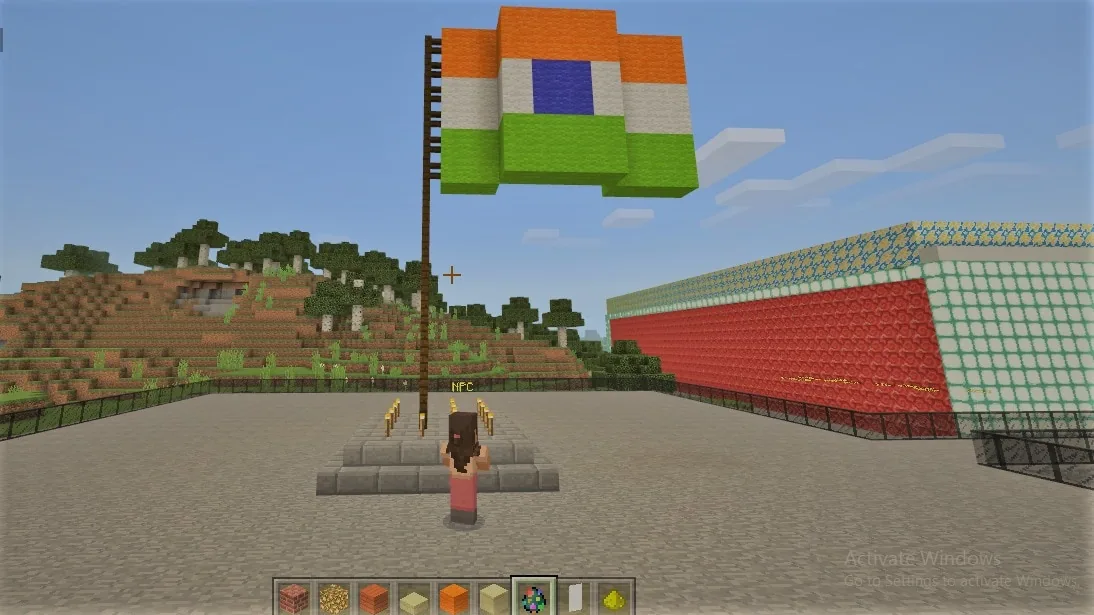
Students combine historical inquiry with computer science by using Code Connection, MakeCode, command blocks, and slash commands to build scenes and story settings. Working collaboratively, they map real-world historical locations into Minecraft and recreate key episodes through in-game storytelling and role-play.
Learning objectives
By the end of this lesson students will be able to:
- Identify key events and movements in India's struggle for independence, including the roles played by Mahatma Gandhi.
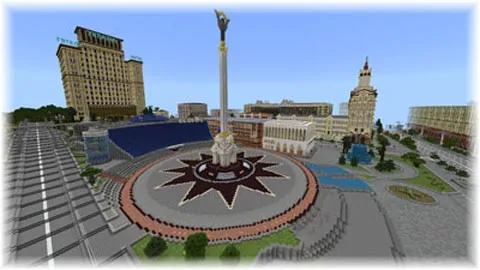
- Map historical locations connected to freedom struggle milestones and reconstruct them in Minecraft.
- Apply computer science control structures using MakeCode and Code Connection to build efficiently in the world.
- Implement command blocks and slash commands to control elements of the digital environment.
- Present a historical role-play demonstrating major events of the independence movement.
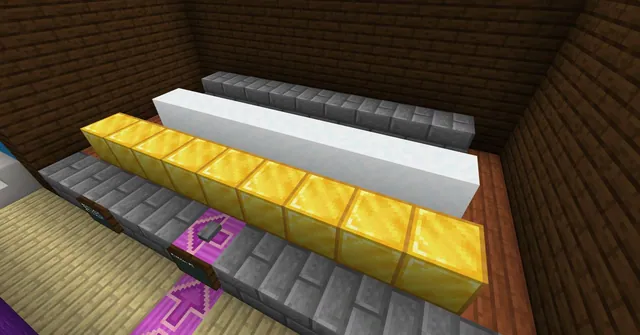
Blocks and items used in this lesson


Key vocabulary
- Non-Violence
- The practice of achieving political and social goals without using physical force.
- Non-Cooperation Movement
- A major nationwide protest campaign led by Mahatma Gandhi urging citizens to withdraw cooperation from British rule.
- Civil Disobedience Movement
- A peaceful protest movement focused on deliberately disobeying specific unjust laws.
- Quit India Movement
- A decisive 1942 movement demanding an end to British rule in India.
- Command Block
- An in-game Minecraft block that executes specific text commands when activated.
Before class
Lesson sequence
- Research and Historical Inquiry
Introduce the major milestones of India's independence movement. Have students research the Jallianwala Bagh massacre, the Non-Cooperation Movement, the Civil Disobedience Movement, and the Quit India Movement, focusing on the ideals of Mahatma Gandhi.
- Selecting Events and Map Study
Students work in teams to choose three critical historical events where Mahatma Gandhi played a leading role. They locate the real-world historical sites on maps to plan their digital builds.
- World Building and Coding
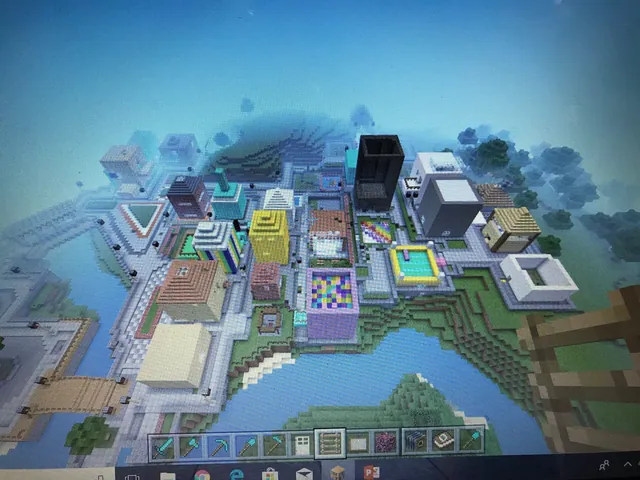
Teams enter the downloadable Minecraft world to construct settings for their selected events. They use MakeCode via Code Connection to automate builds and program control structures, and they place command blocks and run slash commands to trigger scene actions.
- Role-Play and Storytelling
Learners stage in-game or classroom role-plays depicting the historical scenes they constructed, incorporating key slogans, objectives, and moral lessons of the freedom struggle.
- Reflection and Discussion
Conclude with a classroom discussion on the power of non-violent resistance, reviewing the core lessons of patience, unity, world peace, and civic action.
Assessment: success criteria
- Accurately explains the causes, objectives, and slogans of key movements such as the Non-Cooperation, Civil Disobedience, and Quit India movements.
- Successfully integrates MakeCode or Code Connection to construct modular structures in the Minecraft world.
- Demonstrates correct application of command blocks and slash commands to support in-game storytelling.
- Participates in a collaborative role-play that faithfully represents historical events and figures.
Differentiation
Allow students who are new to coding to focus on placing pre-written slash commands and building environments manually before introducing command blocks.
Challenge advanced students to write complex MakeCode control structures that automate multi-stage historical scenes and interactive role-play sequences.
Knowledge check
5 questions to check understanding after the lesson. Tap an answer to see if it is right; the score appears at the end.
1How many historical events featuring Mahatma Gandhi in a lead role are student teams asked to select for their stories?
Answer: C. The student activities specify that learners select three events where Mahatma Gandhi played the lead role for their storytelling.
2Which tool is used alongside Minecraft to introduce computer science control structures in this lesson?
Answer: A. The lesson objectives state that students use Code Connection and MakeCode to practice control structures and create modular builds.
3Which in-game Minecraft mechanism is explicitly highlighted for students to apply during their builds?
Answer: B. The lesson lists using command blocks and slash commands as key tools for building and controlling the digital world.
4What is the primary method of action highlighted in the story of India's independence struggle in this lesson?
Answer: B. The lesson focuses heavily on non-violence, Mahatma Gandhi's ideals, and peaceful movements.
5What planning step do students complete before building their historical environments in Minecraft?
Answer: A. Under the map locate activity, students locate the historical places on a map and plan their Minecraft world accordingly.
Frequently Asked Questions
Do students need prior coding experience to complete this lesson?
Basic familiarity with MakeCode or block coding is helpful, but students can begin with simple slash commands before progressing to command blocks and automated control structures.
Can this lesson be adapted for different age groups?
Yes, the lesson is designed for ages 8 through 18, allowing younger learners to focus on storytelling and basic commands while older students tackle detailed historical analysis and complex MakeCode scripts.
What specific historical events are explored in the lesson?
The lesson guides inquiry into the Jallianwala Bagh massacre, the Non-Cooperation Movement, the Civil Disobedience Movement, and the Quit India Movement.
Adapted from Story of Indian Independence by Chandni Agarwal on Minecraft Education, last updated Jan 13, 2022. This classroom version, the timings and the quiz were written by 9Minecraft Education.