- Type
- Lesson plan
- Ages
- Ages 8-13
How can human farming communities and wild elephant populations share land and resources peacefully?
Overview
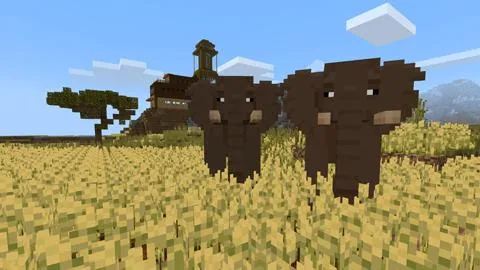
In the Eastern Panhandle of the Okavango Delta in northern Botswana, roughly 15,000 people share land and water resources with an equal number of elephants. When wild elephants raid crops, they endanger the livelihoods and food supply of subsistence farming communities. This lesson guides learners to examine both ecological and human perspectives to understand the complex realities of land-use conflict.
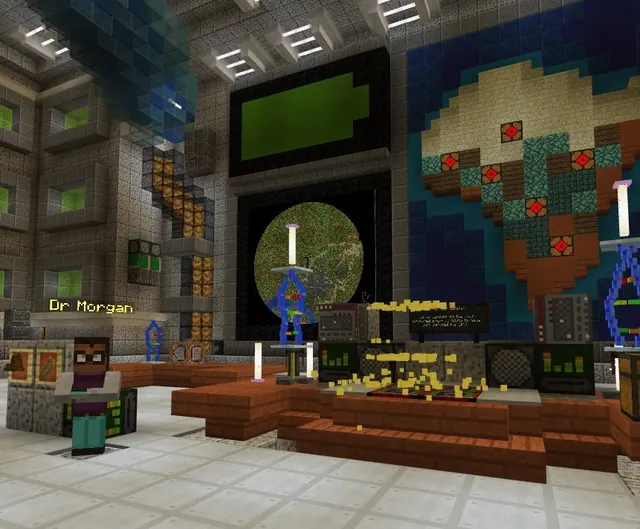
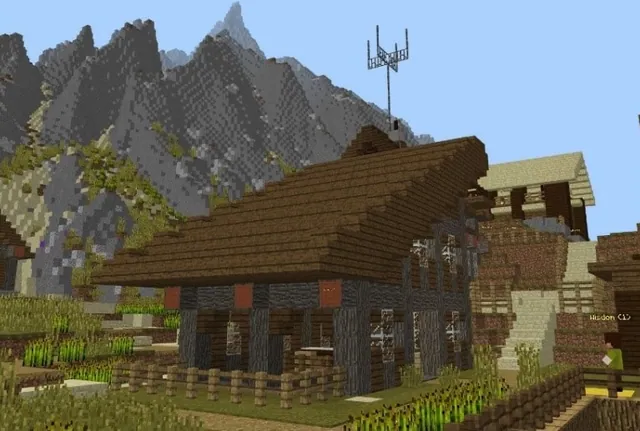
Using the We Are The Rangers world two map, students explore an outpost, interact with local villagers facing elephant encounters, and study an adapted village using deterrents such as bee hives and chili plants. Working from these real-world strategies, students plan, sketch, and construct their own farm settlements near water where humans and wildlife can safely coexist.
Learning objectives
By the end of this lesson students will be able to:
- Define subsistence farming and explain why crop raiding causes severe land-use conflict.
- Evaluate human-wildlife conflict from both the elephant and the human perspective.
- Identify coexistence strategies used in communities, including bee hives, chili deterrents, and village layouts.
- Design and build a farm and village settlement in Minecraft that minimizes conflict with elephants.
Blocks and items used in this lesson


Key vocabulary
- Subsistence farming
- A farming practice where families grow food primarily to feed themselves rather than selling it for profit.
- Land-use conflict
- Disagreements or clashes that occur when humans and wildlife compete for the same land, space, or water resources.
- Crop raiding
- Wild animals entering agricultural fields to eat or trample crops grown by humans.
- Coexistence
- Living together in the same area peacefully without causing mutual harm.
Before class
Lesson sequence
- Hook and Perspective Discussion
Show the Ecoexist map of northern Botswana and explain that 15,000 elephants share the area with 15,000 people. Introduce subsistence farming and prompt students to imagine surviving solely on garden crops, considering seasonal shortages. Read the Joyce Poole quote to illustrate the fear and economic hardship farmers face during nocturnal elephant raids.
- Minecraft Exploration: First Village
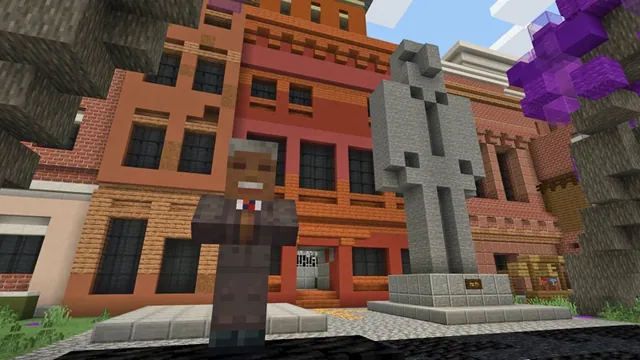
Have students load into the Village by the Lake in We Are The Rangers map two. Students talk to personnel at the Ranger outpost and interview villagers to discover why people and elephants settle near the same water sources, what actions elephants take that cause distress, and how human presence impacts elephant behavior.
- Field Study: The Coexistence Village
Direct students to travel to the second village on the map, which has actively adopted coexistence methods. Students observe the settlement layout and record specific deterrent methods, such as chili plant borders and bee hives, that reduce conflict with elephants.
- Design and Build a Coexisting Settlement
Students sketch an original settlement plan balancing human farming needs with elephant safety near a water source. Once planned, learners build their farms and village in a designated area of the Minecraft map using defensive features inspired by their research.
- Research and Reflection
Conclude with a class debrief on the effectiveness of student designs. Direct learners to explore online conservation technology resources, such as United for Wildlife, WildLabs, or the ZSL site, to review ongoing field initiatives.
Assessment: success criteria
- Student accurately describes the impact of elephant crop raiding on a subsistence farming family.
- Student identifies at least two non-lethal deterrent methods observed in the second village, such as chili plants or bee hives.
- Student sketches and constructs a settlement in Minecraft that incorporates intentional features to protect crops and respect wildlife paths.
- Student explains both human needs and elephant behaviors when presenting their built solution.
Differentiation
Provide a graphic organizer that lists specific non-lethal deterrents seen in the second village so students can check them off before planning their build.
Have students research conservation technologies on the WildLabs or ZSL websites and incorporate simulated technical monitoring devices into their Minecraft build.
Knowledge check
5 questions to check understanding after the lesson. Tap an answer to see if it is right; the score appears at the end.
1Approximately how many elephants and people share the Eastern Panhandle of the Okavango Delta in northern Botswana?
Answer: B. The source states that the region is home to an estimated 15,000 elephants and 15,000 people living within the Delta region.
2Why is crop raiding especially devastating for subsistence farmers?
Answer: A. Subsistence farmers eat the food they grow directly, so losing crops threatens their family's food security and survival.
3Which two deterrent methods are specifically noted in the second village to deter elephants?
Answer: C. The source identifies chili plants and bee hives as solutions discovered by students visiting the second village.
4Where in the Minecraft world are students directed to build their new coexisting settlement?
Answer: C. Students are instructed to design their village and farms in an area of the map near water to learn coexistence.
5Which conservation technology platforms does the source recommend for further student research?
Answer: A. The source explicitly invites students to research conservation technology on the United for Wildlife, WildLabs, and ZSL websites.
Resources
Part of the Climate Rangers curriculum
This is lesson 3 of 5 in Climate Rangers.
Frequently Asked Questions
Which Minecraft world file is required for this lesson?
This lesson requires the We Are The Rangers world two map, which contains the Ranger outpost, the lakeside village, and the coexistence demonstration village.
How should students balance human safety and animal welfare in their designs?
Encourage learners to focus on non-lethal barriers and deterrents such as bee hives, chili borders, and spatial layout planning, ensuring both villagers' crops and wildlife habitats are protected.
Adapted from Humans and Elephants by Minecraft Education on Minecraft Education, last updated Dec 15, 2022. This classroom version, the timings and the quiz were written by 9Minecraft Education.