- Type
- Lesson plan
- Topics
- Art and DesignHistory
- Ages
- Ages 6-13
- Duration
- 1 hour
- Level
- Beginner
How did classical architectural styles from ancient Egypt, Greece, and Rome inspire Sir John Soane and continue to influence buildings today?
Overview
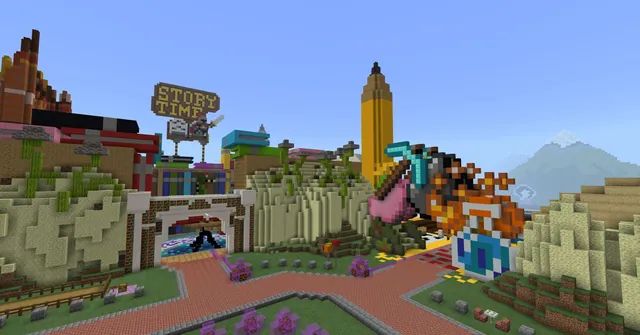
Sir John Soane was one of Britain's most notable architects, drawing lifelong inspiration from the art and building styles of antiquity. In this lesson, students explore Soane's preserved London museum to investigate how classical cultures, specifically ancient Egypt, Greece, and Rome, shaped his personal collection and influenced architectural history.
Using Minecraft Education, learners follow Soane's dog, Fan, to examine museum artefacts that serve as time portals. Through interactive tasks—painting Egyptian columns, assembling Greek Doric pillars, and carving Roman Corinthian marble—students analyze ancient engineering before applying these principles to create their own structures in the Design Studio.
Learning objectives
By the end of this lesson students will be able to:
- Investigate Sir John Soane's Museum to discover historical artefacts and architectural collections.
- Compare architectural columns and decorative methods used in ancient Egypt, Greece, and Rome.
- Solve hands-on building challenges involving colour matching, pillar arrangement, and stone chiselling.
- Construct an original architectural design inspired by classical historical styles.
Blocks and items used in this lesson


Key vocabulary
- Doric Order
- An early classical Greek architectural style characterized by sturdy, plain columns and clean lines.
- Corinthian
- An elaborate classical architectural style known for ornate, highly decorative column capitals.
- Artefact
- An object made or used by humans in the past that provides historical evidence of a culture.
- Sarcophagus
- A stone coffin often adorned with carvings and inscriptions, such as the museum's Seti sarcophagus.
Before class
Lesson sequence
Suggested timing: about 60 minutes in total.
- Museum Arrival and Exploration10 min
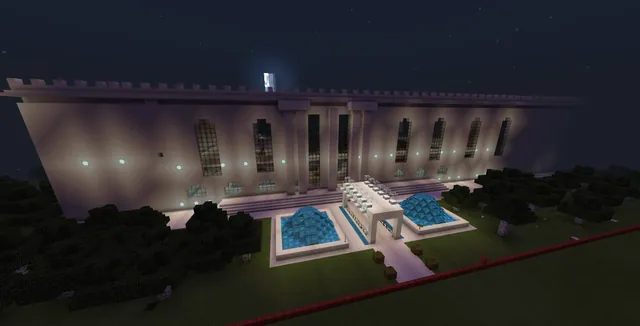
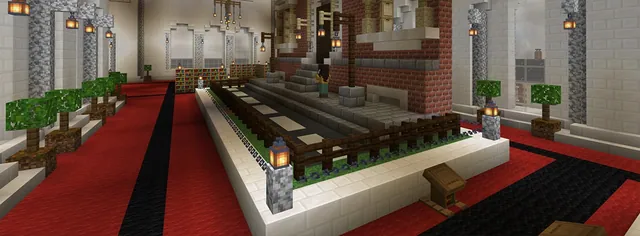
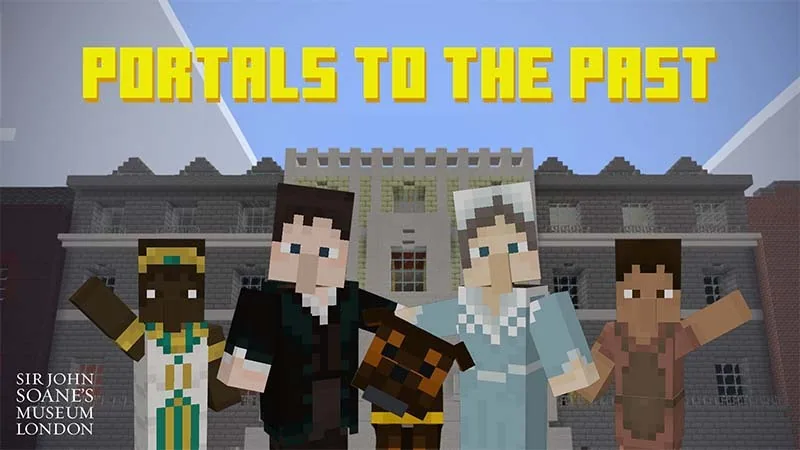
Students spawn outside Sir John Soane's Museum and meet their guide, Fan the dog. Once inside, they explore the collection, meet non-player characters John Soane and Eliza Soane, and observe how historical antiquities inspired Soane's work.
- Time Travel Architectural Challenges25 min
Guided by Fan, students interact with three portal artefacts in any order to complete civilization-specific tasks:
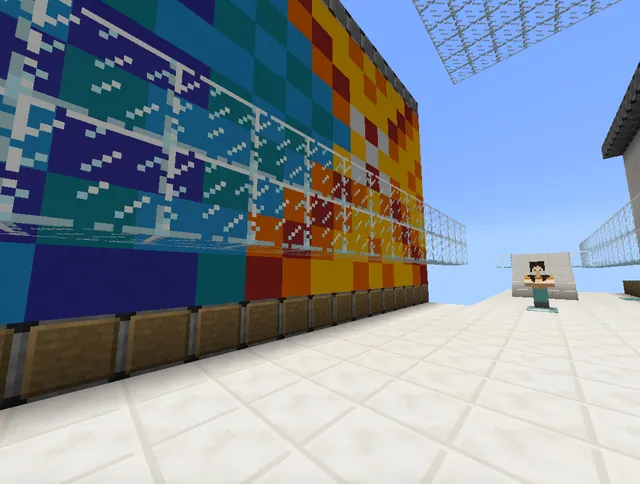
- Egypt (Seti's Sarcophagus): Take a colour quiz and right-click with dyes to paint Karnak Temple pillars in authentic stripes.
- Greece (The Cawdor Vase): Solve pillar puzzles at the Temple of Zeus by picking up and placing Doric column sections in the correct order.
- Rome (Apollo Belvedere): Travel to the Pantheon and left-click uncarved marble with the roundel tool to chisel Corinthian columns.
- Design Studio Creation20 min
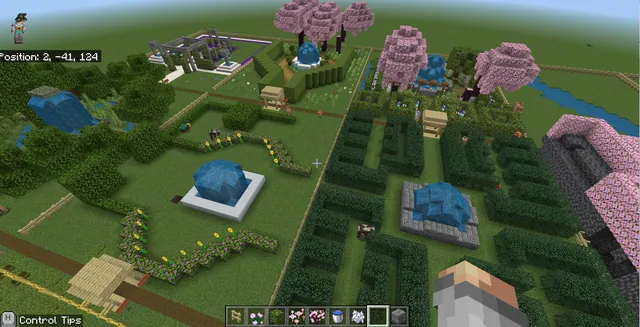
After completing all three time-travel destinations, students enter the Design Studio. Using the techniques and motifs observed during their journey, students build their own original architectural structure combining Egyptian, Greek, or Roman elements.
- Reflection and Documentation5 min
Students document their final creation and challenge results using the Camera and Book & Quill, writing brief notes on how classical styles shaped their build.
Assessment: success criteria
- Portfolio documentation featuring photos of completed challenges in Egypt, Greece, and Rome.
- Written Book & Quill entries that compare column features across the three civilizations.
- A completed structure in the Design Studio demonstrating clear inspiration from classical architecture.
- Contribution to class discussion explaining how ancient building techniques appear in modern designs.
Differentiation
Allow learners to work in pairs on a single computer and follow Fan through one historical portal at a time.
Encourage students to integrate distinct architectural features from all three civilizations into their Design Studio build.
Knowledge check
5 questions to check understanding after the lesson. Tap an answer to see if it is right; the score appears at the end.
1Who acts as the student's guide outside and throughout Sir John Soane's Museum?
Answer: A. Fan the dog meets students outside the museum and guides them through the adventure.
2Which artefact serves as the portal to the Temple of Zeus in ancient Greece?
Answer: C. The Cawdor Vase is the specific portal artefact that sends players to ancient Greece.
3What interactive task must students complete at the Karnak Temple in ancient Egypt?
Answer: B. In Egypt, players solve a colour quiz and use dye to paint stripes onto massive pillars.
4How do students chisel Roman Corinthian columns at the Pantheon?
Answer: D. The Roman activity requires players to use the roundel tool to left-click and carve marble elements.
5Where do students construct their own classical creation after visiting all three civilisations?
Answer: B. After visiting Egypt, Greece, and Rome, students proceed to the Design Studio to build their final project.
Resources
- Teacher Pack - Soane's Portals to the Past gameTeacher Pack for Soane's Portals to the Past game
- Lesson worldOpens the world page in Minecraft Education (sign-in with a school account may be needed).
Part of the Cities and Architecture curriculum
This is lesson 6 of 8 in Cities and Architecture.
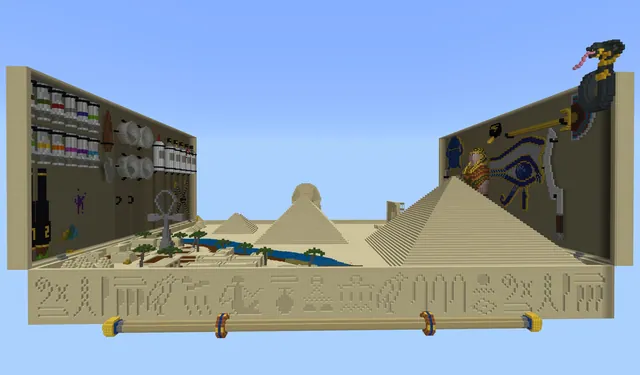
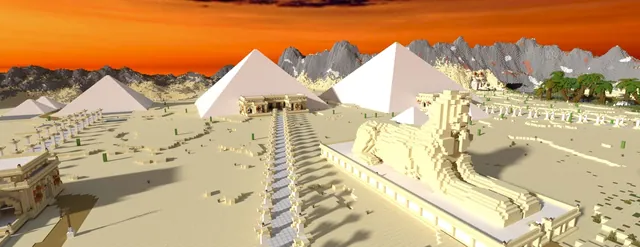
- Egypt Toybox Lesson 1 of 5
- Egypt
- Kyiv: Craft a City Guidebook
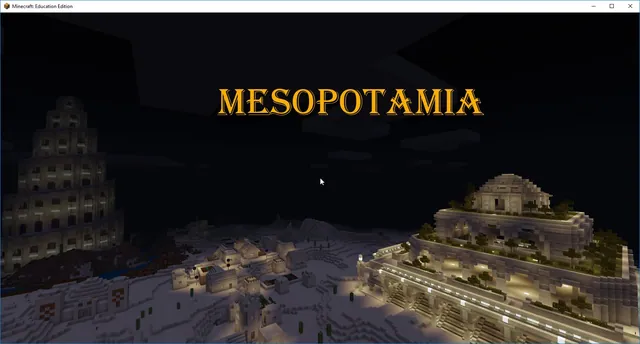
- Mesopotamia
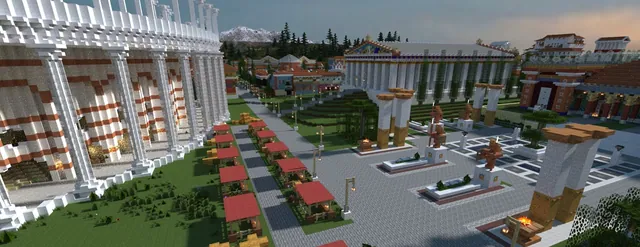
- Rome
- Soane's Portals to the Past
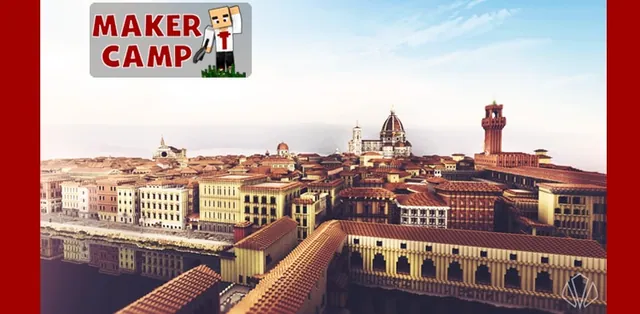
- The City Of Florence (Italy)
- Washington D.C.
Frequently Asked Questions
Do students need to visit the ancient civilizations in a set sequence?
No. Once inside the museum, students can interact with Seti's Sarcophagus, the Cawdor Vase, or the Apollo Belvedere statue to visit Egypt, Greece, or Rome in whatever order they prefer.
What recording tools should students use during their exploration?
Students should use the in-game Camera and Book & Quill to capture screenshots of completed pillar puzzles and record written observations comparing the different architectural orders.
Adapted from Soane's Portals to the Past by Block Builders on Minecraft Education, last updated Mar 3, 2026. This classroom version, the timings and the quiz were written by 9Minecraft Education.