How can an oil-dependent metropolis transition into a renewable energy leader without disrupting urban life and infrastructure?
Overview
Modern urban centers face an urgent need to transition away from fossil fuels toward sustainable energy infrastructure. In this lesson, students investigate five major renewable energy solutions: tidal, wind, biofuel, solar, and geothermal power. They evaluate how each method operates and determine where it fits best within an urban environment while considering daily community life, transport systems, and visual appeal.
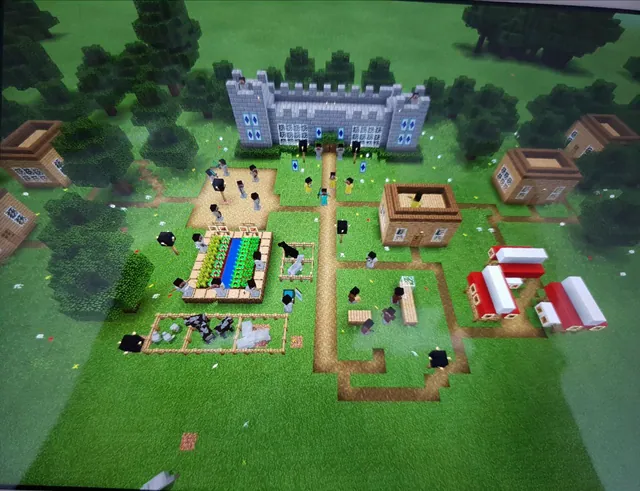
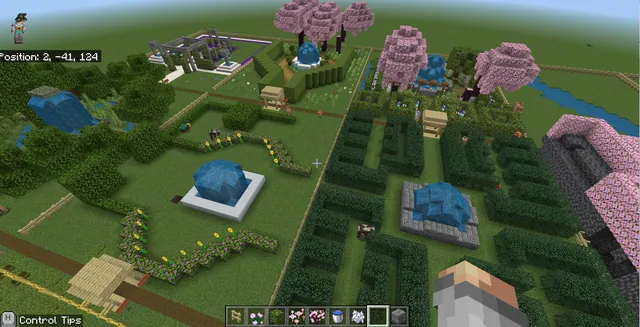
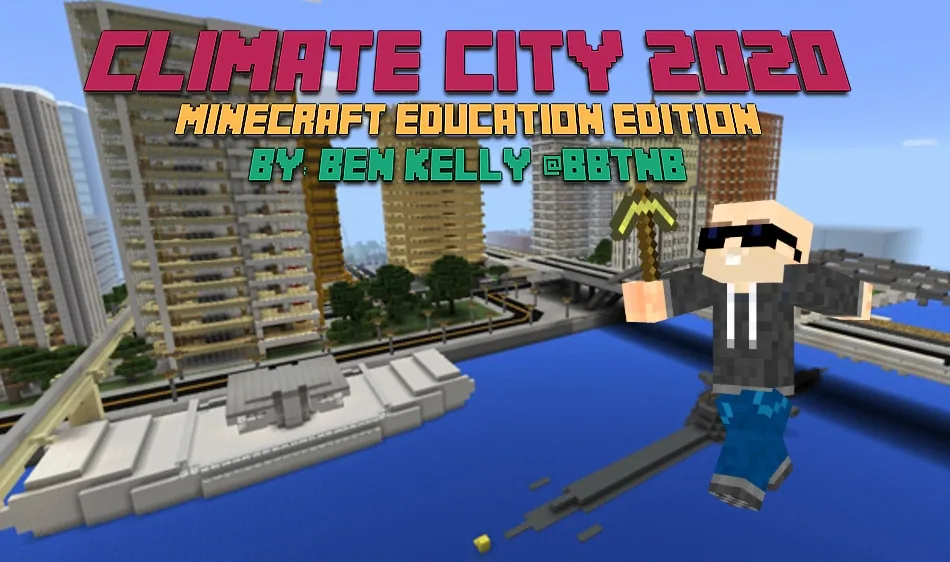
Using a Minecraft city environment such as CraftMania City or Capitol City, student teams survey the terrain, propose an installation plan to the teacher serving as the city mayor, and construct their approved energy infrastructure. Once the clean grid is fully established across the map, learners collaborate to decommission the offshore oil rigs and tour the transformed sustainable metropolis.
Learning objectives
By the end of this lesson students will be able to:
- Analyze the operational conditions and ideal site locations for five alternative energy types: tidal, wind, biofuel, solar, and geothermal.
- Pitch a site-specific renewable energy proposal to the city mayor for review and funding approval.
- Construct functional clean energy infrastructure within the city while protecting transportation and aesthetic beauty.
- Evaluate the overall impact of clean power adoption and decommission the coastal oil rigs.
Blocks and items used in this lesson


Key vocabulary
- Alternative Energy
- Power generated from renewable sources that do not deplete natural resources or rely on fossil fuels.
- Geothermal Energy
- Heat harvested from beneath the Earth's surface to generate electricity or direct warmth.
- Biofuel
- Fuel derived directly from living or recently harvested organic matter and agricultural waste.
- Tidal Energy
- Renewable power generated by the natural rise and fall of ocean tides.
- Decommission
- To safely take an industrial facility, such as an offshore oil rig, out of active service.
Before class
Lesson sequence
- Energy Research and Site Survey
Introduce the challenge of transforming CraftMania City from an oil-reliant center into a green metropolis. Have student teams investigate solar, wind, tidal, geothermal, and biofuel power, analyzing how each functions and where it would be most effective within the game world.
- Mayoral Pitch
Teams identify suitable locations in the city for their assigned or chosen energy solution. Each group presents a formal pitch to the teacher, who acts as the city mayor, demonstrating how their build supplies energy while protecting local transport networks, public spaces, and city aesthetics.
- Clean Energy Construction
Upon receiving municipal approval and virtual project funding from the mayor, students construct their energy facilities. Teams must carefully integrate their structures into the city fabric to minimize disruption to roadways and neighborhood beauty.
- Decommissioning and City Tour
Once all alternative energy systems are operational, students travel offshore to officially shut down the coastal oil rigs. The class then conducts a walking tour across the city to review each installation and observe how the metropolitan grid has evolved.
- Local Reflection
Students evaluate their real-world hometown or city, scoring its current adoption of clean energy systems and discussing ways community members can encourage greener municipal planning.
Assessment: success criteria
- Student accurately justifies the placement of a chosen renewable energy technology based on geographic and physical requirements.
- Team delivers a coherent pitch to the mayor addressing community impact, aesthetics, and energy delivery.
- Completed Minecraft installation provides clean energy without obstructing city transport or civic areas.
- Student articulates why transitioning away from oil is essential for urban sustainability during the final reflection.
Differentiation
Assign a specific energy type with a visual reference guide showing typical Minecraft design patterns for that technology.
Have advanced learners draft a formal civic recommendation report evaluating their real-world municipality's clean energy transition.
Knowledge check
5 questions to check understanding after the lesson. Tap an answer to see if it is right; the score appears at the end.
1Which ocean-based renewable energy source is specifically highlighted in this lesson plan?
Answer: B. Tidal energy is one of the five specific renewable solutions students study alongside wind, biofuel, solar, and geothermal power.
2What must students do before they begin building their clean energy structures in Minecraft?
Answer: A. Teams must present their proposed design and site selection to the mayor to earn permission and funding before building.
3What action do students take once the city's alternative energy grid is fully operational?
Answer: C. After the clean energy installations are complete, students shut down the coastal oil rigs to complete the city's transition.
4When designing their energy builds, what constraint must students consider regarding the city?
Answer: D. The lesson requires students to integrate their energy builds without harming infrastructure, visual appeal, or civic life.
5In the extension activity, what are students encouraged to evaluate?
Answer: A. The extension prompts learners to investigate their own real-world community and assess its adoption of green energy solutions.
Resources
Frequently Asked Questions
What role does the teacher play during the student activity?
The teacher acts as the city mayor, evaluating student proposals, asking critical questions about community impact, and granting official approval and project funding before construction begins.
Can students work in groups or should this be an individual assignment?
The lesson accommodates both collaborative teams and individual students, though working in small teams makes dividing research across multiple energy types and managing large builds much easier.
Adapted from Climate City 2020 by Benjamin Kelly on Minecraft Education, last updated Jan 24, 2017. This classroom version, the timings and the quiz were written by 9Minecraft Education.