- Type
- Lesson plan
- Subject
- ScienceArt, Music & Design
- Ages
- Ages 11-18
- Duration
- about 60 min (suggested)
- Skills
- CollaborationCreativity
How can we systematically organize chemical elements based on their in-game characteristics and real-world properties?
Overview
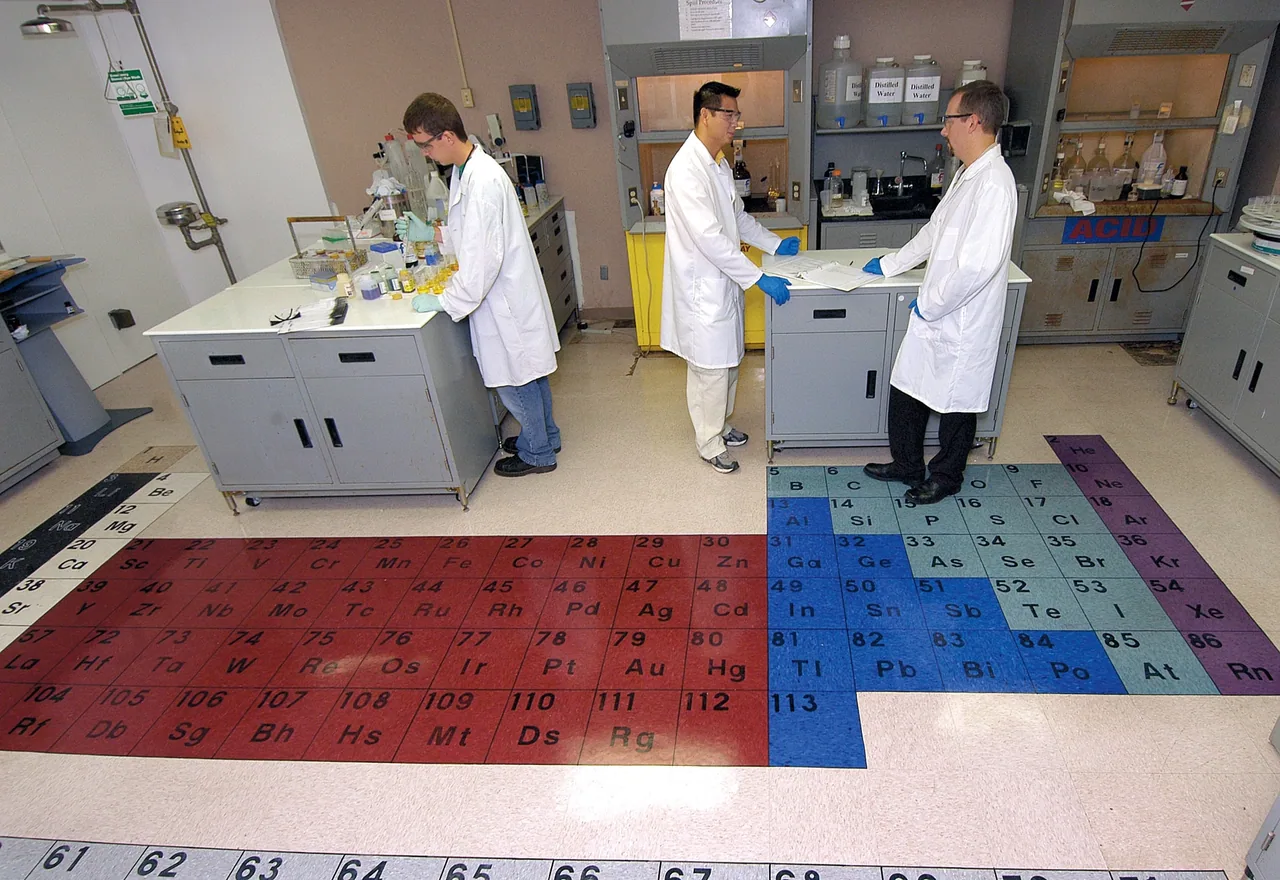
Chemical elements possess distinct physical and chemical traits that determine how they are classified and arranged, traditionally organized by atomic number and electron structure. While the conventional periodic table groups elements with shared chemical behaviors in columns, elements can also be organized through alternative frameworks such as three-dimensional models or transport-style charts.
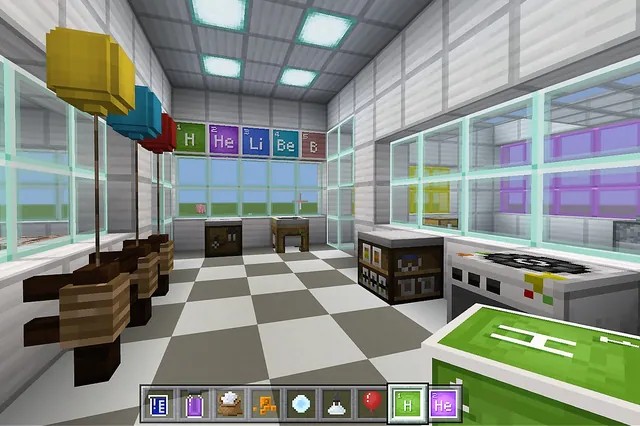
In Minecraft Education, students use the Element Constructor and element blocks to observe key attributes like atomic number, mass, and regional block colors. Learners then design and construct their own customized element tables in the game, categorizing elements based on game utility, block appearance, and researched real-world scientific data.
Learning objectives
By the end of this lesson students will be able to:
- Identify element characteristics including atomic number, mass, and block color using Minecraft chemistry tools.
- Categorize elements using both in-game attributes and researched real-world chemical or physical properties.
- Design and build a custom representation or table of elements within Minecraft.
- Evaluate different organizational systems to explain how well they group elements with related characteristics.
Blocks and items used in this lesson
 Element Constructor
 Hydrogen (Element 1)
 Helium (Element 2)
 Carbon (Element 6)
 Oxygen (Element 8)
 Nitrogen (Element 7)
 Iron (Element 26)
Key vocabulary
- Atomic Number
- The number of protons found in an element, used to arrange elements in the standard periodic table.
- Electron Configuration
- The arrangement of electrons in an atom, which influences an element's chemical properties and column placement.
- Isotope
- A variation of a chemical element that possesses a different mass while sharing the same atomic number.
- Element Constructor
- A Minecraft station that allows players to build and view elements by adjusting subatomic particles.
Before class
Lesson sequence
Suggested timing: about 60 minutes in total.
- Introduction to Element Organization10 min
Review how the traditional periodic table arranges elements by atomic number and electron configuration to group elements with similar chemical properties. Introduce alternative classification concepts, such as three-dimensional arrangements or transport-style maps.
- In-Game Element Investigation15 min
Have students use the Element Constructor and element blocks to determine atomic numbers and masses. Instruct them to observe the block colors, which indicate the regions of the periodic table each element inhabits.
- Building Custom Element Tables25 min
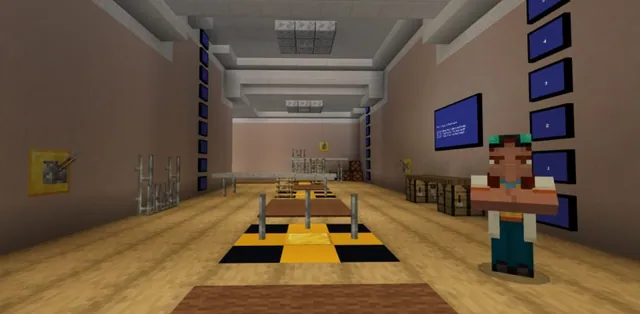
Students research real-world chemical and physical properties of selected elements and combine these findings with Minecraft attributes, such as block color, isotopes, or in-game usefulness. Working collaboratively, they build their own customized element table in the game world.
- Presentation and Evaluation10 min
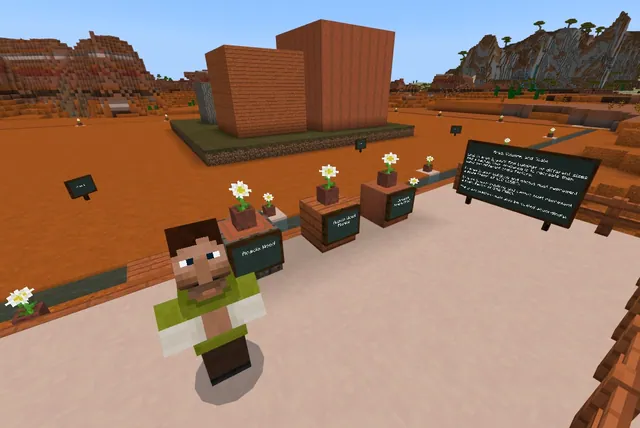
Teams tour each other's element tables to evaluate how systematically the competing designs organize elements and compare their custom models to the standard periodic table.
Assessment: success criteria
- Identify the atomic number, mass, and periodic table region for selected elements using Minecraft blocks.
- Integrate researched real-world physical or chemical properties into a working classification scheme.
- Construct a coherent in-game element table based on clearly defined organizational criteria.
- Explain how elements within the same group share related characteristics.
Differentiation
Provide a curated list of common elements and encourage students to sort them primarily by block color and atomic number.
Challenge students to construct an advanced three-dimensional periodic structure or transport-style element map that incorporates electron configurations.
Knowledge check
5 questions to check understanding after the lesson. Tap an answer to see if it is right; the score appears at the end.
1How are elements ordered in the traditional periodic table?
Answer: B. The lesson explains that the periodic table is ordered by atomic number and electron configuration.
2What does an element's atomic number correspond to?
Answer: A. The text states that atomic number correlates with the number of protons in the element.
3What determines the color of an element block in Minecraft?
Answer: D. Element blocks in Minecraft are colored according to the region of the periodic table they inhabit.
4Which Minecraft chemistry station allows students to discover an element's atomic number and mass?
Answer: B. Students find the atomic number and mass of elements using the Element Constructor.
5Which of the following is an alternative organizational design mentioned in the lesson?
Answer: A. The source highlights alternative models such as three-dimensional tables and transport-style maps.
Resources
Part of the Chemistry curriculum
This is lesson 3 of 12 in Chemistry.
- Atomic Structures and Isotopes
- Build A Molecule
- Characterizing Elements
- Chemical Reactions
- Chemistry All Around You
- Exploring Chemistry Safely
- Properties of Matter
- Science in Minecraft
- Structures, Models, Molecules
- The Scientific Method
- Types of Chemical Reactions
- What is the world made of?
Frequently Asked Questions
What tools do students need inside Minecraft to complete this activity?
Students need access to the Element Constructor station and element blocks to observe atomic numbers, masses, and region colors.
What criteria can students use to organize their custom element tables?
Students may categorize elements by atomic number, block color, isotopes, in-game utility, or researched real-world physical and chemical properties.
Adapted from Characterizing Elements by Minecraft Education on Minecraft Education, last updated Jul 21, 2025. This classroom version, the timings and the quiz were written by 9Minecraft Education.