- Type
- Lesson plan
- Ages
- Ages 11-18
- Duration
- about 50 min (suggested)
How does temperature affect the speed and intensity of a chemical reaction?
Overview
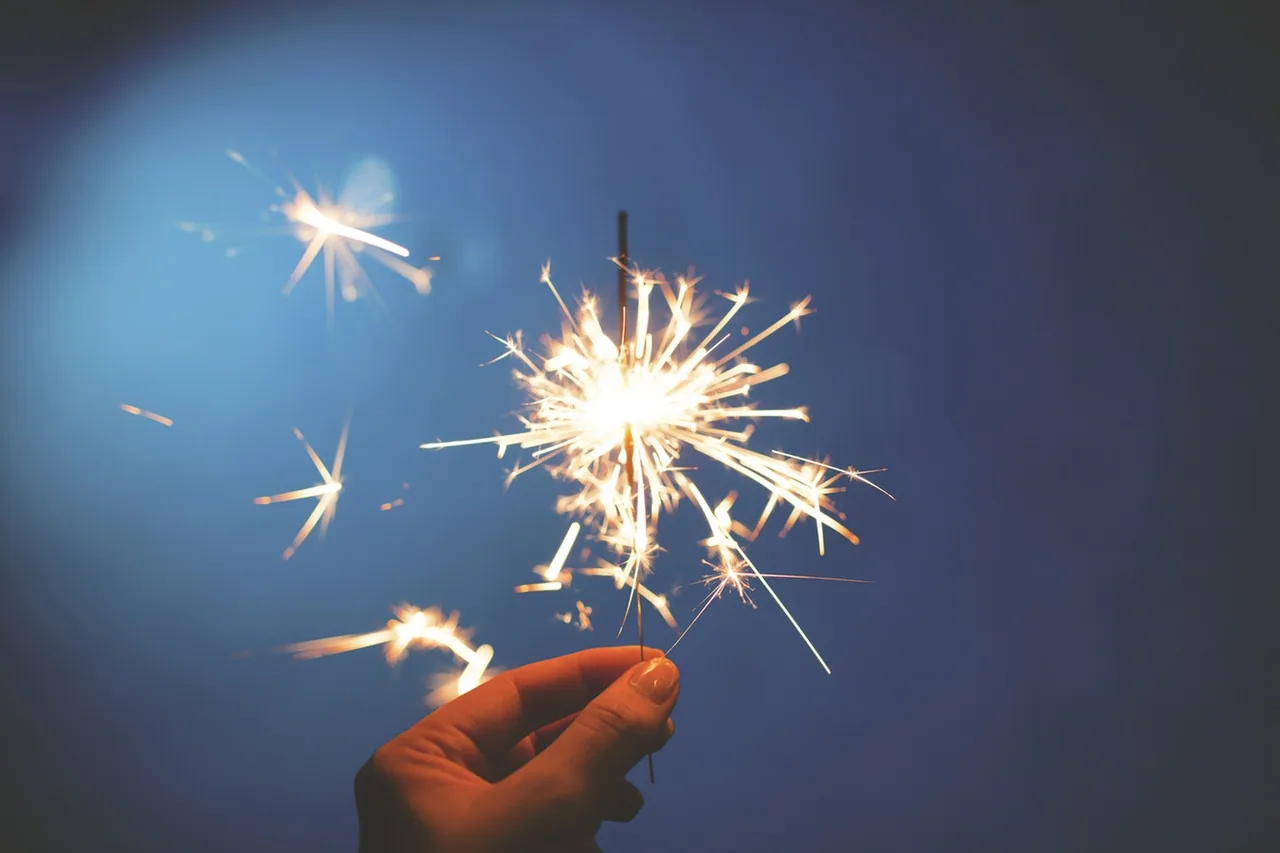
For chemical reactions to take place, reactant molecules must physically collide. Increasing the temperature causes molecules to move more quickly and collide with greater force, which accelerates the chemical reaction. In chemiluminescent reactions such as those inside glow sticks, the brightness of the light emitted serves as a direct indicator of the speed of the reaction.
Students begin by crafting glow sticks in Minecraft using luminol to observe how chemical processes can generate light. They then carry out a hands-on investigation using real glow sticks submerged in bottles of water across a range of temperatures, discovering that heat produces a brighter glow that depletes reactants more rapidly.
Learning objectives
By the end of this lesson students will be able to:
- Explain how molecular collisions and temperature changes determine the rate of a chemical reaction.
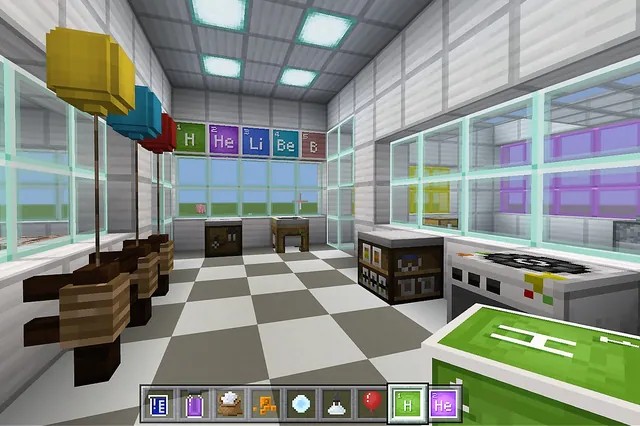
- Craft glow sticks in Minecraft using luminol to model light-emitting reactions.
- Measure and record water temperatures across multiple experimental setups.
- Correlate the brightness and lifespan of real glow sticks with temperature.
Blocks and items used in this lesson

Key vocabulary
- Reactants
- The starting substances in a chemical reaction that collide and interact.
- Luminol
- A chemical used in Minecraft to construct glow sticks that emit light.
- Hydrogen peroxide
- A reactant kept inside an internal glass tube within a real glow stick.
- Diphenyl oxalate
- A chemical reactant in glow sticks that releases energy when mixed with hydrogen peroxide.
Before class
Lesson sequence
Suggested timing: about 50 minutes in total.
- Minecraft Introduction10 min
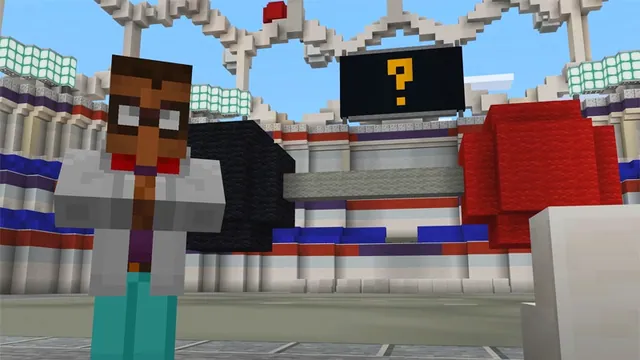
Introduce the concept that chemical reactions require reactant molecules to collide. Have students open Minecraft and craft glow sticks using luminol, discussing how certain chemical reactions give off light.
- Preparing the Bottles10 min
Give each student a bottle. Have students mix warm water (up to 50 degrees Celsius) and ice-cold water to establish a broad spread of temperatures across the class. Students measure the water with a thermometer and write the temperature onto the bottle.
- Acclimation and Hypotheses10 min
Distribute unactivated glow sticks. Students submerge their sticks into their bottles for five minutes without snapping them. While waiting, ask students how light output indicates reaction speed and prompt them to predict what will happen in warm versus cold water.
- Activation and Ordering10 min
Instruct students to remove the glow sticks, snap them to break the internal glass vial, shake them to mix the reactants, and place them back into the bottles. Have the class arrange the bottles in a line from dimmest to brightest.
- Discussion and Comparison10 min
Review the line of bottles. Students should observe that the bottles are ordered by temperature, confirming that higher heat causes faster reactions and brighter light, while colder sticks react more slowly and last longer.
Assessment: success criteria
- Student successfully crafts a glow stick in Minecraft using luminol.
- Student accurately measures water temperature and records it on their bottle.
- Student correctly identifies that warmer temperatures cause molecules to collide faster.
- Student correctly explains why cold glow sticks glow dimmer but last longer than warm ones.
Differentiation
Assist learners with reading the thermometers accurately and help them snap and shake the glow sticks firmly.
Store extra glow sticks in a freezer overnight and have students place them alongside room-temperature sticks in warm water the next day to analyze reactant preservation.
Knowledge check
5 questions to check understanding after the lesson. Tap an answer to see if it is right; the score appears at the end.
1What must happen between molecules for a chemical reaction to occur?
Answer: A. Reactant molecules must physically collide with each other to undergo a chemical reaction.
2What effect does higher temperature have on the molecules in a reaction?
Answer: C. Higher temperatures increase molecular motion, causing faster and harder collisions.
3Which chemical is used to craft glow sticks in Minecraft?
Answer: B. In Minecraft Education, glow sticks are crafted using luminol.
4How does a glow stick in warm water behave compared to one in cold water?
Answer: B. Warm sticks react more rapidly, producing brighter light while exhausting reactants sooner.
5Why is a glow stick stored in a freezer brighter the next morning when placed in warm water?
Answer: B. Freezing almost halts the reaction, preventing reactants from being used up overnight.
Part of the Chemistry curriculum
This is lesson 4 of 12 in Chemistry.
- Atomic Structures and Isotopes
- Build A Molecule
- Characterizing Elements
- Chemical Reactions
- Chemistry All Around You
- Exploring Chemistry Safely
- Properties of Matter
- Science in Minecraft
- Structures, Models, Molecules
- The Scientific Method
- Types of Chemical Reactions
- What is the world made of?
Frequently Asked Questions
What safety precautions are required for the water temperature?
Warm water should not exceed 50 degrees Celsius to ensure students can handle the bottles safely without risk of burns.
Is a custom world file needed to craft glow sticks in Minecraft?
No special world download is required. Glow sticks can be crafted in any standard Minecraft world that has Chemistry features enabled.
Adapted from Chemical Reactions by Minecraft Education on Minecraft Education, last updated Jul 21, 2025. This classroom version, the timings and the quiz were written by 9Minecraft Education.