- Type
- Lesson plan
- Grade
- Primary (Grades 3-5)
- Ages
- Ages 8-10
- Duration
- 1 hour
- Level
- Intermediate
Why is it important to understand and trace code before running it in a computer program?
Overview
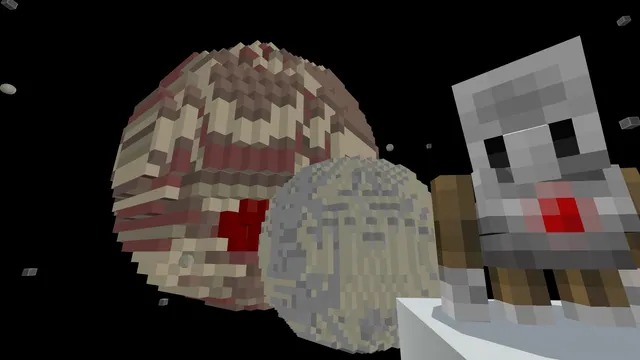
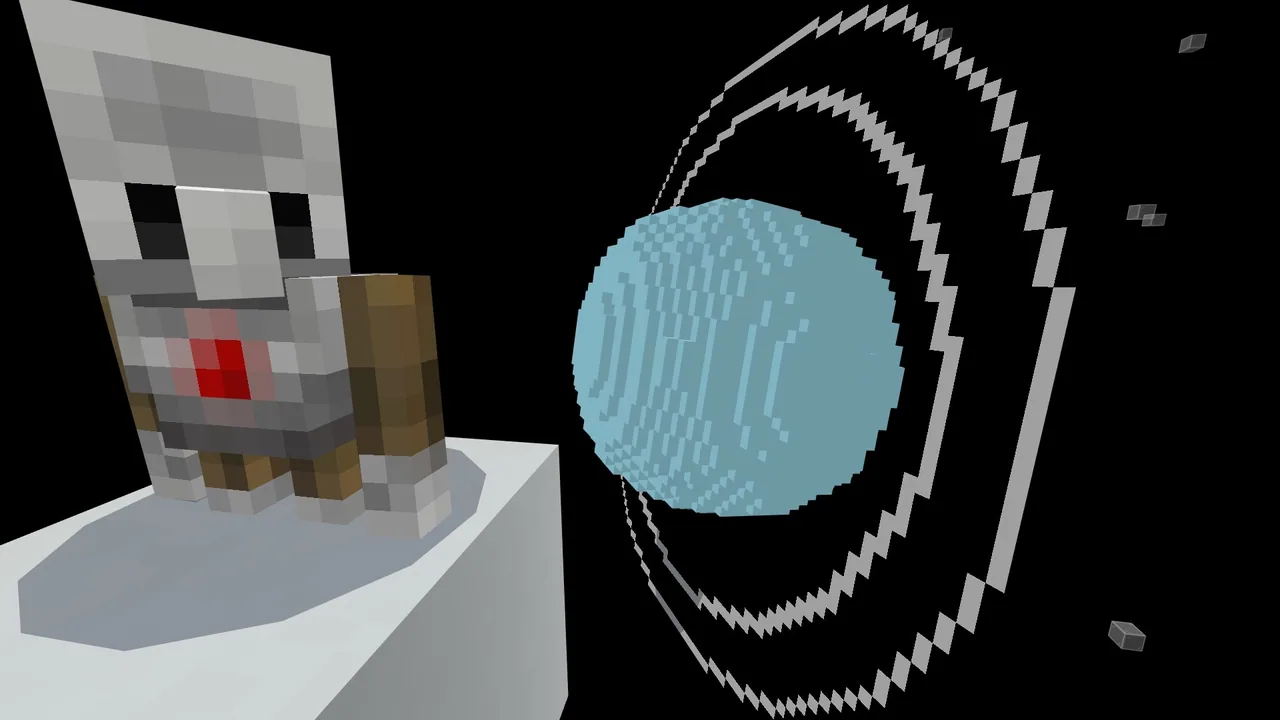
In this flipped computer science lesson, learners travel through the outer solar system to explore the rings of Uranus and harvest ore on Neptune's moon, Triton. Instead of building code from scratch, students practice reading comprehension for programs by evaluating existing code blocks before executing them.
Using a downloadable Minecraft world alongside printed or digital reference sheets, learners analyze snippets of instructions to predict their outcomes. Because students only get a single attempt to choose the correct solution, they must carefully trace code sequence and practice persistence when working through computational challenges.
Learning objectives
By the end of this lesson students will be able to:
- Analyze pre-written code snippets to identify which commands achieve target tasks
- Test existing code blocks within the Minecraft environment
- Explain the roles of correct sequencing and persistence in problem-solving
- Develop a thoughtful computer science mindset by predicting outcomes prior to execution
Blocks and items used in this lesson


Key vocabulary
- Code Snippet
- A short section of program instructions designed to complete a small, specific task.
- Sequencing
- Putting instructions in the exact step-by-step order needed to solve a problem correctly.
- Persistence
- Continuing to try and work through challenges even when code fails or tasks are difficult.
- Flipped Lesson
- A learning structure where students analyze, evaluate, and test existing material rather than watching teacher demonstrations first.
Before class
Lesson sequence
Suggested timing: about 60 minutes in total.
- Warm-up and Introduction10 min
Introduce the flipped format of the session: explain that instead of writing code from scratch, learners will read code blocks carefully and make deliberate choices. Review the significance of sequencing and staying persistent when tackling difficult problems.
- Activity 1: Uranus’ Rings20 min
Direct students to open the world file and navigate to the rings of the ice giant Uranus. Working with their Coding Snippets handout, students inspect the structure of the rings, study the provided code options, and select the exact snippet needed to meet the objective on their single attempt.
- Activity 2: Neptune’s Moon, Triton20 min
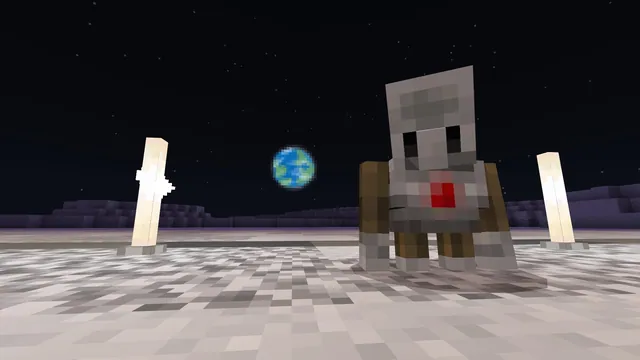
Transition students to Neptune's moon, Triton, to collect ore samples. Students examine new code segments, trace how each command sequence behaves, and trigger the chosen snippet to gather materials for their collection.
- Reflection and Assessment10 min
Gather the class to discuss key programming habits using the assessment questions. Emphasize why reviewing code before pressing run prevents errors, and invite students to share what they noticed about the outer planets.
Assessment: success criteria
- Student accurately pairs target tasks with the correct pre-written code snippet on their handout.
- Student successfully completes the in-world challenges on Uranus' rings and Triton.
- Student articulates why sequencing and reading code prior to execution prevents errors.
- Student defines persistence in the context of debugging and completing computing tasks.
Differentiation
Allow students to work in pairs and talk through the code line by line using the printed handout before committing to their choice.
Have early finishers complete the optional Internet-based Planet Research Template to investigate the scientific properties of Uranus and Neptune.
Knowledge check
5 questions to check understanding after the lesson. Tap an answer to see if it is right; the score appears at the end.
1What makes this particular coding lesson different from typical lessons?
Answer: B. The source specifies that the lesson is flipped, requiring students to analyze and select pre-written code snippets.
2How many chances do students have to select the specific code to complete each task?
Answer: C. The guiding ideas note that students must select the specific code to accomplish the task and only have one chance.
3Which celestial location do students visit to gather ore for their collection?
Answer: D. The source states that students head over to Neptune's moon, Triton, to collect ore.
4Why is it important to review and understand code snippets before running them?
Answer: A. Careful analysis ensures that the commands are in the correct sequence before using the single allowed execution attempt.
5What additional requirement must be met if a teacher chooses to run the optional Planet Research activity?
Answer: B. The source notes that the planet research lesson does not take place in Minecraft, requires Internet connectivity, and takes extra time.
Resources
- Lesson package (.zip)Everything the author attached to this lesson in one download.
- Coding Fundamentals Part 2: Uranus' Rings and Neptune's MoonEDU Guide and Formative Assessment
- Coding Fundamentals Part 2: Uranus' Rings and Neptune's MoonClassroom Presentation
- Coding Fundamentals Part 2: Uranus' Rings and Neptune's MoonStudent Handout
- Coding Fundamentals Part 2: Minecraft Space CenterCurriculum Overview
- Planet Research TemplateUse this lesson plan and student research template if you want to conduct the research portion of this computer science unit.
- Lesson worldOpens the world page in Minecraft Education (sign-in with a school account may be needed).
Part of the Coding Fundamentals curriculum
This is lesson 15 of 17 in Coding Fundamentals.
- Basic Moves and the Agent
- Coding Challenge
- Dinosaur Run
- Earth’s Moon & Mars
- Ganymede (Jupiter's Moon) & Saturn's Rings
- Gray Wolves
- Mercury and Venus
- Minecraft Space Center
- Panda's Protected Habitat
- Polar Bear Rescue
- Revisiting Biomes
- Revisiting Planets
- Sea Turtle Assistance
- The Experiment
- Uranus’ Rings and Neptune's Moon, Triton
- We Need Beets!
- Wild West
Frequently Asked Questions
What materials are necessary to run Activity 1?
Activity 1 requires both the downloadable Minecraft world and the Coding Snippets handout, which can be printed out or provided to students digitally.
Does the optional Planet Research project take place inside Minecraft?
No, the research activity is conducted outside Minecraft, uses an independent research template, and requires an active Internet connection.
How does the single-attempt rule benefit student learning?
Having only one chance encourages students to slow down, trace the execution of each instruction on paper, and think critically about sequencing before executing the program.
Adapted from Uranus’ Rings and Neptune's Moon, Triton by Minecraft Education on Minecraft Education, last updated Feb 4, 2025. This classroom version, the timings and the quiz were written by 9Minecraft Education.