- Type
- Lesson plan
- Grade
- Primary (Grades 3-5)
- Ages
- Ages 8-10
- Duration
- 3 hours
- Level
- Intermediate
How can teams design, test, and debug multiple algorithmic solutions to solve complex planetary coding challenges?
Overview
Students apply the computer science skills developed throughout the Minecraft Space Center unit to complete a multi-day summative challenge. Working collaboratively in teams, students organize their workflow, write pseudocode, and design at least two distinct algorithms for each task to demonstrate mastery of core programming structures.Learning objectives
By the end of this lesson students will be able to:
- Create at least two distinct algorithms to solve each assigned coding task.
- Utilize repeat loops, conditional loops, conditionals, and operators in student code.
- Test and debug programs collaboratively inside a shared Minecraft world.
- Document the development process using pseudocode and present final solutions to peers.
Blocks and items used in this lesson


Key vocabulary
- Algorithm
- A step-by-step list of instructions designed to complete a specific task or solve a problem.
- Pseudocode
- A plain-language outline of a program written before entering actual code.
- Conditional Loop
- A programming structure that repeats actions continuously while or until a condition is met.
- Operator
- A symbol or rule used in code to compare values or combine conditions.
- Debugging
- The process of identifying, testing, and fixing mistakes or errors in code.
Before class
Lesson sequence
Suggested timing: about 180 minutes in total.
- Team Planning and Task Assignment30 min
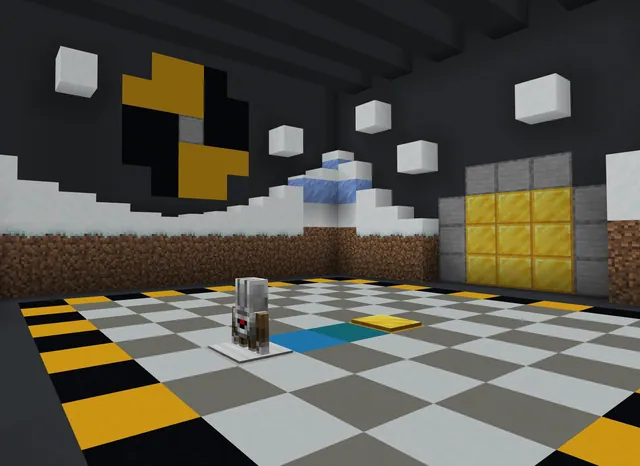
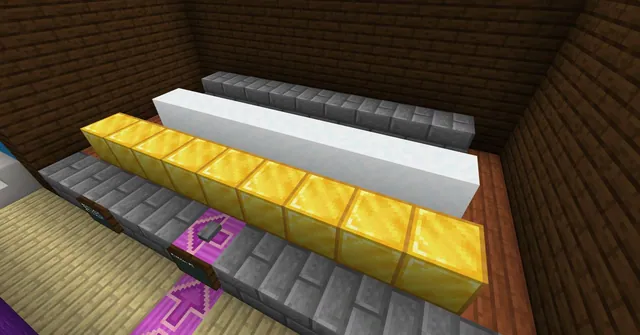
Organize students into collaborative groups and introduce the summative project. Teams review the student guide, prioritize their five tasks (mining ore, completing the maze, collecting golden blocks, following the wall, and finding diamonds in the crater), and assign roles.
- Pseudocode and Algorithm Design40 min
Teams brainstorm solutions and write pseudocode for each puzzle. Students must outline at least two distinct algorithms per task, incorporating repeat loops, conditional loops, conditionals, and operators before coding.
- Collaborative Coding and Testing70 min
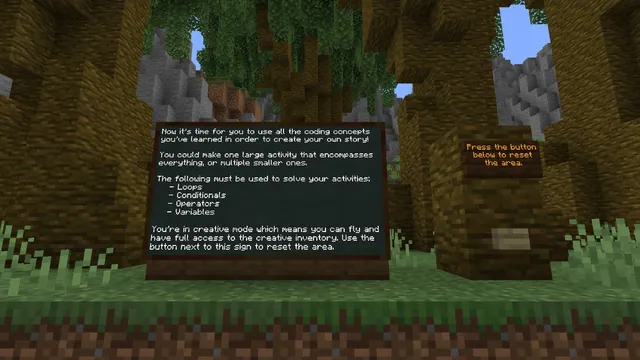
Groups enter the shared Minecraft world to program and run their solutions. Because the world does not feature reset buttons or automated completion signs, students must carefully test their code and debug any errors together.
- Documentation and Peer Presentations40 min
Students compile their documentation to show how their programs evolved during testing. Each team then presents their completed code and algorithms to the class, detailing their debugging process and teamwork.
Assessment: success criteria
- Teams produce at least two working algorithms for each planetary coding challenge.
- Programs correctly integrate repeat loops, conditional loops, conditionals, and operators.
- Students accurately document program iterations and pseudocode using the provided student guide.
- Groups present their final programs to classmates and explain their collaborative process.
Differentiation
Provide targeted pseudocode sentence starters to help groups outline their logic before building programs in the shared world.
Challenge students to analyze their two algorithms for each puzzle to determine and explain which approach is more efficient.
Knowledge check
5 questions to check understanding after the lesson. Tap an answer to see if it is right; the score appears at the end.
1What planning step must students complete before writing their final code for each task?
Answer: A. The performance expectations state that students must create pseudocode for each coding task.
2How many different algorithms must teams design for each coding task?
Answer: C. A core learning objective is to create at least two algorithms to solve each task.
3Which set of computer science concepts must students use across their programs?
Answer: D. The lesson requires students to utilize repeat loops, conditional loops, conditionals, and operators in their code.
4Which activity is one of the five specific tasks students must complete in the world?
Answer: B. Finding diamonds in the crater is specifically listed among the student activities.
5What unique condition must students keep in mind when working in this project world?
Answer: C. The guiding ideas remind teachers that no reset activity or completion signs are provided in this lesson.
Resources
- Lesson package (.zip)Everything the author attached to this lesson in one download.
- Coding Fundamentals Part 2: Revisiting PlanetsEDU Guide
- Coding Fundamentals Part 2: Revisiting PlanetsSummative Assessment: Performance Task - Student Guide
- Coding Fundamentals Part 2: Minecraft Space CenterCurriculum Overview
- Lesson worldOpens the world page in Minecraft Education (sign-in with a school account may be needed).
Part of the Coding Fundamentals curriculum
This is lesson 12 of 17 in Coding Fundamentals.
- Basic Moves and the Agent
- Coding Challenge
- Dinosaur Run
- Earth’s Moon & Mars
- Ganymede (Jupiter's Moon) & Saturn's Rings
- Gray Wolves
- Mercury and Venus
- Minecraft Space Center
- Panda's Protected Habitat
- Polar Bear Rescue
- Revisiting Biomes
- Revisiting Planets
- Sea Turtle Assistance
- The Experiment
- Uranus’ Rings and Neptune's Moon, Triton
- We Need Beets!
- Wild West
Frequently Asked Questions
How can I assess student progress without built-in completion signs?
Track student learning by monitoring group collaboration, checking their completed student guide documentation, reviewing pseudocode, and watching peer presentations.
Should this project be completed in a single class period?
No, the project has a three-hour duration and is specifically designed to be delivered over several days to allow sufficient time for planning, coding, and presenting.
Do students complete the planet tasks independently?
No, this is a collaborative build where students work together in groups inside a shared Minecraft world, dividing roles and planning solutions jointly.
Adapted from Revisiting Planets by Minecraft Education on Minecraft Education, last updated Feb 4, 2025. This classroom version, the timings and the quiz were written by 9Minecraft Education.