- Type
- Lesson plan
- Grade
- Primary (Grades 3-5)
- Ages
- Ages 8-10
- Duration
- 1 hour
- Level
- Beginner
How can autonomous agents use while loops and conditionals to navigate and collect scientific data in extreme planetary environments?
Overview
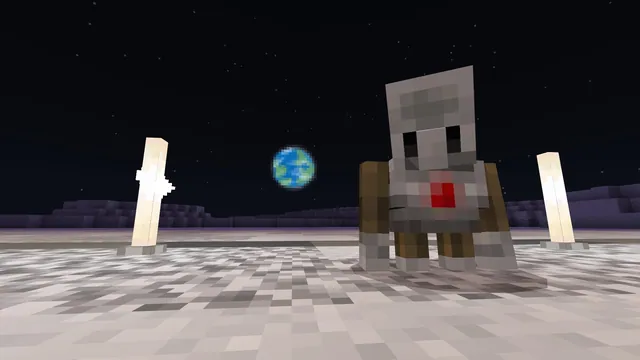
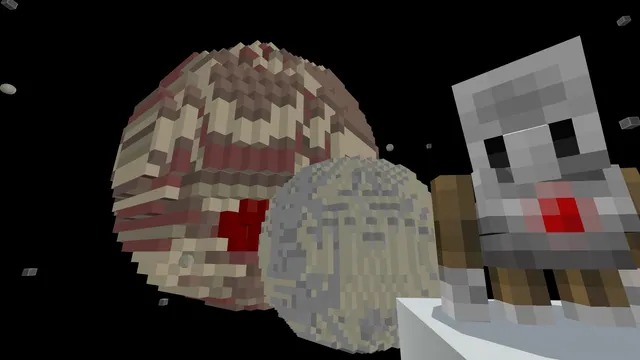
Students transition from basic flight preparation to planetary exploration as they program an autonomous Agent to withstand the harsh environments of Mercury and Venus. By shifting from visual prompts to logical problem-solving, learners practice directing their robotic companion through challenging terrains to collect scientific samples safely.Learning objectives
By the end of this lesson students will be able to:
- Program the Agent to solve navigation puzzles using while loops, conditionals, and operators.
- Follow text-based coding instructions without relying on visual supports.
- Test and debug robotic movement routines to gather planetary samples.
- Analyze programming snippets to predict and verify Agent behavior.
Blocks and items used in this lesson


Key vocabulary
- While loop
- A programming command that repeats a block of instructions continuously as long as a specified condition remains true.
- Conditional
- A rule or statement in code that carries out specific actions only when a designated condition is met.
- Operator
- A coding symbol or rule used to compare values or evaluate logical conditions.
- Debugging
- The process of reviewing, testing, and fixing mistakes within computer code.
Before class
Lesson sequence
Suggested timing: about 60 minutes in total.
- Mission Launch and Concept Review10 min
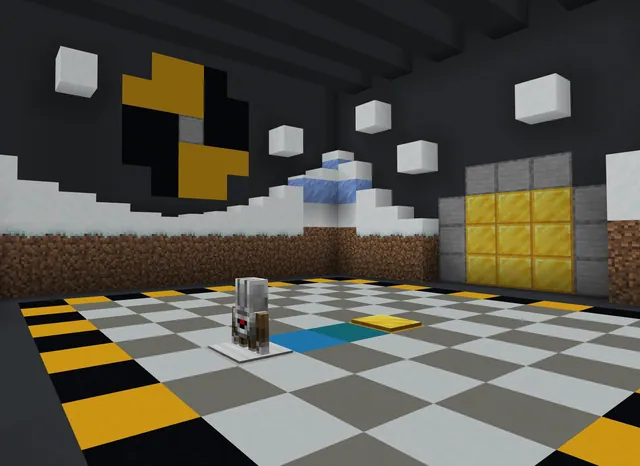
Introduce the mission to explore Mercury and Venus. Review how while loops, conditionals, and operators allow the Agent to explore dangerous planetary surfaces in place of the astronaut.
- Mercury Exploration15 min
Students guide their Agent through the first two missions:
- Activity 1: Mercury, Finding a Crater
- Activity 2: Mercury, Locating a Sample
Learners test their routines and debug errors when the Agent meets unexpected obstacles.
- Venus Mission20 min
Students proceed to Venus to solve advanced navigation puzzles without visual assistance:
- Activity 3: Venus, Finding the Surface
- Activity 4: Venus, Helping the Agent
- Extension and Bonus Challenge10 min
Students who finish early tackle the Bonus Activity: Virtual Gathering inside the world, or begin organizing notes using the external Planet Research Template.
- Formative Code Analysis5 min
Conclude the lesson by reviewing the educator guide conclusion questions. Students analyze code snippets individually or in pairs to demonstrate logical comprehension.
Assessment: success criteria
- Student successfully navigates the Agent through Mercury's crater and retrieves the target sample.
- Student applies while loops and conditional logic to complete the Venus exploration tasks.
- Student troubleshoots and debugs code without needing visual assistance prompts.
- Student accurately explains and evaluates the logic in the concluding code snippet analysis.
Differentiation
Walk through the first Mercury puzzle as a class, modeling how to translate written instructions into loop and conditional blocks.
Have advanced students solve the Bonus Virtual Gathering challenge and begin independent research using the Planet Research Template.
Knowledge check
5 questions to check understanding after the lesson. Tap an answer to see if it is right; the score appears at the end.
1Which celestial body is the first stop on the mission after space training?
Answer: C. The lesson states that the first stop on the journey is Mercury, the planet closest to the Sun.
2Why does the Agent explore the surfaces of Mercury and Venus instead of the player character?
Answer: B. Minecraft space technology keeps the player safe while the robotic Agent explores the planets.
3What coding structures are primarily reinforced throughout this lesson?
Answer: A. The core objectives focus on using while loops, conditionals, and operators to solve problems.
4What is the primary goal of Activity 2 on Mercury?
Answer: B. Activity 2 is titled 'Mercury, Locating a Sample'.
5How is the optional Planet Research activity conducted?
Answer: C. The prep notes state that the research lesson does not take place in Minecraft and requires internet access.
Resources
- Lesson package (.zip)Everything the author attached to this lesson in one download.
- Coding Fundamentals Part 2: Mercury and VenusEDU Guide and Formative Assessment
- Coding Fundamentals Part 2: Mercury and VenusClassroom Presentation
- Coding Fundamentals Part 2: Minecraft Space CenterCurriculum Overview
- Planet Research TemplateUse this lesson plan and student research template if you want to conduct the research portion of this computer science unit.
- Lesson worldOpens the world page in Minecraft Education (sign-in with a school account may be needed).
Part of the Coding Fundamentals curriculum
This is lesson 7 of 17 in Coding Fundamentals.
- Basic Moves and the Agent
- Coding Challenge
- Dinosaur Run
- Earth’s Moon & Mars
- Ganymede (Jupiter's Moon) & Saturn's Rings
- Gray Wolves
- Mercury and Venus
- Minecraft Space Center
- Panda's Protected Habitat
- Polar Bear Rescue
- Revisiting Biomes
- Revisiting Planets
- Sea Turtle Assistance
- The Experiment
- Uranus’ Rings and Neptune's Moon, Triton
- We Need Beets!
- Wild West
Frequently Asked Questions
Does the optional research project take place inside the Minecraft world?
No. The Planet Research component is designed as an off-screen activity that requires internet connectivity and uses the provided research template.
How are students assessed at the end of the lesson?
Teachers can use the formative assessment questions located at the conclusion of the educator guide, which ask students to analyze specific coding snippets.
What prior experience do students need before starting this lesson?
This is a beginner-level lesson designed for ages 8 to 10 that builds upon Block 2 Lesson 1 space training concepts.
Adapted from Mercury and Venus by Minecraft Education on Minecraft Education, last updated Feb 4, 2025. This classroom version, the timings and the quiz were written by 9Minecraft Education.