- Type
- Lesson plan
- Subject
- Computer Science & Coding
- Topics
- Computer Science
- Grade
- Primary (Grades 3-5)
- Ages
- Ages 8-10
How can large shapes be partitioned into smaller equal pieces to represent fractions of a whole?
Overview
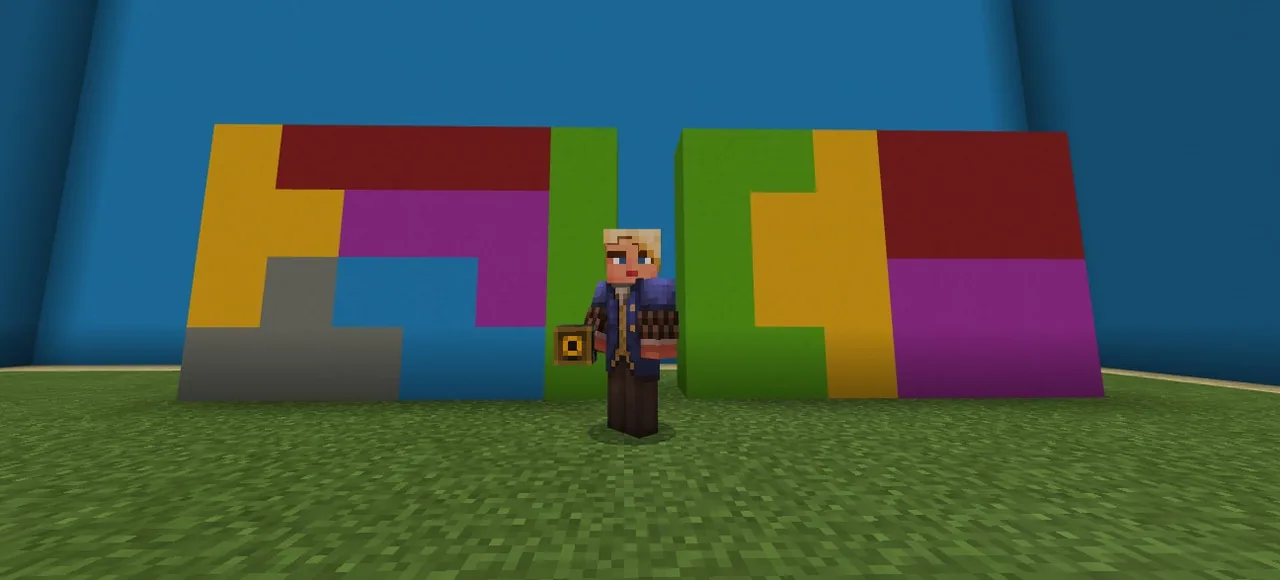
Large geometric shapes can be partitioned into smaller, equal-sized parts that represent unit fractions of the whole. In this lesson, students investigate how whole structures are composed of equal pieces, discovering the core mathematical idea that fractions can be formed from large shapes built out of smaller components.Learning objectives
By the end of this lesson students will be able to:
- Partition geometric shapes into parts with equal areas.
- Identify and label the unit fraction represented by each equal piece of a math model.
- Build a structure using sets of blocks and find the fraction for each section.
- Recreate a peer's shape using a different combination of equal-sized block sets.
Blocks and items used in this lesson


Key vocabulary
- Unit Fraction
- A fraction representing one equal part of a partitioned whole shape.
- Partition
- To divide a shape into parts that have equal area.
- Math Model
- A visual block structure used to represent mathematical relationships like parts to a whole.
Before class
Lesson sequence
- Introduction and Big Idea
Present the supporting slideshow to explore math problems, strategies, and solutions with the class. Introduce the Big Idea: fractions can be made out of large shapes that are made out of smaller shapes.
- Exhibition Area Exploration
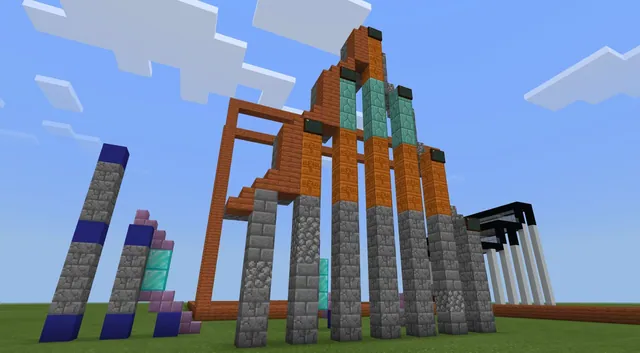
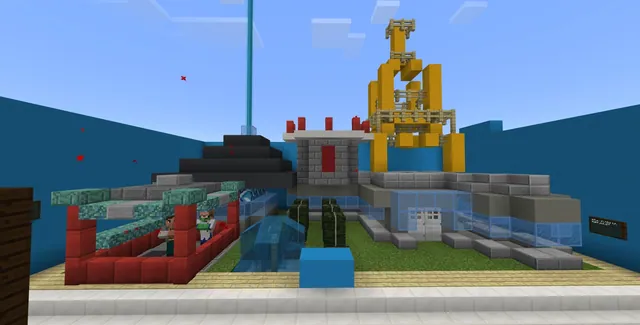
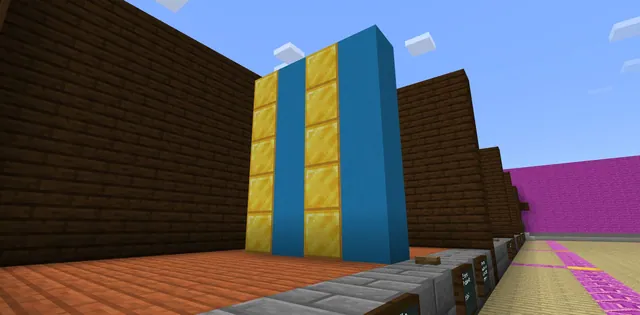
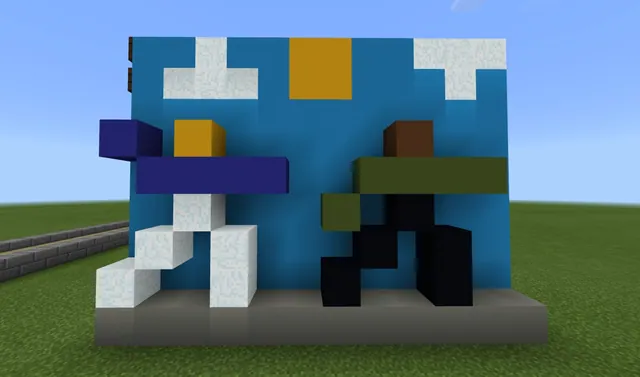
Teleport students to the Exhibition Area and provide them with a camera and portfolio. Have learners examine the mathematical models, identify the fraction for each piece, and record their answers before advancing to the next question.
- Stage Building Activity
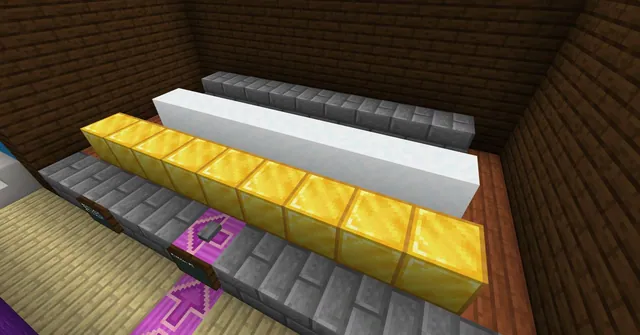
Teleport learners to the Stage area and distribute either four sets of six blocks or six sets of four blocks. Students build a structure using their given blocks and determine the fraction representing each piece.
- Peer Review and Reconstruction
When finished, students press the done button to teleport to a partner's stage. Each student examines their partner's completed shape and rebuilds the exact same shape using their own alternate set of block pieces.
- Class Debrief
Lead a concluding class discussion based on the peer review questions. Prompt students to connect their builds to unit fractions, equal parts, factor pairs, and equivalent fractions.
Assessment: success criteria
- Label and explain whether given math models are divided into equal-sized pieces.
- Accurately calculate and document unit fractions for each partitioned part of a structure.
- Build a shape composed of equal parts using assigned block sets.
- Replicate a classmate's shape accurately using a different quantity of blocks per piece.
- Explain mathematical connections such as factors, number families, or equivalent fractions during debrief.
Differentiation
Refer students to the portfolio example in the supporting files to help them structure their visual records and check for equal-sized parts.
Ask advanced learners to explain how their build demonstrates factors, number families, and equivalent fractions during the peer review.
Knowledge check
5 questions to check understanding after the lesson. Tap an answer to see if it is right; the score appears at the end.
1What is the central Big Idea introduced in this lesson?
Answer: B. The lesson specifically defines the Big Idea as: fractions can be made out of large shapes that are made out of smaller shapes.
2Which tools are given to students to record their math models in the Exhibition Area?
Answer: C. The source specifies that learners receive a camera and portfolio upon arriving in the Exhibition Area.
3What block sets are assigned to students on the Stage?
Answer: A. According to the activity details, students receive either four sets of six blocks or six sets of four blocks.
4What must a student do after pressing the done button and teleporting to a partner's stage?
Answer: D. The peer review requires students to replicate their partner's shape using their own set of blocks.
5Which academic standard is directly targeted by partitioning shapes into equal areas in this lesson?
Answer: B. The source explicitly states CCSS.Math.Content.3.G.A.2 as the learning objective.
Resources
- Lesson package (.zip)Everything the author attached to this lesson in one download.
- Slideshow
- Rubric
- Lesson worldOpens the world page in Minecraft Education (sign-in with a school account may be needed).
Part of the Grade 3 Math curriculum
This is lesson 12 of 15 in Grade 3 Math.
- Algebra Architecture
- Building Word Problems
- Division Into Equal Numbers
- Finding the Unknown
- Fractions Pixel Art
- Fractions Steeplechase
- Liquid Measurements
- Make a Regrouping Video
- Measuring Landforms
- Repeated Addition with Parkour
- Round Numbers Video
- Shapes From Shapes
- Survival City Making Roads
- Survival Olympics Bar Graphs
- Two Step Word Problems
Frequently Asked Questions
What materials are included in the supporting files for this lesson?
The lesson files include an introductory slideshow to guide problem-solving discussions and a rubric along with portfolio documentation examples.
How do students navigate between the different lesson areas?
Students are moved through in-game teleportation, which takes them to the Exhibition Area, to their Stage, and directly to their partner's build via a done button.
Adapted from Shapes From Shapes by Minecraft Education on Minecraft Education, last updated Sep 16, 2023. This classroom version, the timings and the quiz were written by 9Minecraft Education.