- Type
- Lesson plan
- Subject
- Math
- Topics
- Math & Economics
- Grade
- Primary (Grades 3-5)
- Ages
- Ages 8-10
How can building physical models in Minecraft help us solve equations with missing numbers?
Overview
Understanding the inverse relationship between multiplication and division allows students to solve equations with missing variables. By recognizing that division can find missing factors and multiplication can resolve unknown division problems, learners build a conceptual foundation for algebraic thinking.Learning objectives
By the end of this lesson students will be able to:
- Determine unknown whole numbers in multiplication and division equations.
- Explain division as an unknown-factor problem using inverse operations.
- Build 3D math models and arrays to represent factor pairs and equations.
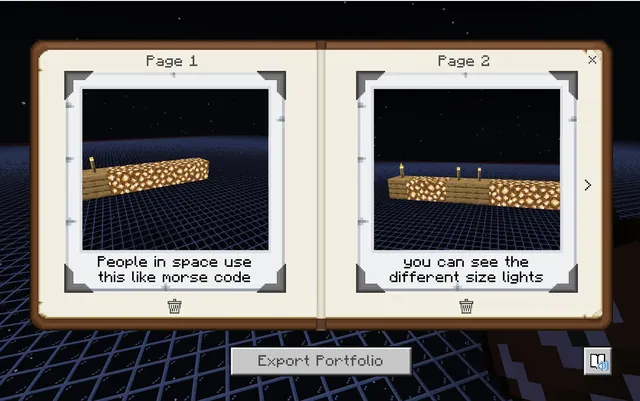
- Document mathematical thinking using in-game slates, photos, and portfolios.
Blocks and items used in this lesson


Key vocabulary
- Unknown Variable
- A missing number in a mathematical equation that needs to be found.
- Inverse Operations
- Opposite operations that undo each other, such as multiplication and division.
- Array
- An arrangement of objects in equal rows and columns to represent multiplication.
- Slate
- A small in-game sign used to write brief notes or labels next to builds.
Before class
Lesson sequence
- Opening Slideshow and Concept Introduction
Present the opening slideshow to introduce equations with missing values. Facilitate a discussion around student strategies and highlight the core principle: division helps solve unknown multiplication numbers, and multiplication helps solve unknown division numbers.
- Part 1: Modeling Unknown Multiplication Factors
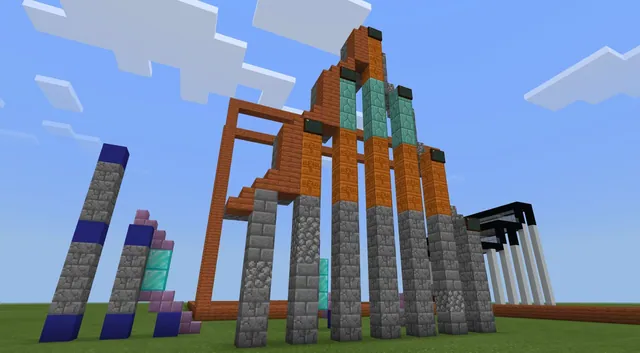
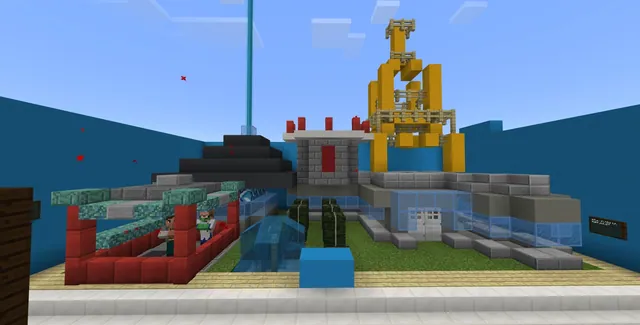
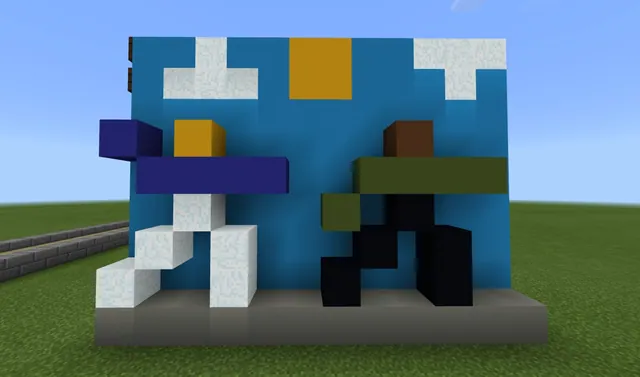
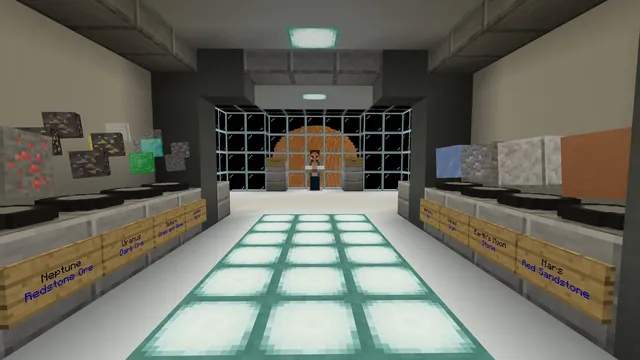
Students enter the Find The Unknown world and locate equations with missing numbers, such as ? × 5 = 15. Students push the button at each station to collect materials, construct a visual math model to solve for the missing variable, write their answer on a slate, and photograph the build for their portfolio.
- Part 2: Converting Division to Multiplication
Learners proceed to the next section to tackle division equations with missing numbers. Students transform division problems into multiplication structures, build the corresponding block models, and log their evidence in their portfolios.
- Part 3: Challenge 24!
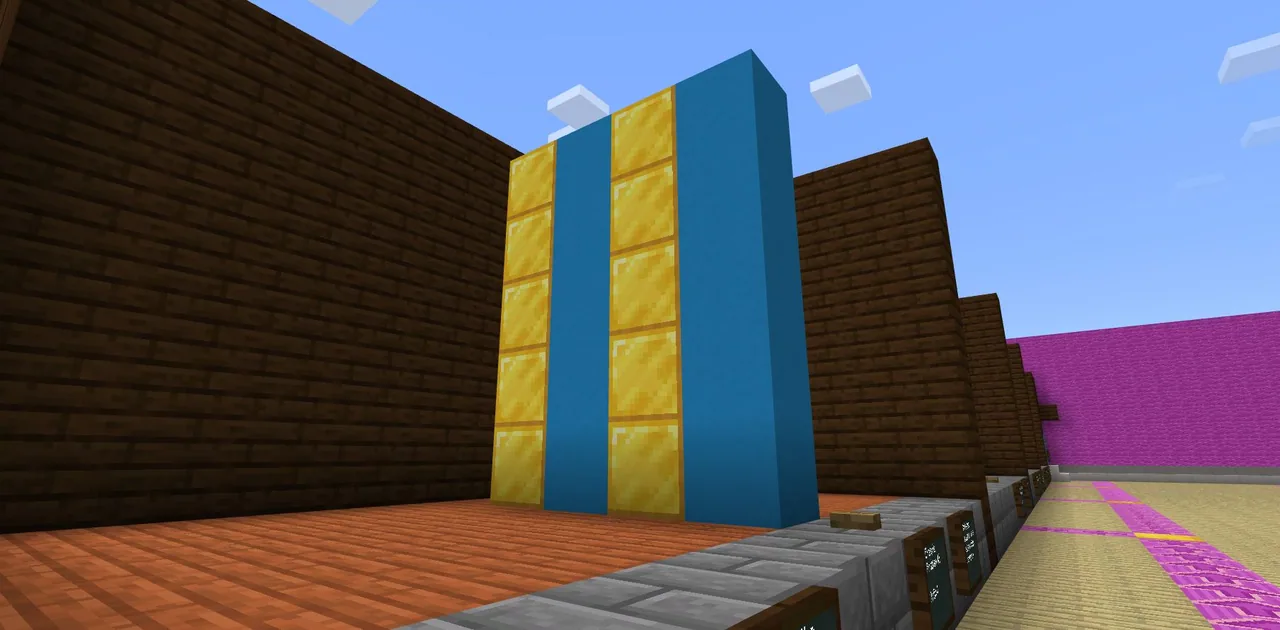
Students teleport to the dedicated build area and press a button to receive 24 gold blocks. They construct as many arrays and equal-group models as possible that total 24 blocks, labeling each distinct factor pair with a slate.
- Peer Review and Class Debrief
Partners evaluate each other's work by checking if the models prove the equations, noting any missing factor pairs, and discussing build improvements. The teacher then leads a debrief reflecting on the peer review findings.
Assessment: success criteria
- Student accurately determines missing whole numbers using inverse multiplication or division strategies.
- Student builds correct block models and arrays corresponding to target equations.
- Student constructs math models representing the factor pairs of 24.
- Student documents solutions using slates and portfolio photos.
- Student offers constructive feedback during peer review using the guiding questions.
Differentiation
Guide students to count out the total blocks first and physically divide them into equal rows to visualize the missing factor.
Challenge students to find and model all six factor pairs of 24 and explain how changing row lengths alters the array.
Knowledge check
5 questions to check understanding after the lesson. Tap an answer to see if it is right; the score appears at the end.
1If you need to solve ? × 5 = 15, which inverse operation should you use?
Answer: B. Division can be used to find an unknown factor in a multiplication equation.
2How can you solve an unknown division equation like _ ÷ 3 = 5?
Answer: A. Multiplication can be used to find an unknown dividend in a division problem.
3What item do students use in the world to label their completed math models?
Answer: C. The lesson directs students to write their missing number and labels on a slate next to their build.
4In the Challenge 24 activity, which block type do students receive from the button?
Answer: D. The activity specifies that the button gives students 24 gold blocks to build their arrays.
5During peer review, which question are students asked to consider?
Answer: B. One of the specific peer review questions asks whether the partner's math model proves the sign.
Resources
- Lesson package (.zip)Everything the author attached to this lesson in one download.
- Opening Slideshow
- Rubric
- Lesson worldOpens the world page in Minecraft Education (sign-in with a school account may be needed).
Part of the Grade 3 Math curriculum
This is lesson 4 of 15 in Grade 3 Math.
- Algebra Architecture
- Building Word Problems
- Division Into Equal Numbers
- Finding the Unknown
- Fractions Pixel Art
- Fractions Steeplechase
- Liquid Measurements
- Make a Regrouping Video
- Measuring Landforms
- Repeated Addition with Parkour
- Round Numbers Video
- Shapes From Shapes
- Survival City Making Roads
- Survival Olympics Bar Graphs
- Two Step Word Problems
Frequently Asked Questions
How do students capture their work inside the world?
Students write their answers and labels on in-game slates, take a picture of the build, and store the photo and math explanation inside their portfolio.
What is the goal of the Challenge 24 section?
Students use 24 gold blocks to discover and construct different equal groups and arrays, working to identify the various factor pairs that multiply to 24.
Adapted from Finding the Unknown by Minecraft Education on Minecraft Education, last updated Sep 15, 2023. This classroom version, the timings and the quiz were written by 9Minecraft Education.