- Type
- Lesson plan
- Subject
- Math
- Topics
- Math & Economics
- Grade
- Primary (Grades 3-5)
- Ages
- Ages 8-10
- Duration
- 1 hour
- Level
- Beginner
How can geometric properties and spatial reasoning help us solve complex puzzles?
Overview
Travel to ancient Egypt where a mathematical mummy is said to wander historic sites. Created in collaboration with Cambridge Mathematics, this lesson challenges students to use core geometric skills to solve sequential chambers and unveil historical secrets.
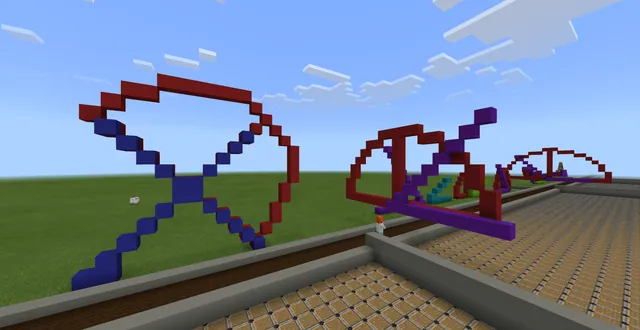
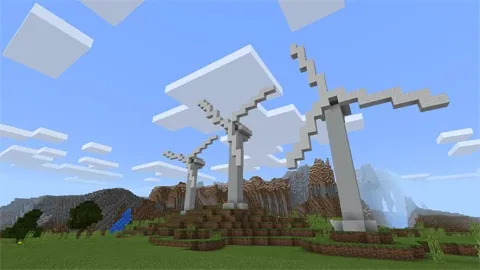
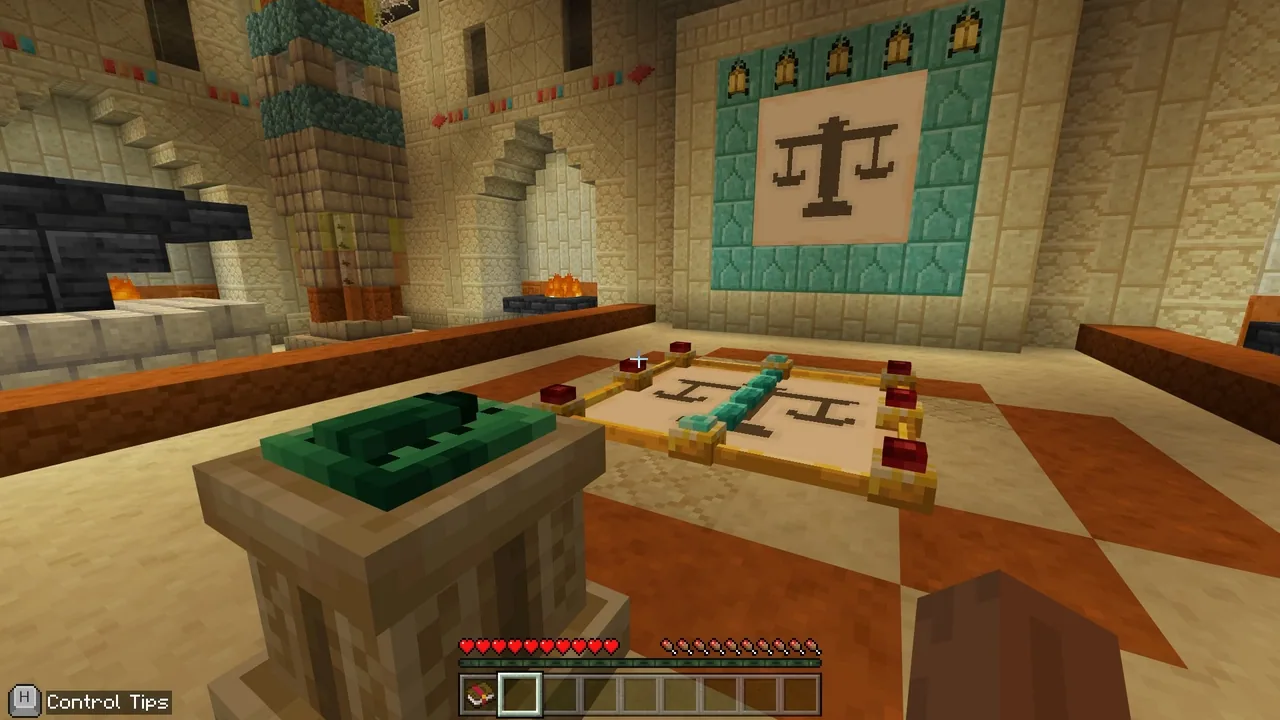
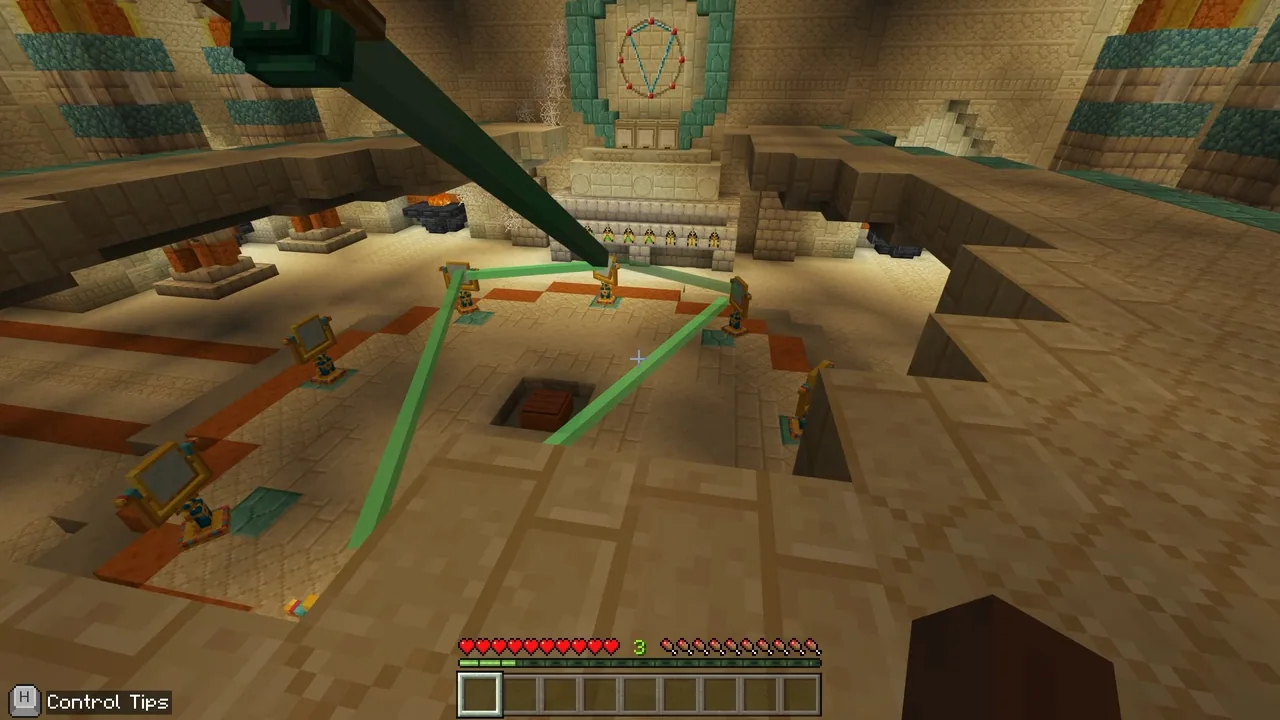
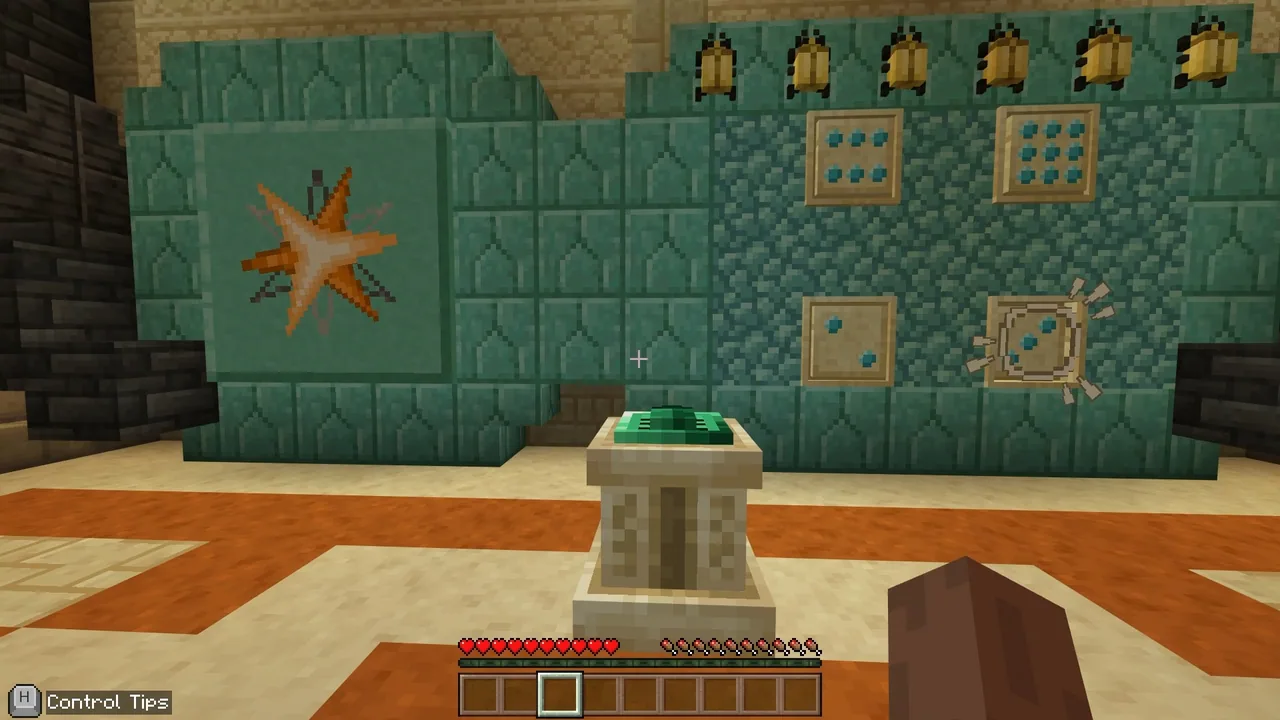
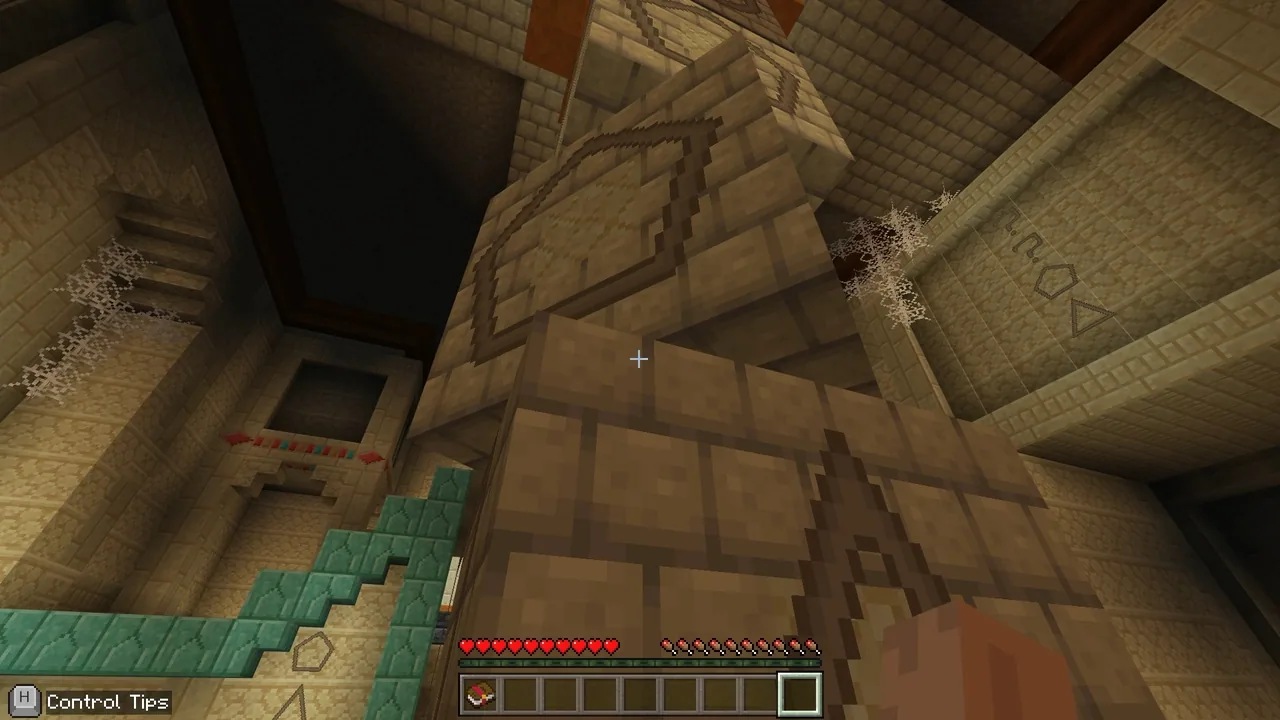
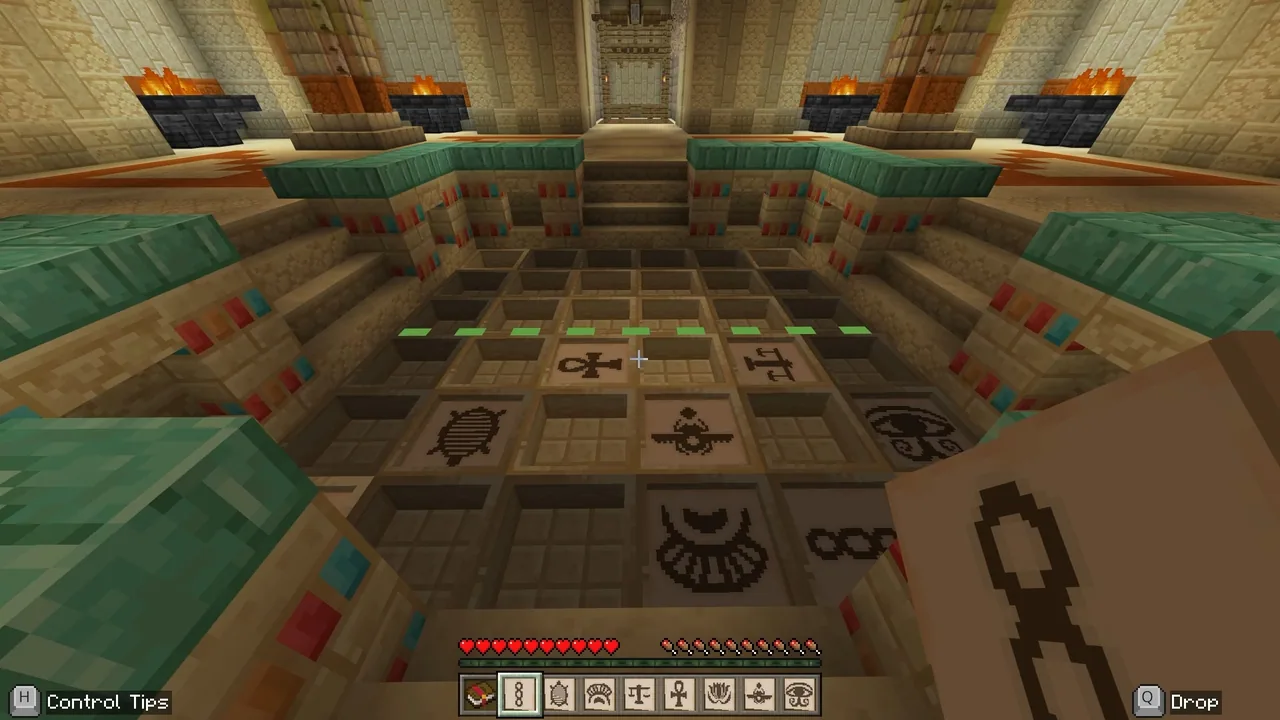
Students enter a single-player Minecraft world to tackle ten distinct spatial reasoning and geometry puzzles. Across these challenges, learners analyze 2D and 3D shapes, discover symmetry lines, test rotational orders, unfold nets, and manipulate light beams, verifying their solutions with an interactive scarab.
Learning objectives
By the end of this lesson students will be able to:
- Identify lines of symmetry and rotational symmetry orders within geometric shapes.
- Connect three-dimensional solid figures to their corresponding two-dimensional nets.
- Apply spatial reasoning to construct mirror reflections and assemble rotated shapes.
- Create and identify quadrilaterals by manipulating directional light beams.
Blocks and items used in this lesson


Key vocabulary
- Symmetry
- A property where a shape looks identical across a central dividing line.
- Rotational Symmetry
- When a shape still looks the same after being turned around its center point.
- Net
- A flat, unfolded pattern that can be folded together to form a 3D shape.
- Spatial Reasoning
- The mental skill of visualizing, rotating, and organizing shapes in space.
- Quadrilateral
- A flat geometric shape that has four straight sides.
- Tangram
- A dissection puzzle consisting of geometric shapes that fit together to form a specific layout.
Before class
Lesson sequence
Suggested timing: about 60 minutes in total.
- Introduction and Briefing10 min
Introduce the expedition to Egypt and present the narrative of the wandering mathematical mummy. Review key geometry terms such as shape, symmetry, and spatial reasoning so students understand the mathematical ideas behind the puzzles.
- Sequential Puzzle Exploration40 min
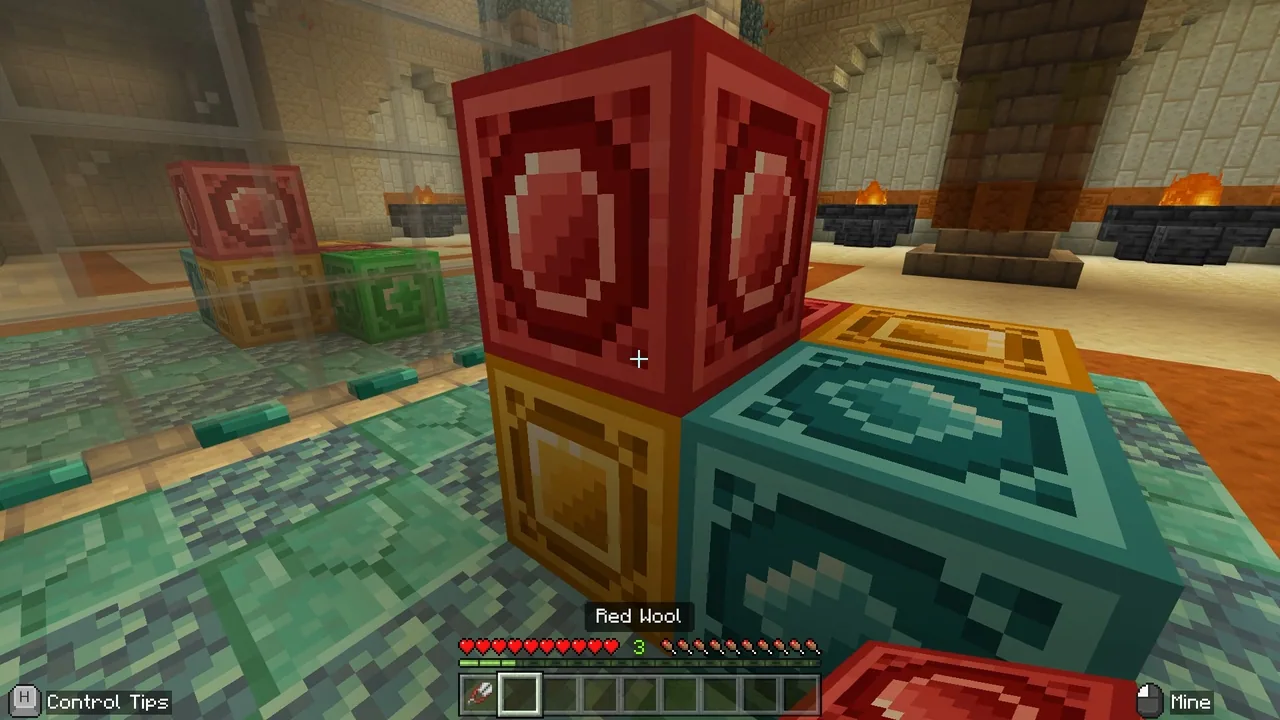
Learners progress independently through the ten puzzle rooms in order. In each chamber, students examine clues, test geometric solutions, and interact with the green scarab to verify their answers.
- Puzzles 1 to 5 cover 3D block jigsaws, symmetry spotting, column crypts, overlapping shapes, and symmetry grids.
- Puzzles 6 to 10 cover rotational symmetry, shape nets, reflection builds, tangram assembly, and quadrilateral beam alignment.
- Review and Discussion10 min
Gather the class to review the final challenge and reflect on the puzzles. Have students share the strategies they used to mentally fold nets, locate lines of symmetry, and prove their geometric reasoning.
Video
Inside the lesson world
Assessment: success criteria
- Student successfully completes the in-game puzzles, verified by green scarab activations and illuminated indicator lights.
- Student correctly identifies lines of symmetry and orders of rotational symmetry.
- Student pairs three-dimensional forms with their matching flat nets.
- Student uses accurate geometric terminology when explaining reasoning to peers or the teacher.
Differentiation
Have students run through the keyboard or touch tutorials in the library before starting, or provide physical grid paper to help them sketch out reflections and nets.
Ask learners to formulate non-examples and alternative geometric proofs for the symmetry and quadrilateral puzzles.
Knowledge check
5 questions to check understanding after the lesson. Tap an answer to see if it is right; the score appears at the end.
1How do players verify that a puzzle solution is correct in this world?
Answer: B. The lesson instructions state that players interact with the green scarab to confirm their solutions.
2What specific geometry concept is the primary focus of Puzzle 6?
Answer: D. Puzzle 6 asks students to observe shapes in different orientations and determine their order of rotational symmetry.
3In Puzzle 7, what must students locate and place on the empty side of the scales?
Answer: A. Puzzle 7 requires learners to search for the opened-out version, or net, of the shape sitting on the scales.
4What visual cue indicates that a puzzle has been solved and shows how many remain?
Answer: C. Small overhead lights illuminate to show successful puzzle completion and indicate remaining puzzles in the room.
5How do students construct the shape required on the wall in Puzzle 10?
Answer: B. Puzzle 10 involves interacting with mirrors in the room to position beams of light that outline the quadrilateral.
Resources
Frequently Asked Questions
Can students save their progress if they cannot finish all ten puzzles in one sitting?
Yes. Students can save and exit the world, export their personal mcworld file to a secure directory, and reload it later to resume exactly where they left off.
Is M.A.T.H. Mummy Mayhem played as a group or individually?
The in-game world is designed as a single-player experience, though students can collaborate, compare strategies, and discuss geometric vocabulary outside the game.
What should I do if my students struggle with basic movement in Minecraft?
You can have them complete the keyboard or touch control tutorials found inside the How to Play section of the Minecraft Education Library before starting the lesson.
Adapted from M.A.T.H. Mummy Mayhem by Minecraft Education on Minecraft Education, last updated Sep 29, 2025. This classroom version, the timings and the quiz were written by 9Minecraft Education.