- Type
- Lesson plan
- Subject
- Math
- Topics
- Math & Economics
- Grade
- Primary (Grades 3-5)
- Ages
- Ages 8-10
- Duration
- about 65 min (suggested)
How can grouping numbers and repeated addition help us understand and model multiplication?
Overview
This lesson introduces learners to the core concept that repeated addition is multiplication. By examining visual models and identifying patterns of grouping, students discover how equal sets of objects translate into addition sentences, multiplication equations, and algebraic thinking.
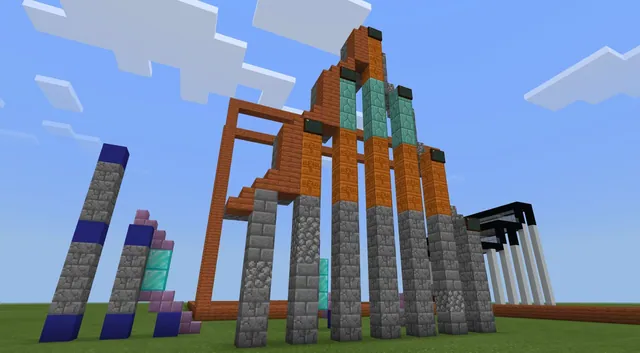
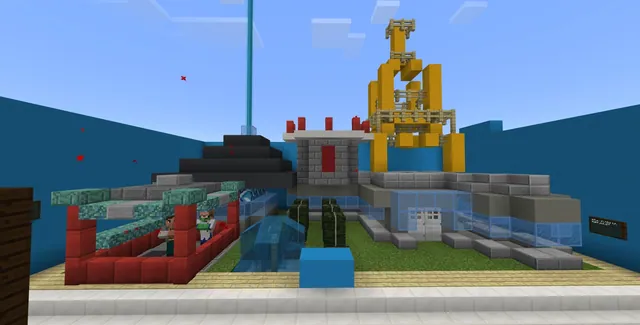
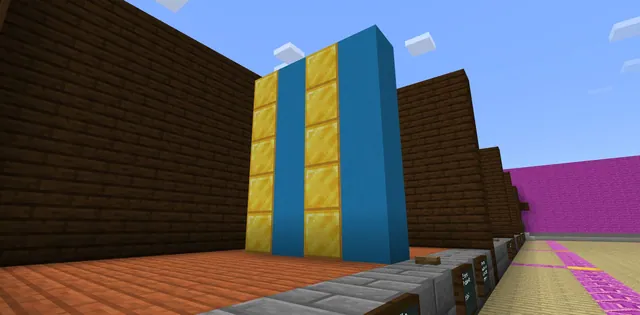
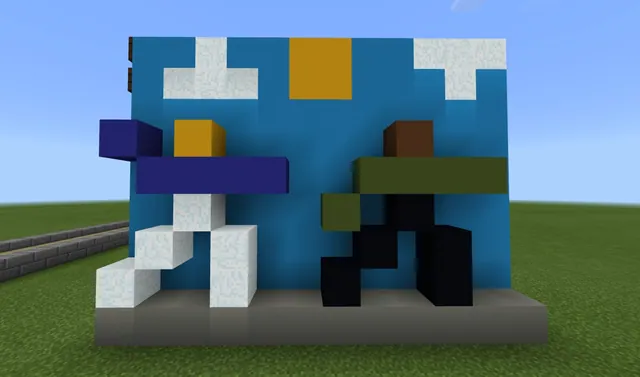
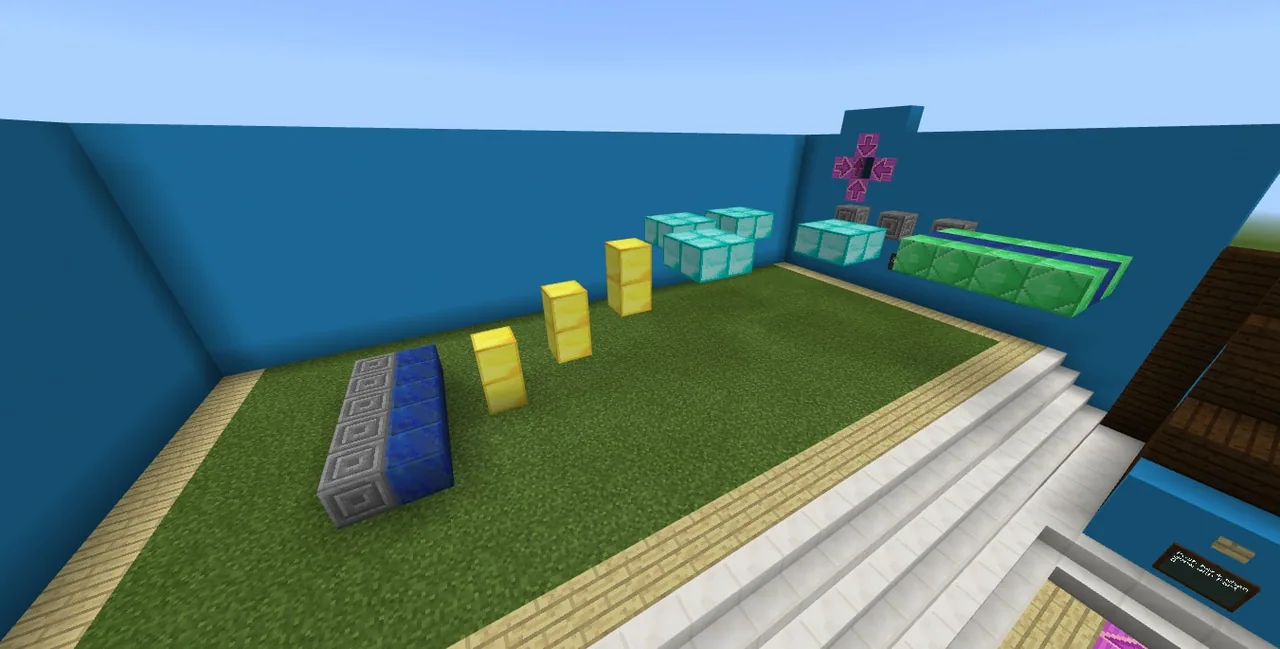
Using Minecraft, student pairs interact with math models inside the game world. They test whether given equations are true or false, build obstacle courses where blocks serve as grouped numbers, and playtest each other's parkour challenges to evaluate mathematical thinking.
Learning objectives
By the end of this lesson students will be able to:
- Write matching addition and multiplication sentences from visual Minecraft math models.
- Build a Minecraft model to prove whether a given equation is true or false.
- Design and successfully complete a parkour course using at least four sets of grouped numbers.
- Critique peer models and record mathematical feedback in peer notebooks.
Blocks and items used in this lesson


Key vocabulary
- Repeated Addition
- Adding the exact same number multiple times to find a total.
- Multiplication
- A mathematical operation that represents combining equal groups.
- Grouping
- Sorting items into collections that contain an equal number of objects.
- Slate
- An in-game board used in Minecraft to write notes, questions, and equations.
Before class
Lesson sequence
Suggested timing: about 65 minutes in total.
- Warm-up and Brainstorming10 min
Display pictures from the opening slideshow to prompt class observations. Guide students to notice shapes, patterns, and groupings. Use their comments to connect grouping to repeated addition and introduce the big idea: Repeated Addition is Multiplication. Instruct students to record notes in their math notebooks.
- Model Analysis and Verification15 min
Students log into the Minecraft world in pairs to tackle the first two challenges:
- Challenge 1: Photograph a math model, then write both an addition sentence and a multiplication sentence on a slate. Students can add a story sentence (such as kiwis in boxes) for context.
- Challenge 2: Press a button to receive an equation, build a model to verify if it is true or false, explain the reasoning in notebooks or verbally, and take a photo.
- Parkour Course Construction15 min
Pairs begin Challenge 3 by writing four multiplication problems on slates without answering them yet. Next, partners build a parkour course made out of at least four sets of grouped numbers. Once constructed, partners answer their multiplication problems on the slate, place a button at the course exit, and beat their own course to confirm it is playable.
- Peer Playtesting and Review15 min
Students rotate to classmates' computers to play through other parkour courses. Each student plays at least two courses and writes at least two comments in the creator's math notebook addressing how the math was shown, whether it was correct, what they learned, and ideas for improvement.
- Reflection and Debrief10 min
Students spend five minutes writing in their math journals about what they learned, patterns they noticed, and things that could be improved. The teacher then leads a five-minute whole-class discussion to synthesize key takeaways about multiplication and repeated addition.
Assessment: success criteria
- Parkour course includes at least four distinct sets of grouped numbers.
- Student accurately records both repeated addition and multiplication equations for visual models.
- Constructed model correctly demonstrates whether an assigned equation is true or false.
- Written peer feedback answers mathematical evaluation questions in student notebooks.
Differentiation
Help students connect groups to real-world objects using story sentences before building their structures.
Encourage students to introduce variable concepts by writing story descriptions that represent unknown quantities within their models.
Knowledge check
5 questions to check understanding after the lesson. Tap an answer to see if it is right; the score appears at the end.
1What is the central mathematical idea highlighted in this lesson?
Answer: B. The guiding idea states directly that repeated addition is multiplication.
2In Challenge 1, what two types of math sentences must students write on their slate?
Answer: B. Challenge 1 requires students to write the model as both an addition sentence and a multiplication sentence.
3How many sets of grouped numbers must students use when building their parkour course?
Answer: C. Challenge 3 instructs students to build a parkour course out of at least 4 sets of grouped numbers.
4What must creators do to prove their parkour challenge is complete?
Answer: A. The rules specify that creators must beat their own game in order to finish.
5Where do students record their peer review feedback during the playtest phase?
Answer: B. During the playtest, students leave comments in the game creator's math notebook.
Resources
- Lesson package (.zip)Everything the author attached to this lesson in one download.
- Opening Slideshow
- Grading Rubric
- Lesson worldOpens the world page in Minecraft Education (sign-in with a school account may be needed).
Part of the Grade 3 Math curriculum
This is lesson 10 of 15 in Grade 3 Math.
- Algebra Architecture
- Building Word Problems
- Division Into Equal Numbers
- Finding the Unknown
- Fractions Pixel Art
- Fractions Steeplechase
- Liquid Measurements
- Make a Regrouping Video
- Measuring Landforms
- Repeated Addition with Parkour
- Round Numbers Video
- Shapes From Shapes
- Survival City Making Roads
- Survival Olympics Bar Graphs
- Two Step Word Problems
Frequently Asked Questions
How should student partners divide the first set of challenges?
Students work in pairs inside the Minecraft world, and each student is responsible for completing two of the four challenges for each part.
What features must be present at the finish line of the parkour course?
The course must conclude at a button, and the creators must successfully complete their own course to demonstrate that it is beatable.
What should students focus on when giving peer review comments?
Students should explain how the model represented math, prove whether the math was correct, highlight what they learned, and suggest improvements.
Adapted from Repeated Addition with Parkour by Minecraft Education on Minecraft Education, last updated Feb 28, 2025. This classroom version, the timings and the quiz were written by 9Minecraft Education.