- Type
- Lesson plan
- Topics
- Computer ScienceSTEAMAI
- Ages
- Ages 6-18
- Duration
- 45 min
- Level
- Beginner
- Skills
- CommunicationCreativity
How can we design AI agents to sense, think, and act in ways that help solve real problems in Minecraft, our schools, or our communities?
Overview
In this lesson, learners explore core artificial intelligence principles by designing an autonomous assistant to solve practical problems. Through examining how an agent gathers information, evaluates choices, and performs actions, students connect fundamental computer science concepts such as pattern recognition and error detection to purposeful technological solutions.
Using Minecraft Education, small teams take their planned concepts into a virtual world to build, test, and refine their automated agents. Whether helping farmers irrigate land, keeping villages safe after dusk, or sorting waste, students evaluate ethical concerns such as safety and fairness while observing their digital assistants in action.
Learning objectives
By the end of this lesson students will be able to:
- Identify a clear community or Minecraft problem that an automated agent can help resolve.
- Plan an agent's sensing, thinking, and acting behaviors using non-coding design methods like drawings or flowcharts.
- Construct and test an agent inside Minecraft to observe its performance and make needed adjustments.
- Evaluate the design using responsible AI concepts including fairness, transparency, and safety.
Blocks and items used in this lesson


Key vocabulary
- Sense
- How an AI agent gathers details and notices what is happening in its surroundings.
- Think
- The process an agent uses to evaluate information and choose the best next step.
- Act
- The physical or digital movement an agent carries out to solve a problem.
- Responsible AI
- Designing technology thoughtfully so it is fair, safe, understandable, and helpful to people.
Before class
Lesson sequence
Suggested timing: about 45 minutes in total.
- Understand the Problem10 min
Introduce the essential question and review the five responsible AI principles: fairness, transparency, privacy, safety, and accountability. Working in teams of two or three, students pick a ready-made prompt (such as eco-cleanup, night safety, or crop care) or identify an issue in their own community, answering who needs help and what the agent should accomplish.
- Design the Agent10 min
Before touching code or placing blocks, teams map out their concept using paper sketches, sticky notes, or flowcharts. Learners must clearly detail what their agent will sense, what decisions it will think through, and what exact actions it will take.
- Build in Minecraft12 min
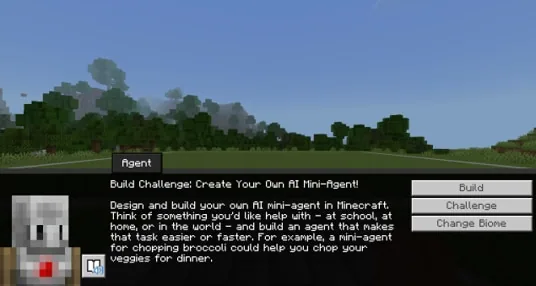
Students launch their Minecraft world, set up the agent, and place the blocks and items required for the challenge scenario. They place signs or markers to label their setup and explain how their agent is meant to interact with its environment.
- Test and Refine8 min
Teams run their agent through different test situations to see how it performs. Students observe where mistakes occur, adjust the agent's behavior to fix errors, and take note of the improvements made during testing.
- Share and Reflect5 min
Groups briefly present their finished builds to peers, summarizing who their agent helps, how it balances safety and fairness, and what key lessons they learned during the build challenge.
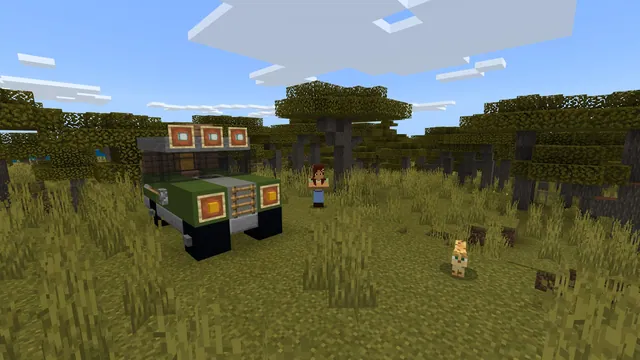
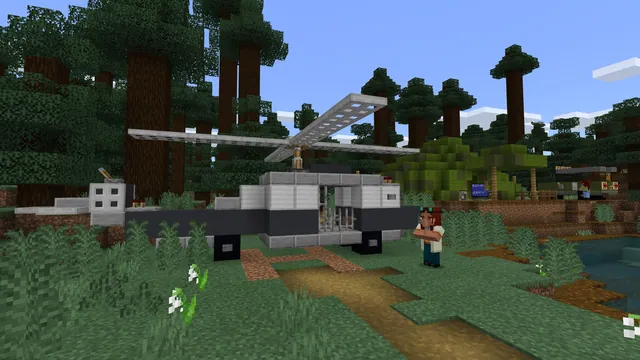
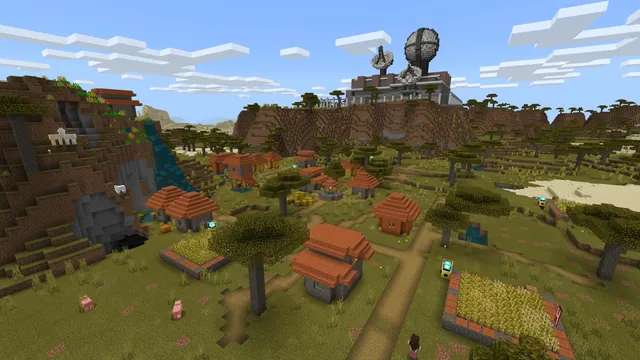
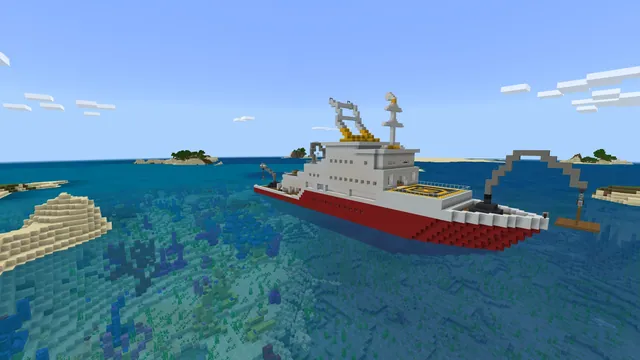
Inside the lesson world
Assessment: success criteria
- The student group defines a specific problem and explains how their agent addresses it.
- The planning draft clearly identifies how the agent senses, thinks, and acts.
- The agent is tested within Minecraft with observable adjustments made to fix errors.
- Students explain how their agent adheres to at least one responsible AI principle, such as safety or fairness.
Differentiation
Younger or emerging learners can draw their agent's actions on paper, use picture cards for decision logic, or role-play the steps physically before setting up blocks.
Advanced students can build full scripted behaviors using block-based coding or text programming, incorporating multi-step decision trees and formal ethical presentations.
Knowledge check
5 questions to check understanding after the lesson. Tap an answer to see if it is right; the score appears at the end.
1What are the three core stages an AI agent follows to solve problems?
Answer: B. The lesson structures an AI agent's behavior around sensing the environment, thinking about options, and taking action.
2Which step comes immediately after understanding the problem in the build challenge process?
Answer: C. Step two requires students to design their agent on paper or flowcharts before jumping into building or coding.
3What does the responsible AI principle of 'fairness' ask designers to consider?
Answer: B. Fairness prompts designers to ask if the agent treats and helps all individuals equally.
4What would a Smart Farming Agent typically do based on the lesson prompts?
Answer: D. The Smart Farming prompt focuses on checking soil moisture, watering dry crops, and harvesting during a drought.
5What should students focus on during the build challenge?
Answer: A. Teacher notes emphasize focusing on the design process, critical thinking, and celebrating all creative solutions rather than demanding perfect builds.
Resources
- Lesson package (.zip)Everything the author attached to this lesson in one download.
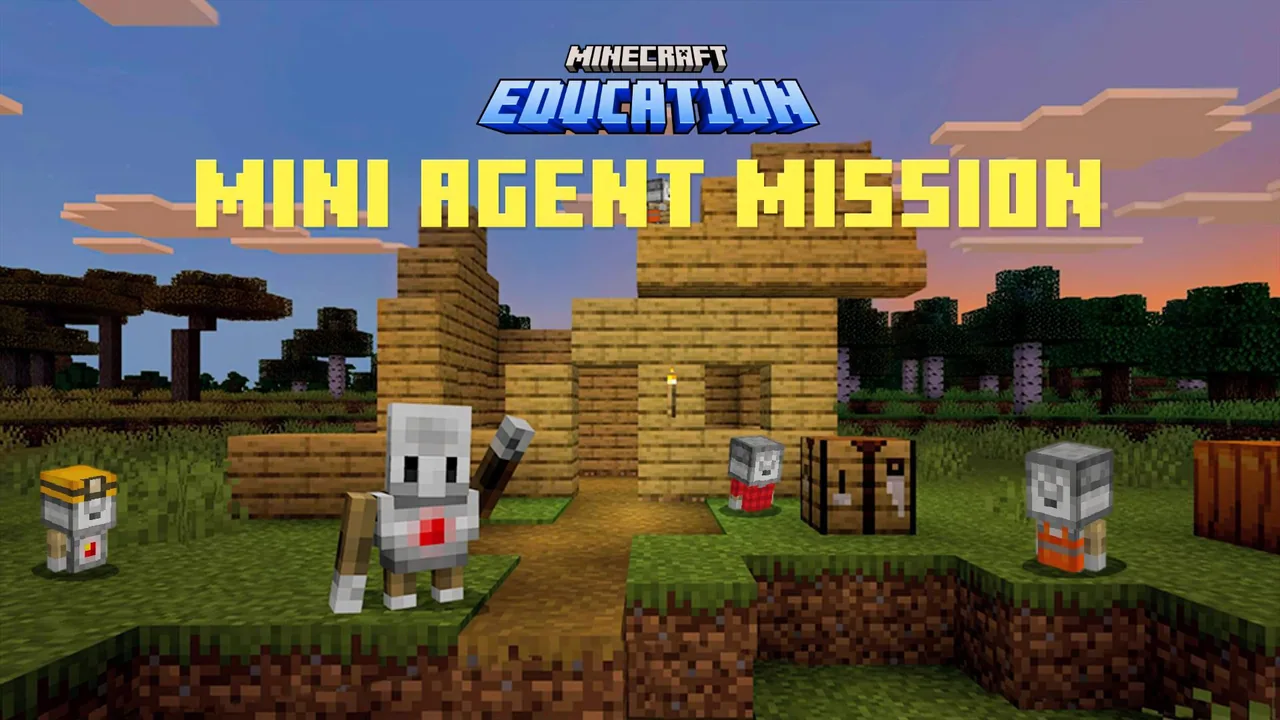
- PowerPoint PresentationStudent-facing slide deck for the AI Build Challenge: Mini Agent Mission
- AI Build Challenge ToolkitLead an AI Build Challenge with our pre-designed challenges or design your own with the step-by-step guide.
- Lesson worldOpens the world page in Minecraft Education (sign-in with a school account may be needed).
Part of the AI Foundations curriculum
This is lesson 16 of 18 in AI Foundations.
- AI-1: Who Is That Ocelot?
- AI-2: Mapping Terrain
- AI-3: Sustainable Farming
- AI-4: Ocean Observations
- AI-5: Water Quality
- Unit 9: AI
- AI Adventurers
- AI Wildlife Park
- CyberSafe AI: Dig Deeper
- Fantastic Fairgrounds
- Hour of AI: Field Agent
- Hour of AI: Generation AI
- Hour of AI: The First Night
- Hour of Code: AI for Good
- Hour of Code: Generation AI
- Mini Agent Mission
- Peter Is Here: AI for Cultural Heritage
- Reed Smart: AI Detective
Frequently Asked Questions
Do my students need prior coding experience to complete this lesson?
No. The challenge is structured around conceptual design, problem solving, and basic logic. Younger or beginner students can plan through drawings, visual flowcharts, and simple in-game interactions without writing complex code.
What if teams do not finish their builds within the 45-minute window?
The goal is to understand how automated agents function rather than building a flawless product. Teams can present their initial prototypes, share what worked during testing, and explain what adjustments they would make next.
Adapted from Mini Agent Mission by Minecraft Education on Minecraft Education, last updated Nov 13, 2026. This classroom version, the timings and the quiz were written by 9Minecraft Education.