- Type
- Lesson plan
- Ages
- Ages 8-18
- Duration
- 45 min
- Level
- Beginner
- Skills
- Critical thinking
How can supervised machine learning analyze environmental data to detect and eliminate water pollution sources?
Overview
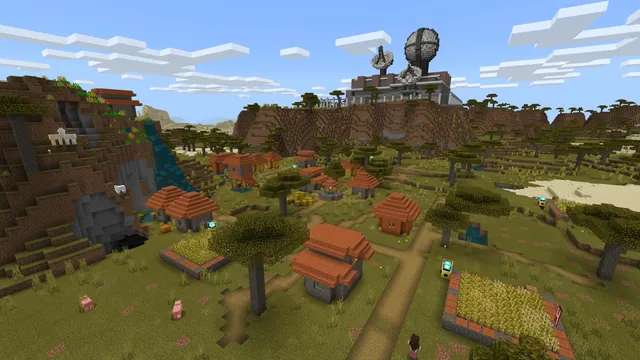
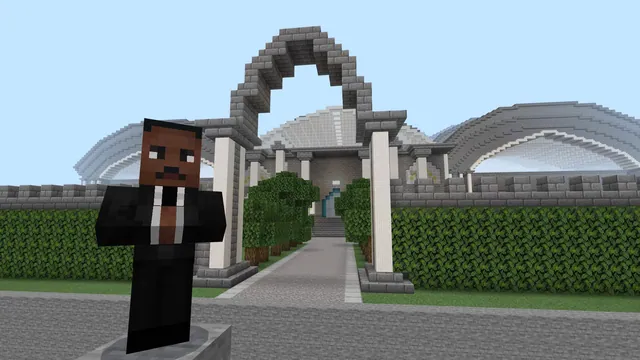
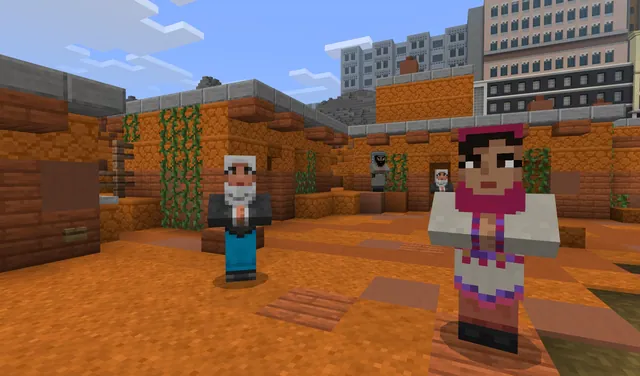
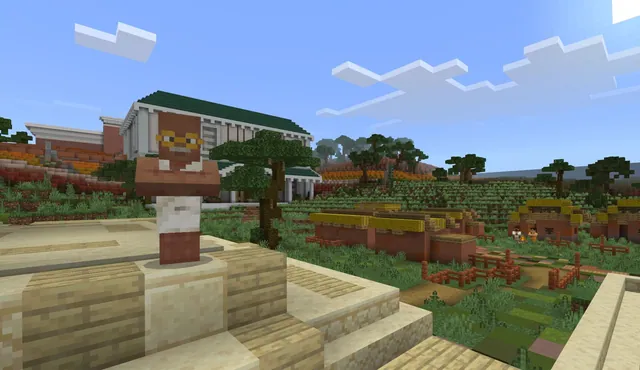
When residents in a Minecraft village begin suffering from identical symptoms, medical providers suspect their drinking water has been contaminated. To solve this public health issue, students collect environmental samples to build a dataset, which is then evaluated using artificial intelligence to pinpoint where pollutants enter the water supply.
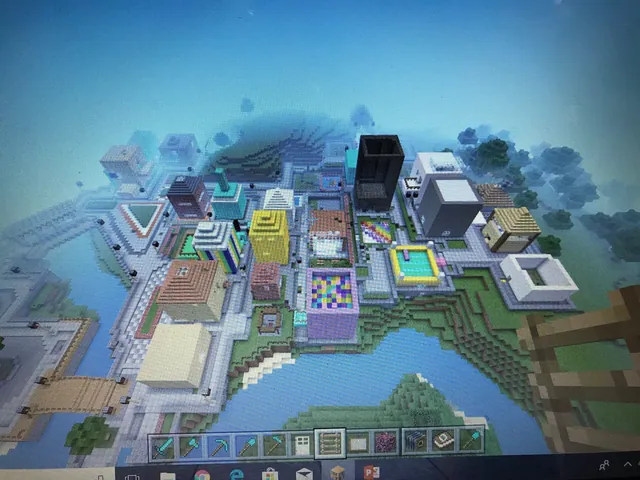
Students work directly in the Minecraft world to gather water samples along local rivers, run a supervised machine learning algorithm to analyze pollutant concentrations, and travel to the flagged coordinates to stop the pollution at its source.
Learning objectives
By the end of this lesson students will be able to:
- Collect and organize water samples into a functional dataset
- Apply supervised machine learning to detect sources of environmental contamination
- Explain how artificial intelligence supports water quality testing and conservation efforts
Blocks and items used in this lesson


Key vocabulary
- Supervised Machine Learning
- An artificial intelligence process that uses existing labeled data to discover patterns and identify outcomes.
- Dataset
- A collection of gathered data points, such as water samples, organized for analysis.
- Pollutant
- A harmful substance that contaminates natural resources like water and can cause disease.
- Water Quality
- A measure of how clean or safe water is for humans, animals, and the environment.
Before class
Lesson sequence
Suggested timing: about 45 minutes in total.
- Activity 1: Widespread Illness10 min
Introduce the village scenario where multiple residents have fallen sick with similar symptoms. Discuss the doctor's suspicion of tainted water and review why clean water supplies are critical for preventing disease.
- Activity 2: Straight from the Tap10 min
Direct students into the rivers surrounding the village to collect water samples. Explain how these individual samples are organized into a structured dataset for computational analysis.
- Activity 3: Pollutants Here, Pollutants There10 min
Introduce supervised machine learning concepts. Students process their water sample dataset through the AI algorithm to discover where pollutant levels are most heavily concentrated.
- Activity 4: Cleaning Up10 min
Using the locations identified by the machine learning algorithm, students navigate to the exact pollution sites in the world and take action to shut down the sources of contamination.
- Lesson Conclusion5 min
Convene as a whole group to review how AI assisted the environmental response. Reinforce that AI analyzed multiple water samples to pinpoint the highest concentrations of pollutants, allowing for targeted remediation.
Assessment: success criteria
- Water samples are successfully gathered from river locations to assemble a complete dataset.
- The supervised machine learning algorithm runs to detect high-concentration pollution areas.
- Students locate and remediate the pollution sources within the Minecraft world.
- Students verbally explain how unpolluted water prevents disease and how AI helped find the contamination.
Differentiation
Display the step-by-step classroom presentation during sampling to help students locate waterways and manage data.
Have students begin the performance-based AI for Good Project summative assessment using a world template of their choice.
Knowledge check
5 questions to check understanding after the lesson. Tap an answer to see if it is right; the score appears at the end.
1What do medical workers suspect is making the villagers sick?
Answer: B. The lesson introduction explains that doctors suspect the villagers are drinking contaminated water.
2What kind of artificial intelligence algorithm is applied in this lesson?
Answer: C. The guiding ideas state that the algorithm used to evaluate the data is supervised machine learning.
3What must students gather before running the AI algorithm?
Answer: A. Students gather water samples from the rivers around the village to build a database for the AI.
4How does the AI algorithm pinpoint where the water contamination is coming from?
Answer: D. The lesson conclusion notes that AI analyzed samples to determine where pollutants were most concentrated.
5What is the final objective after the AI identifies the pollution coordinates?
Answer: B. The lesson directs students to visit the identified locations to stop the pollution sources and clean up the water.
Resources
- Lesson package (.zip)Everything the author attached to this lesson in one download.
- Artificial Intelligence- Water QualityEDU Guide
- Artificial Intelligence- Water QualityPresentation
- Artificial IntelligenceCurriculum Overview
- Artificial Intelligence- Summative AssessmentStudent Guide
- Lesson worldOpens the world page in Minecraft Education (sign-in with a school account may be needed).
Part of the AI Foundations curriculum
This is lesson 5 of 18 in AI Foundations.
- AI-1: Who Is That Ocelot?
- AI-2: Mapping Terrain
- AI-3: Sustainable Farming
- AI-4: Ocean Observations
- AI-5: Water Quality
- Unit 9: AI
- AI Adventurers
- AI Wildlife Park
- CyberSafe AI: Dig Deeper
- Fantastic Fairgrounds
- Hour of AI: Field Agent
- Hour of AI: Generation AI
- Hour of AI: The First Night
- Hour of Code: AI for Good
- Hour of Code: Generation AI
- Mini Agent Mission
- Peter Is Here: AI for Cultural Heritage
- Reed Smart: AI Detective
Frequently Asked Questions
Does this activity teach technical AI coding?
No. The AI workflow presented in the lesson is simplified and conceptual in nature, designed to explain how supervised machine learning works rather than mirror a full professional engineering pipeline.
Where does this lesson fit within the broader curriculum?
This is Lesson 5 and the final lesson of the Artificial Intelligence computer science unit, preparing students for an optional summative AI for Good Project.
Adapted from AI-5: Water Quality by Minecraft Education on Minecraft Education, last updated Oct 4, 2024. This classroom version, the timings and the quiz were written by 9Minecraft Education.