- Type
- Lesson plan
- Grade
- Primary (Grades 3-5)
- Ages
- Ages 8-10
- Duration
- 45 min
- Level
- Beginner
How can artificial intelligence and pattern recognition help scientists track and protect individual wild animals?
Overview
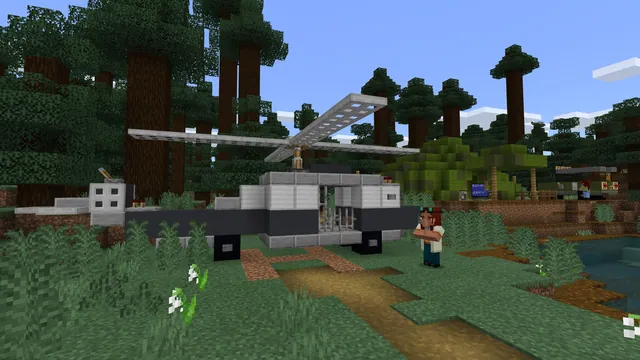
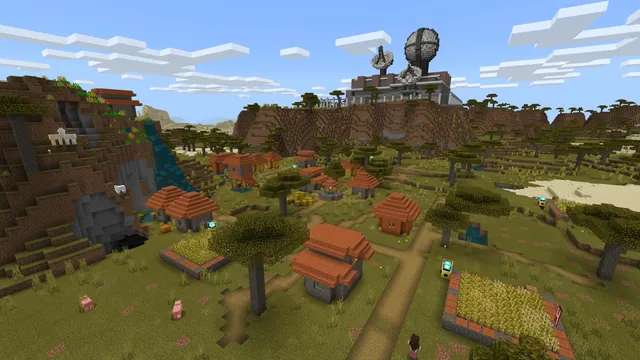
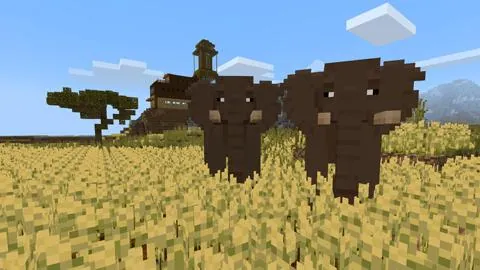
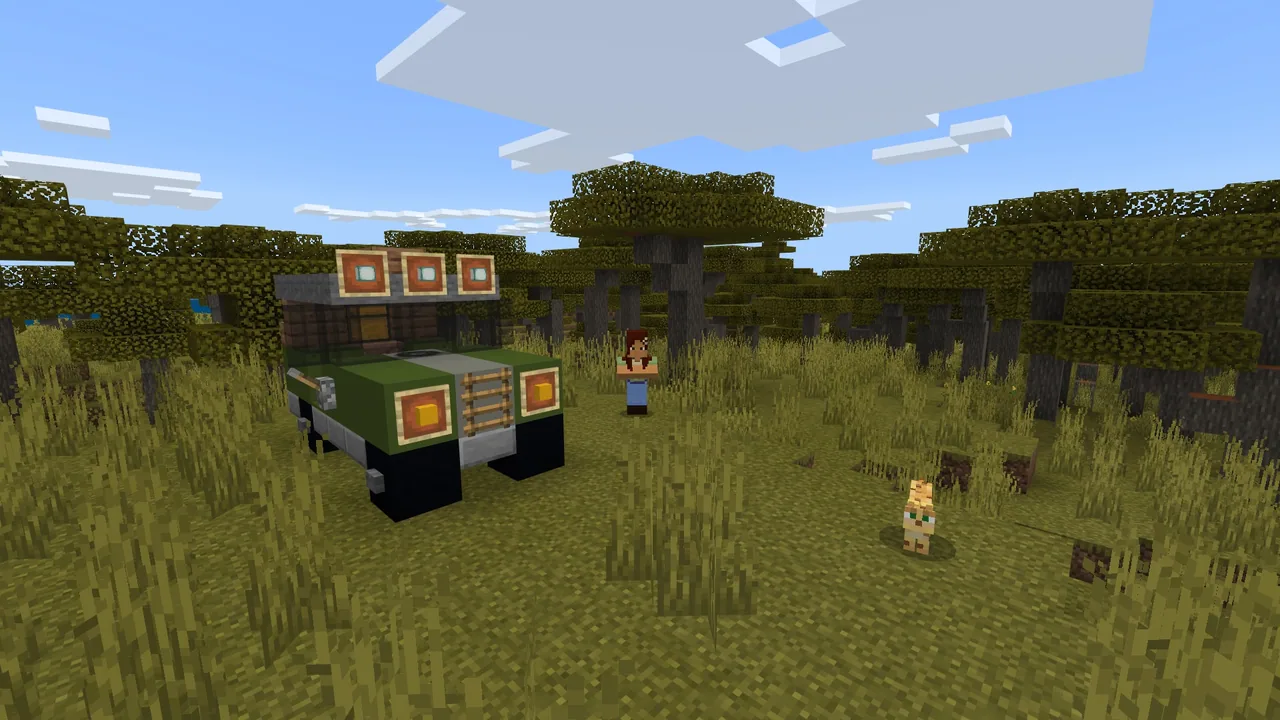
In this introductory computer science and climate science lesson, students visit a research outpost in a savannah environment to monitor wildlife. Using the premise of animal conservation and biodiversity tracking, learners explore how artificial intelligence can analyze distinct coat patterns—functioning much like human fingerprints—to tell individual animals apart.
Through four structured in-game tasks, learners collect photographic data and explore semi-supervised machine learning concepts. By connecting their gameplay to real conservation initiatives like Wild Me, students discover how pattern recognition and big data help researchers monitor animal migration, movement, and population health.
Learning objectives
By the end of this lesson students will be able to:
- Gather photographic data to build a visual dataset within Minecraft.
- Explain the concept of pattern recognition in machine learning.
- Apply pattern recognition to distinguish individual ocelots by their coat markings.
- Describe how tracking wildlife populations and movements supports conservation efforts.
Blocks and items used in this lesson


Key vocabulary
- Pattern Recognition
- The ability of a computer or human to identify regularities and distinct features within data, such as coat markings.
- Semi-Supervised Machine Learning
- A machine learning approach where a computer learns from a combination of labeled and unlabeled data.
- Dataset
- A collection of related information or images used to teach and test an artificial intelligence model.
- Conservation
- The protection, study, and management of wild animal species and their natural environments.
Before class
Lesson sequence
Suggested timing: about 45 minutes in total.
- Introduction and Activity 1: Into the Bush10 min
Introduce the savannah research outpost scenario and display the lesson presentation slides. Students launch the world, head into the bush, and begin observing wildlife to collect photographic data for their initial dataset.
- Activity 2: Patterns, Patterns, Patterns10 min
Guide students through examining the visual characteristics of their photos. Learners explore pattern recognition, observing how individual ocelot coat markings act like human fingerprints to set animals apart.
- Activity 3: Professional Tracker15 min
Students step into the role of wildlife trackers using semi-supervised machine learning ideas. They organize their visual dataset to help the AI model recognize and categorize distinct coat patterns across different animals.
- Activity 4: Who Is That Ocelot? and Reflection10 min
Students put their AI tracking to the test by identifying specific ocelots from new image data. Conclude with a class discussion on how tracking animal movement and population numbers aids conservation, and name other animals with distinct patterns, such as zebras.
Assessment: success criteria
- Student successfully gathers photographic data to build an in-game dataset.
- Student defines pattern recognition and explains how unique markings distinguish individual animals.
- Student uses semi-supervised learning concepts to identify distinct ocelots.
- Student articulates how tracking wildlife populations and migration aids species conservation.
Differentiation
Guide students through the presentation slides step-by-step and pair learners together during visual pattern comparisons.
Ask learners to consider how the same AI identification process could be adapted for other patterned species like zebras, jaguars, or whale sharks.
Knowledge check
5 questions to check understanding after the lesson. Tap an answer to see if it is right; the score appears at the end.
1Why are an ocelot's coat patterns useful for an AI tracking system?
Answer: C. Each ocelot possesses unique coat markings that function like fingerprints for identification.
2What branch of artificial intelligence is explored in this lesson to recognize coat patterns?
Answer: D. The lesson introduces semi-supervised machine learning to help recognize patterns on ocelot coats.
3How does tracking an individual animal species help conservationists protect it?
Answer: A. Tracking allows researchers to study behaviors, migration patterns, and population health to support conservation.
4Which organization is highlighted in the lesson for using AI Wildbooks to track endangered wildlife?
Answer: A. Wild Me is the real-world partner cited for using AI to monitor endangered wildlife through photos.
5Which of the following animals could also be identified using this pattern-recognition method?
Answer: D. Pattern-recognition AI can be adapted for any animal species that displays distinct individual markings, such as a zebra.
Resources
- Lesson package (.zip)Everything the author attached to this lesson in one download.
- Curriculum OverviewCurriculum overview of AI for Earth
- Educator GuideWho is that ocelot?: Educator guide and formative assessment
- Presentation SlidesWho is that ocelot?: Teacher presentation slides
- Lesson worldOpens the world page in Minecraft Education (sign-in with a school account may be needed).
Part of the AI Foundations curriculum
This is lesson 1 of 18 in AI Foundations.
- AI-1: Who Is That Ocelot?
- AI-2: Mapping Terrain
- AI-3: Sustainable Farming
- AI-4: Ocean Observations
- AI-5: Water Quality
- Unit 9: AI
- AI Adventurers
- AI Wildlife Park
- CyberSafe AI: Dig Deeper
- Fantastic Fairgrounds
- Hour of AI: Field Agent
- Hour of AI: Generation AI
- Hour of AI: The First Night
- Hour of Code: AI for Good
- Hour of Code: Generation AI
- Mini Agent Mission
- Peter Is Here: AI for Cultural Heritage
- Reed Smart: AI Detective
Frequently Asked Questions
Does this lesson teach actual programming or real-world machine learning code?
No. The AI workflow presented in the lesson is designed to be conceptual, helping young students grasp the principles of machine learning rather than the technical coding process.
What supporting materials should I use during class?
You should use the provided Presentation Slides to scaffold instruction using the gradual release model, along with the Educator Guide and Curriculum Overview from the supporting files.
What real-world animal tracking projects are connected to this lesson?
The lesson connects to Wildbooks maintained by Wild Me, including tracking projects for jaguars, zebras, and whale sharks.
Adapted from AI-1: Who Is That Ocelot? by Minecraft Education on Minecraft Education, last updated Oct 4, 2024. This classroom version, the timings and the quiz were written by 9Minecraft Education.