- Type
- Lesson plan
- Ages
- Ages 8-18
- Duration
- 30 min
- Level
- Beginner
How can artificial intelligence help us solve problems responsibly in our communities and future careers?
Overview
Artificial intelligence is rapidly transforming society, creating an urgent need for foundational AI literacy across all age groups. Through this introductory experience, learners explore core ideas surrounding machine learning, data processing, and ethical decision-making to understand how automated systems analyze information and influence daily life.
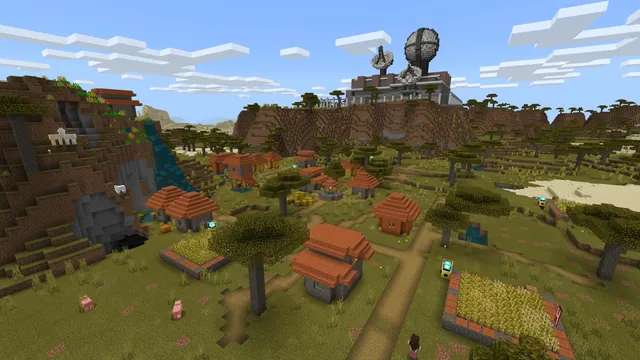
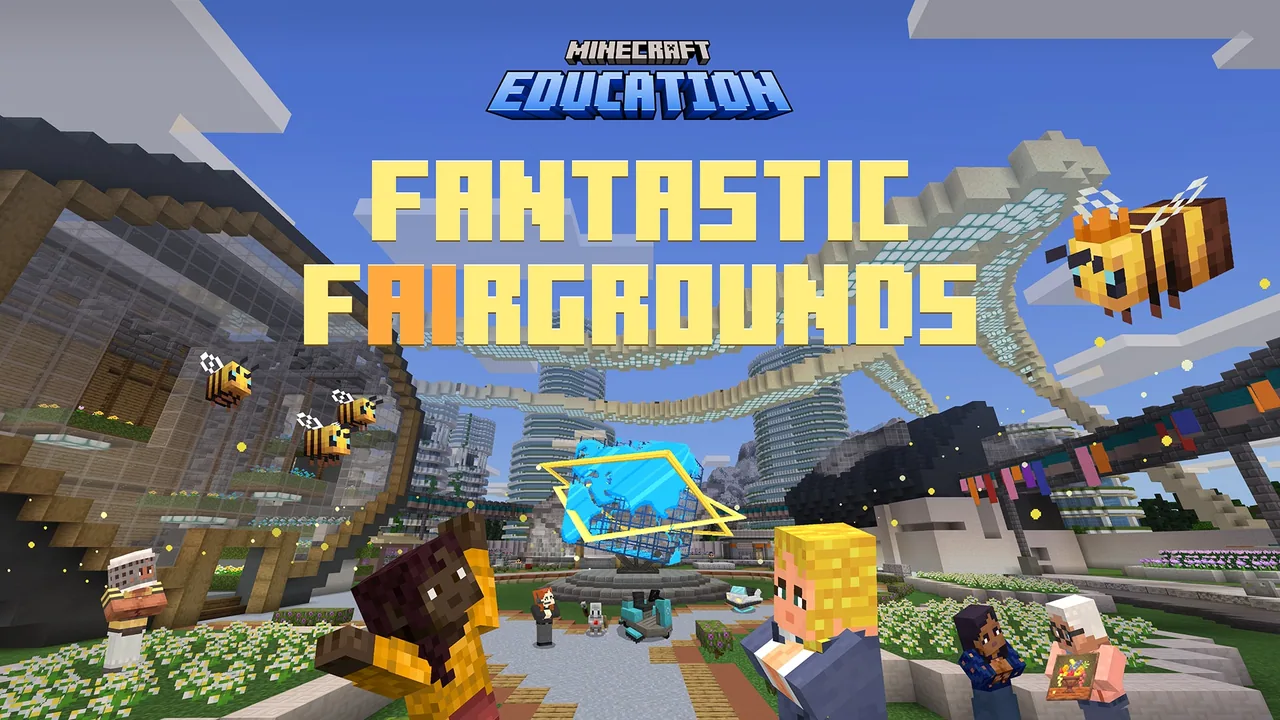
Set within a single-player Minecraft Education map, students step into the shoes of a problem-solver working alongside an AI assistant to assist Park Director Leslie. By touring the Bee Pavilion, Light Show Pavilion, and Art Pavilion, learners resolve park challenges through hands-on data analysis, ethical reasoning, and creative technology applications.
Learning objectives
By the end of this lesson students will be able to:
- Explain core foundations and operational concepts of artificial intelligence.
- Analyze data across diverse pavilion scenarios to resolve park problems.
- Identify ethical dilemmas and potential societal impacts related to AI tools.
- Explore modern career paths and practical applications connected to artificial intelligence.
Blocks and items used in this lesson


Key vocabulary
- AI Literacy
- The ability to understand, critically evaluate, and responsibly use artificial intelligence technologies.
- Algorithmic Thinking
- A structured problem-solving method using step-by-step logic and pattern recognition.
- Data Analysis
- The process of examining information to discover patterns and make decisions or predictions.
- Ethical Dilemma
- A situation requiring a choice between competing moral values or technological trade-offs.
Before class
Lesson sequence
Suggested timing: about 30 minutes in total.
- Introduction to AI Concepts5 min
Introduce the lesson topic and discuss how AI technologies process data to make decisions. Explain the student's role in the fairground as a problem-solver supporting Park Director Leslie alongside an AI assistant.
- Pavilion Investigations15 min
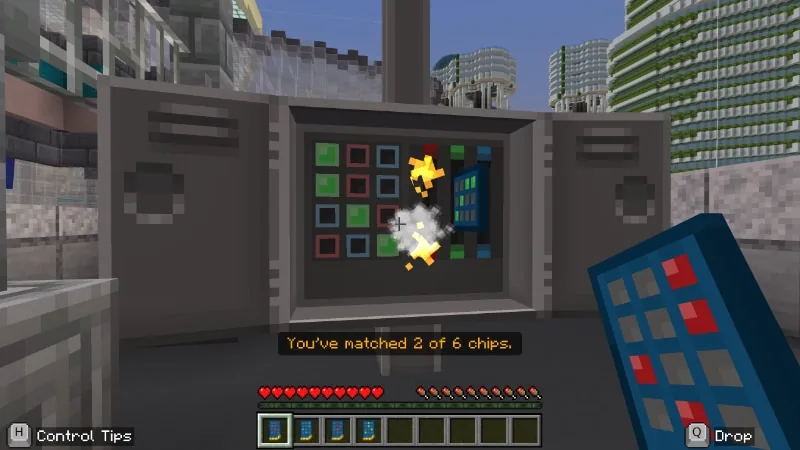
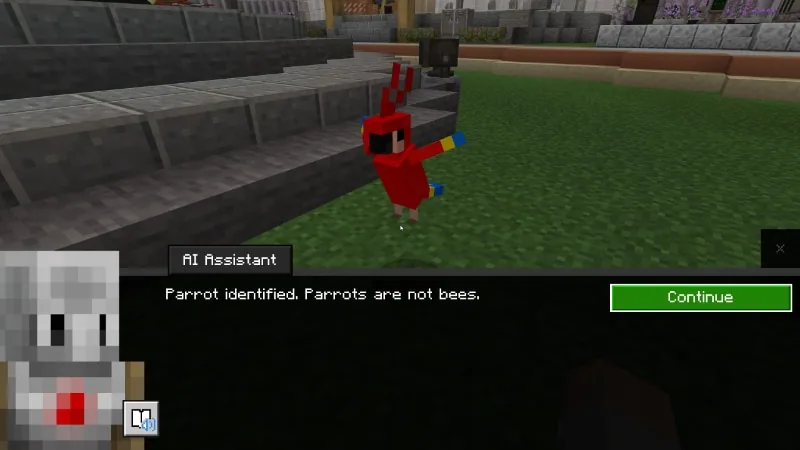
Students enter the single-player world and partner with their AI assistant to tackle park challenges. They navigate through the Bee Pavilion, Light Show Pavilion, and Art Pavilion to evaluate data and resolve operational issues.
- Evaluating AI Dilemmas5 min
Guide learners to reflect on the ethical dilemmas presented during their pavilion tasks. Have them identify potential biases, privacy issues, and the broader consequences of automated decision-making.
- Review and Career Connections5 min
Bring the class together to discuss how the skills practiced in each pavilion connect to real-world AI applications. Conclude with a brief overview of emerging careers that rely on strong AI literacy.
Video
Inside the lesson world

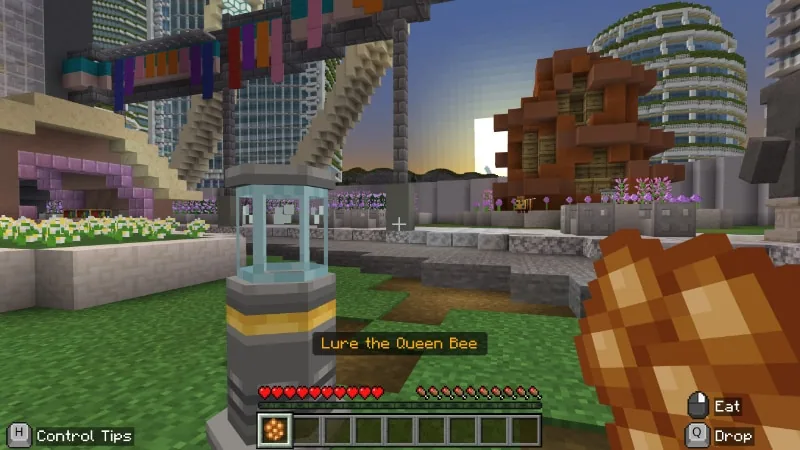

Assessment: success criteria
- Explain how artificial intelligence uses data and pattern recognition to reach conclusions.
- Complete data analysis and problem-solving tasks across all three designated park pavilions.
- Identify at least one ethical concern or bias issue associated with AI systems.
- Describe how AI tools apply to real-world fields and potential future careers.
Differentiation
Allow students to work side-by-side on individual devices so they can discuss pavilion clues and read in-game dialogues together.
Have students write down an idea for a brand new fairground pavilion that uses artificial intelligence to solve an environmental or creative problem.
Knowledge check
5 questions to check understanding after the lesson. Tap an answer to see if it is right; the score appears at the end.
1Who do players assist during their journey through Fantastic Fairgrounds?
Answer: A. The lesson source states that players work alongside an AI assistant to help Park Director Leslie.
2Which three themed areas do students explore to solve park problems?
Answer: B. The challenges are set specifically within the Bee Pavilion, Light Show Pavilion, and Art Pavilion.
3What type of map environment is Fantastic Fairgrounds designed as?
Answer: C. The source identifies Fantastic Fairgrounds as a single-player map.
4Which computational thinking skill is highlighted as a core component of AI literacy?
Answer: D. Algorithmic thinking, such as pattern recognition and abstraction, is listed as an essential component of AI literacy.
5Why is evaluating AI technologies an important focus in this lesson?
Answer: A. Evaluating AI entails recognizing biases, understanding privacy issues, and assessing how technology impacts society.
Resources
- Fantastic Fairgrounds Educator GuideEducator guide and lesson plans for Fantastic Fairgrounds
- Lesson worldOpens the world page in Minecraft Education (sign-in with a school account may be needed).
Part of the AI Foundations curriculum
This is lesson 10 of 18 in AI Foundations.
- AI-1: Who Is That Ocelot?
- AI-2: Mapping Terrain
- AI-3: Sustainable Farming
- AI-4: Ocean Observations
- AI-5: Water Quality
- Unit 9: AI
- AI Adventurers
- AI Wildlife Park
- CyberSafe AI: Dig Deeper
- Fantastic Fairgrounds
- Hour of AI: Field Agent
- Hour of AI: Generation AI
- Hour of AI: The First Night
- Hour of Code: AI for Good
- Hour of Code: Generation AI
- Mini Agent Mission
- Peter Is Here: AI for Cultural Heritage
- Reed Smart: AI Detective
Frequently Asked Questions
Is Fantastic Fairgrounds suitable for multiplayer classrooms?
The lesson map is created for single-player exploration, but students can sit near each other to share ideas and discuss ethical solutions as they play individually.
Do students need prior computer science experience for this map?
No prior computer science or coding background is necessary because the experience is designed for beginners ages eight and older.
Adapted from Fantastic Fairgrounds by Minecraft Education on Minecraft Education, last updated Jul 30, 2026. This classroom version, the timings and the quiz were written by 9Minecraft Education.