- Type
- Lesson plan
- Grade
- Primary (Grades 3-5)
- Ages
- Ages 8-10
- Duration
- 45 min
- Level
- Beginner
How can autonomous robotics and pathfinding algorithms help researchers monitor and protect delicate natural environments?
Overview
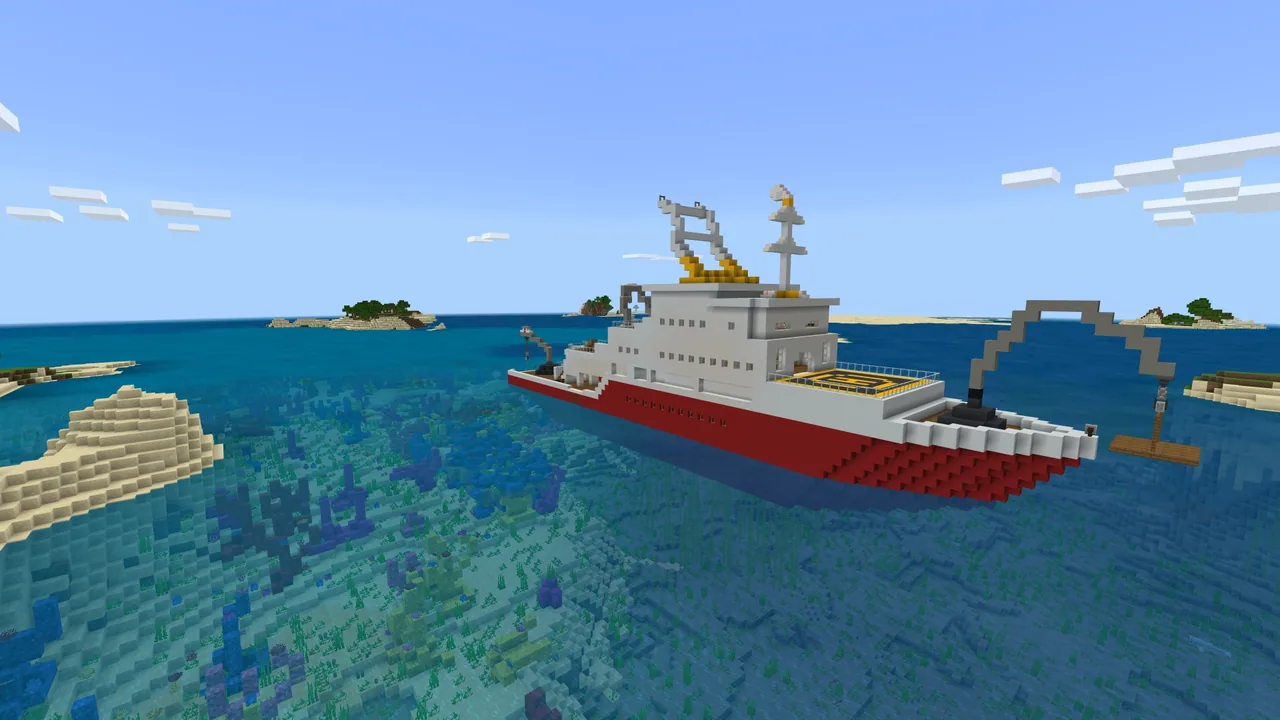
Coral reefs provide critical habitats for marine life and serve as clear indicators of the broader impacts of climate change. In this lesson, students step into the role of ocean researchers working to gather environmental data from delicate underwater ecosystems without causing damage to the fragile environment.
Using Minecraft Education, learners program their Agent to navigate obstacle-filled terrain on the ocean floor to reach and repair damaged sensors. By utilizing pathfinding concepts and reinforcement machine learning algorithms, students discover how autonomous robotics and live datasets help scientists monitor changing natural habitats.
Learning objectives
By the end of this lesson students will be able to:
- Build a live dataset using environmental sensors.
- Explain the concepts of autonomous navigation and pathfinding.
- Describe how reinforcement machine learning algorithms help robots find safe paths through obstacles.
- Identify why coral reefs are valuable indicators of climate change.
Blocks and items used in this lesson
 Agent
 Water Bucket
 Brain Coral Block
 Tube Coral Block
 Fire Coral Block
 Bubble Coral Block
 Horn Coral Block
 Seagrass
Key vocabulary
- Autonomous Navigation
- The ability of a robot or system to travel through an environment on its own without direct human steering.
- Pathfinding
- A computer method for finding the best route between two points while avoiding barriers and hazards.
- Reinforcement Machine Learning
- A type of machine learning where an AI learns optimal behaviors by testing actions and learning from the results.
- Dataset
- A collection of data or measurements gathered together for study and analysis.
Before class
Lesson sequence
Suggested timing: about 45 minutes in total.
- Activity 1: The Great Blue10 min
Introduce the lesson scenario: marine researchers need help tracking ocean conditions around a delicate coral reef. Discuss why reefs are sensitive to climate change and why human divers or heavy equipment might need assistance from small robots.
- Activity 2: Underwater Data10 min
Guide students through collecting live measurements from ocean floor sensors. Explain how an AI system requires continuous live datasets to map an environment that experiences natural changes over time.
- Activity 3: Future Proofing15 min
Introduce pathfinding algorithms and reinforcement learning. Direct students to program their Agent so it can independently navigate through jagged reef obstacles without damaging the surrounding habitat.
- Activity 4: Testing it Out10 min
Students run their navigation code to let the Agent travel autonomously to broken research equipment and complete necessary repairs. Wrap up with a reflection on how autonomous systems adapt when ocean floor conditions change.
Assessment: success criteria
- Student successfully codes the Agent to autonomously reach and service broken research equipment.
- Student explains why autonomous pathfinding is necessary to navigate fragile coral reef environments.
- Student articulates why live data is required to update maps when terrain conditions shift.
Differentiation
Walk through the classroom presentation slides together, modeling how the Agent evaluates obstacles before running navigation code.
Ask advanced learners to explain how reinforcement learning algorithms would respond if a new obstacle suddenly appeared along the Agent's path.
Knowledge check
5 questions to check understanding after the lesson. Tap an answer to see if it is right; the score appears at the end.
1Why are coral reefs valuable for scientists studying the impact of climate change?
Answer: B. Coral reefs provide food and shelter for many species and reflect the overall state of the climate.
2Why does the Agent need to use autonomous pathfinding instead of a pre-set fixed route?
Answer: A. Reefs are delicate and filled with changing obstacles, requiring an AI to generate routes safely.
3What type of machine learning algorithm does the lesson use for pathfinding?
Answer: B. The source specifies that the pathfinding AI utilizes reinforcement machine learning algorithms.
4What is the main task the Agent is coded to accomplish on the seafloor?
Answer: D. The Agent is deployed to reach and repair damaged sensors situated on the ocean floor.
5Why must the AI system rely on live data rather than an old map?
Answer: B. The terrain in the reef changes constantly, so the AI needs live data to avoid obstacles dynamically.
Resources
- Lesson package (.zip)Everything the author attached to this lesson in one download.
- Artificial Intelligence- Ocean ObservationsEDU Guide
- Artificial Intelligence- Ocean ObservationsPresentation
- Artificial IntelligenceCurriculum Overview
- Lesson worldOpens the world page in Minecraft Education (sign-in with a school account may be needed).
Part of the AI Foundations curriculum
This is lesson 4 of 18 in AI Foundations.
- AI-1: Who Is That Ocelot?
- AI-2: Mapping Terrain
- AI-3: Sustainable Farming
- AI-4: Ocean Observations
- AI-5: Water Quality
- Unit 9: AI
- AI Adventurers
- AI Wildlife Park
- CyberSafe AI: Dig Deeper
- Fantastic Fairgrounds
- Hour of AI: Field Agent
- Hour of AI: Generation AI
- Hour of AI: The First Night
- Hour of Code: AI for Good
- Hour of Code: Generation AI
- Mini Agent Mission
- Peter Is Here: AI for Cultural Heritage
- Reed Smart: AI Detective
Frequently Asked Questions
Does this lesson depict an exact real-world AI development cycle?
No, the AI concepts are conceptual in nature and specifically structured to explain the development workflow within Minecraft rather than mirroring industrial AI engineering.
What real-world project relates to this lesson's theme?
A partner called OOICloud uses artificial intelligence to distribute ocean data to scientists worldwide to aid research into climate change.
Adapted from AI-4: Ocean Observations by Minecraft Education on Minecraft Education, last updated Oct 4, 2024. This classroom version, the timings and the quiz were written by 9Minecraft Education.