- Type
- Lesson plan
- Grade
- Primary (Grades 3-5)
- Ages
- Ages 8-10
- Duration
- about 75 min (suggested)
How do plants and pollinators rely on each other to survive and support our food supply?
Overview
Pollination is an essential biological process that allows flowering plants to produce seeds and fruit, supporting global food supplies and natural habitats. Through this lesson, students explore the structural components of flowers and discover how specific animal adaptations enable successful pollination.
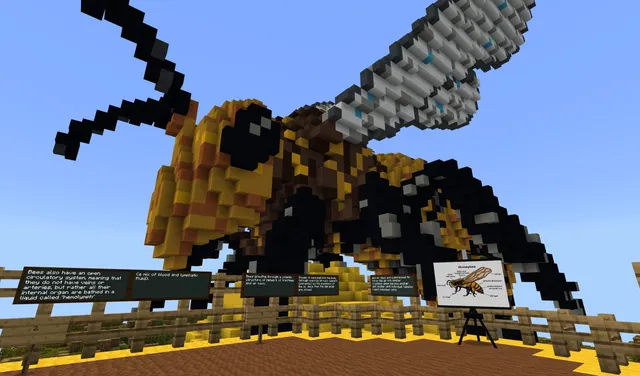
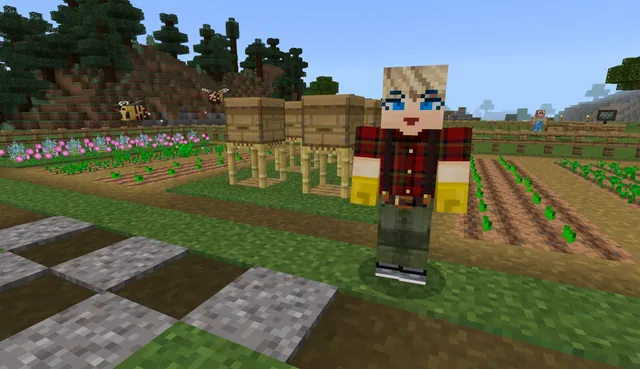
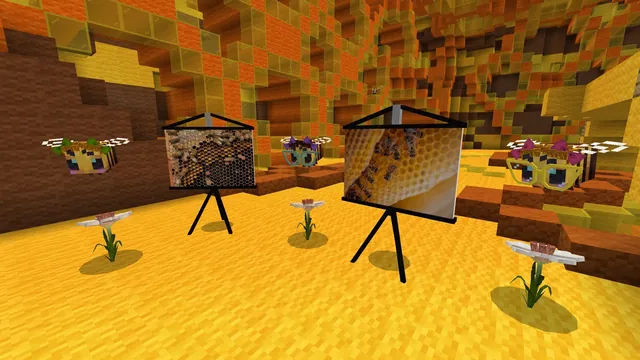
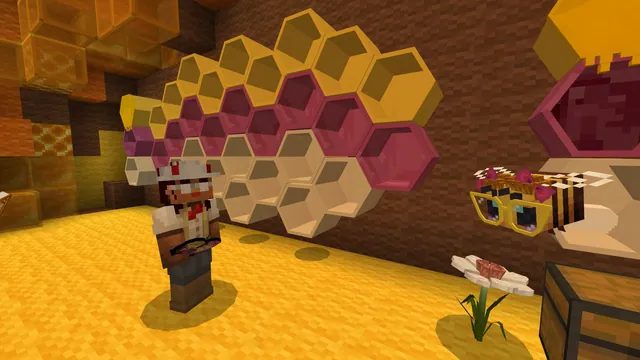
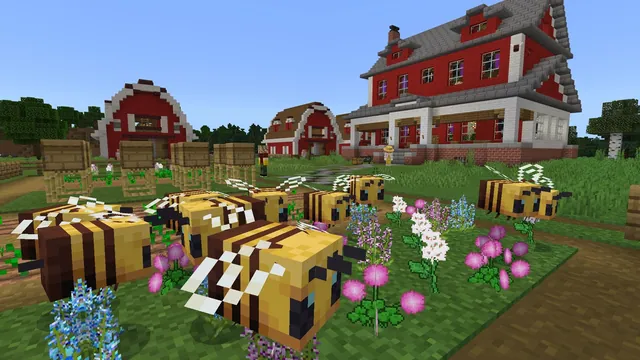
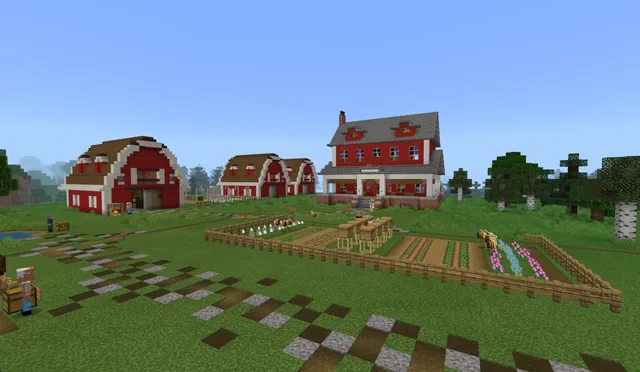
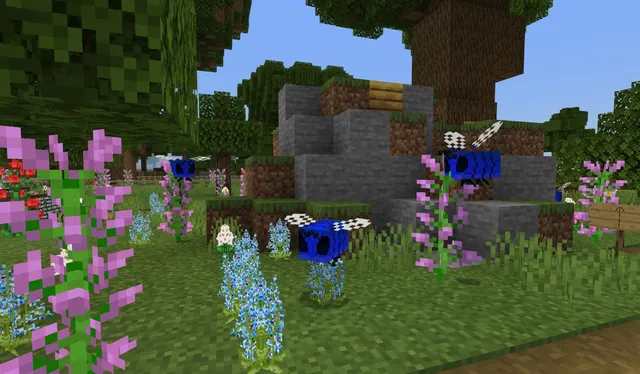
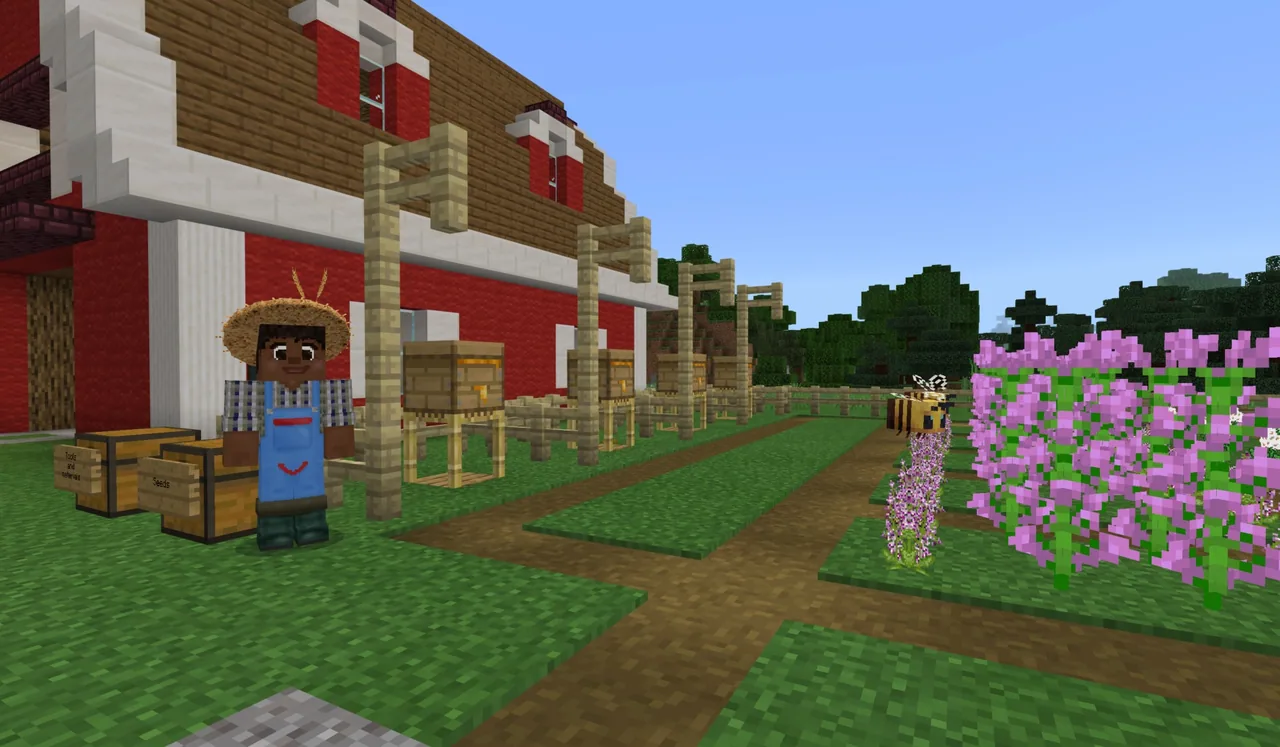
Inside the Kids and Bees Minecraft world, students visit the Farm area to assist a gardener named Terrell. By planting flowers, building hives, and spawning bees, learners directly observe how bees interact with floral resources to produce honey and sustain their colony.
Learning objectives
By the end of this lesson students will be able to:
- Identify key reproductive parts of a flower, including the anther and stigma.
- Explain how pollination enables plants to develop fruit and seeds.
- Describe how physical and behavioral adaptations connect pollinators to specific flowers.
- Construct a pollinator garden and beehives within Minecraft to observe pollinator behaviors.
Blocks and items used in this lesson

Key vocabulary
- Anther
- The male structure of a flower that produces and holds pollen grains.
- Stigma
- The female structure of a flower that receives pollen during pollination.
- Pollination
- The movement of pollen from the anther to the stigma, allowing fertilization.
- Adaptation
- A physical feature or behavior that helps a living thing survive in its environment.
Before class
Lesson sequence
Suggested timing: about 75 minutes in total.
- Introduction and Video Analysis20 min
Introduce pollination as the transfer of pollen from the male anther to the female stigma, emphasizing that plants like bananas, strawberries, and grass need pollination to make fruit and seeds. Provide the worksheet or have students fold blank paper into four sections labeled flowers, animals, food, and questions.
Play the video The Beauty of Pollination, screening it a second time if needed so learners can record specific physical traits, behaviors, and questions.
- Class Discussion and Anatomy15 min
Review student notes as a whole group. Highlight the mutual relationship between plants and pollinators, how floral structures match animal adaptations, and why pollinators are vital to human food systems.
- Minecraft Farm and Garden Build25 min
Direct students into the Farm section of the Kids and Bees world. Students talk to Terrell the gardener, watch the embedded video on bees, and accept his request to help develop the pollinator garden.
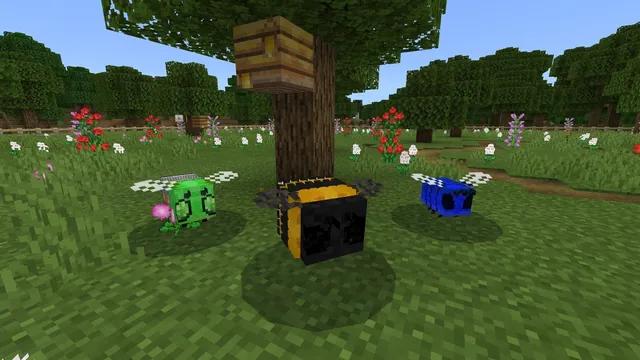
Students plant flowers, construct hives, and spawn bees in the garden plot.
- Observation and Reflection15 min
Students observe the bees gathering nectar and pollen, flying back to the hive to feed young bees, and making honey. Remind students to hold a flower to observe bee reactions.
Conclude with a class reflection on how the simulated hive depends on the surrounding garden.
Assessment: success criteria
- Student accurately identifies the anther and stigma and explains their functions.
- Student records relevant observations in all four quadrants of the note sheet.
- Student explains why pollinators are necessary for seed and fruit production.
- Student builds a complete garden habitat in Minecraft that supports bee pollination.
Differentiation
Provide a pre-labeled diagram of flower anatomy and pair students to assist with navigation in the Minecraft world.
Have students compile a list of additional food crops mentioned in class and explain how a decrease in pollinators would affect them.
Knowledge check
5 questions to check understanding after the lesson. Tap an answer to see if it is right; the score appears at the end.
1Which part of the flower produces and stores pollen?
Answer: B. The anther is the male part of the flower where pollen grains are produced.
2What transfer must occur for a plant to form seeds and fruit?
Answer: A. Pollination is defined as the transfer of pollen from the male anther to the female stigma.
3Which four labels are used on the folded video observation sheet?
Answer: D. Students divide their paper into four quadrants labeled flowers, animals, food, and questions.
4Which character introduces the pollinator garden task in the Minecraft Farm world?
Answer: C. Terrell is the in-game gardener who talks to students about his pollinator garden.
5What happens in Minecraft when a player holds a flower near bees?
Answer: B. Bees in the game show high interest and follow players who are holding flowers.
Resources
- Lesson package (.zip)Everything the author attached to this lesson in one download.
- Pollination Anatomy
- The Beauty of Pollination
- Kids and Bees: Pollination Teacher's Guide
- Lesson worldOpens the world page in Minecraft Education (sign-in with a school account may be needed).
Part of the Build with Bees curriculum
This is lesson 11 of 11 in Build with Bees.
- BUILD WITH BEES: ANATOMY
- BUILD WITH BEES: BEE A HERO
- BUILD WITH BEES: BEE NESTS
- BUILD WITH BEES: BEE TREASURES
- BUILD WITH BEES: BEESWAX
- BUILD WITH BEES: BUMBLE BUZZ
- BUILD WITH BEES: FARMING
- BUILD WITH BEES: HABITAT
- BUILD WITH BEES: HONEY
- BUILD WITH BEES: LIFE CYCLE
- BUILD WITH BEES: POLLINATION
Frequently Asked Questions
What should I do if I do not have printed copies of the worksheet?
Give each student a blank sheet of paper and guide them to make one hot-dog fold and one hamburger fold, creating four quadrants labeled flowers, animals, food, and questions.
Where in the Minecraft world does this lesson take place?
Students work in the Farm area of the Kids and Bees world file, which is the first lesson of that environment.
What are the primary building tasks students must complete in Minecraft?
Students plant a flower garden to support pollinators, build bee hives, and spawn bees to observe pollination in action.
Adapted from BUILD WITH BEES: POLLINATION by Sarah Red-Laird on Minecraft Education, last updated Jul 21, 2025. This classroom version, the timings and the quiz were written by 9Minecraft Education.