- Type
- Lesson plan
- Grade
- Primary (Grades 3-5)
- Ages
- Ages 8-10
- Duration
- about 1.5 hours (suggested)
How do different nesting styles reflect the ways bees adapt to survive in their environments?
Overview
Bees have evolved diverse nesting strategies across more than twenty thousand species over millions of years. In this lesson, learners investigate how varying habitats drive both physical traits and instinctive behaviors, grouping bee nesting styles into cavity, tunnel, and ground shelters.
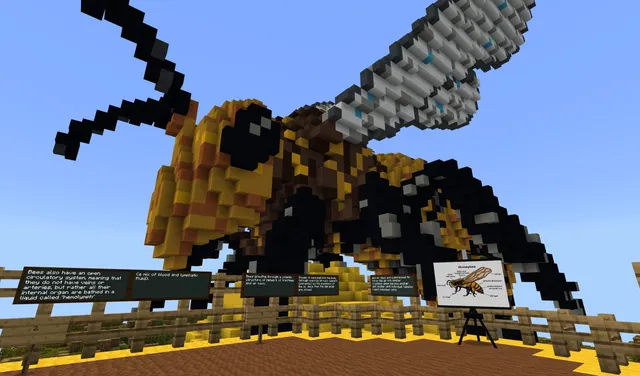
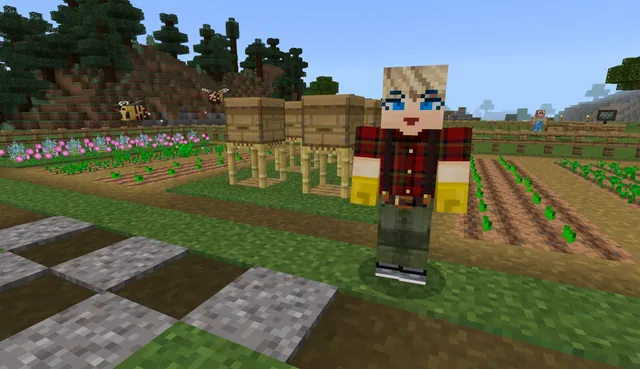
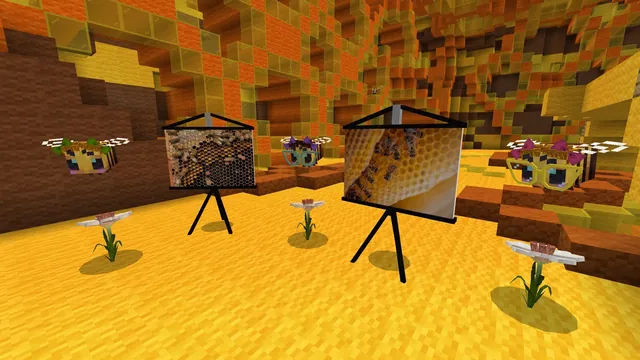
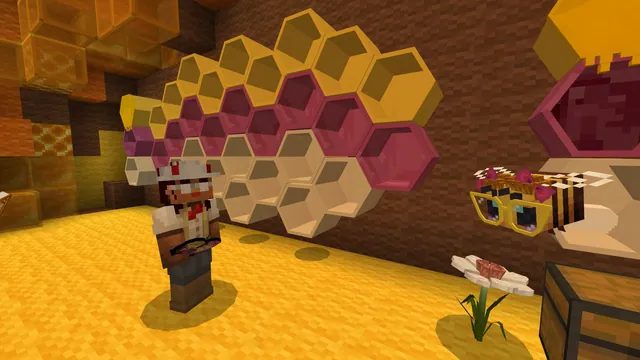
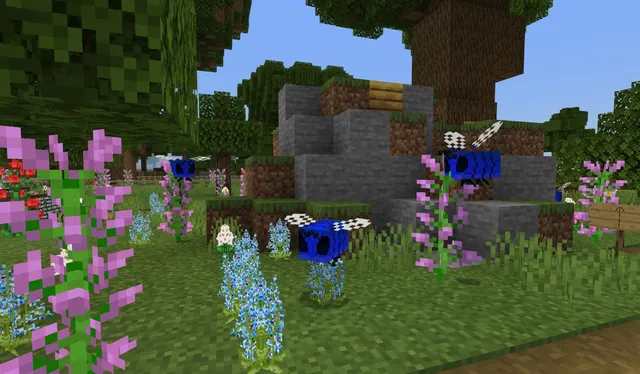
Students reinforce their observations by entering the Beetopia area inside the Kids and Bees Minecraft world. Interacting with in-game characters such as Bee Girl and Beekeeper Sarah, students discover the essential needs of a colony and the environmental disturbances that affect bee survival.
Learning objectives
By the end of this lesson students will be able to:
- Identify and describe cavity, tunnel, and ground nesting styles used by bees.
- Distinguish between physical body adaptations and behavioral adaptations.
- Analyze how environmental conditions and disturbances impact nest building and colony survival.
- Interact with non-player characters in Minecraft Beetopia to examine colony needs.
Blocks and items used in this lesson
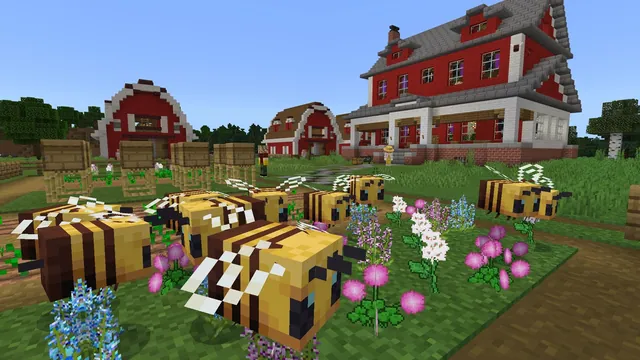
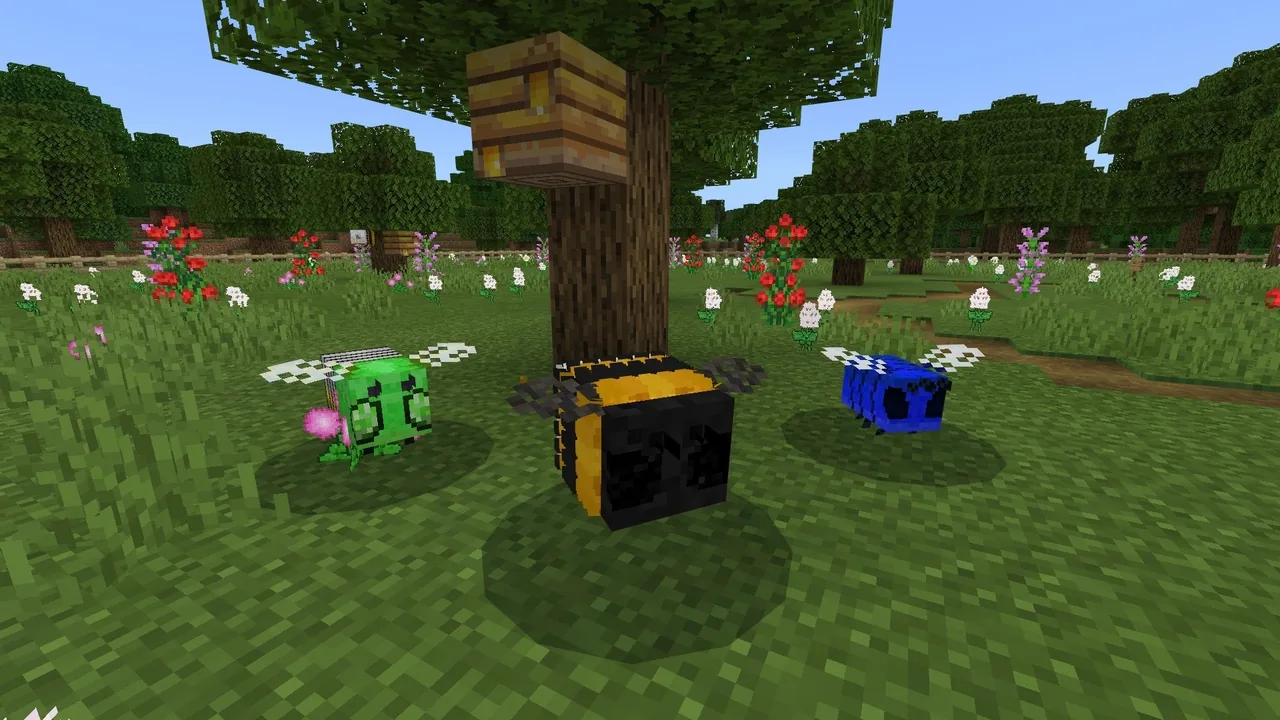
 Bee
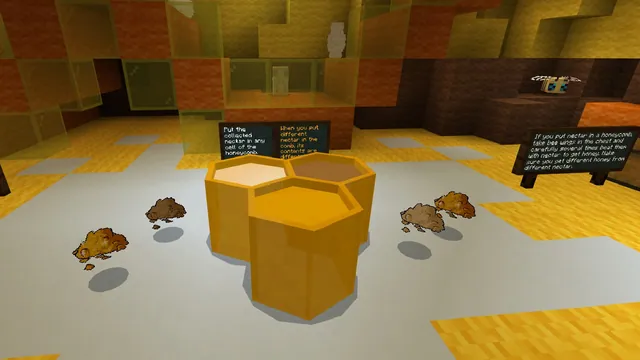
 Honeycomb
Key vocabulary
- Adaptation
- A specialized physical feature or behavior that helps an organism survive in its habitat.
- Behavioral Adaptation
- An action or habit an animal carries out to improve its chances of survival.
- Physical Adaptation
- A specific structural part of an organism's body that supports survival.
- Cavity Nest
- A nest built inside an existing hollow chamber, such as a hollow tree, hive box, or abandoned animal nest.
- Tunnel Nest
- A nest constructed inside narrow tubes, drilled wood, reeds, or empty shells.
- Ground Nest
- A nest excavated directly into soil or dirt by burrowing bees.
Before class
Lesson sequence
Suggested timing: about 90 minutes in total.
- Introduction to Bee Adaptations15 min
Review the concept of adaptation as a trait developed over generations that aids survival, highlighting the distinction between structural body features and behavioral actions. Share that bees first appeared roughly 120 million years ago and now encompass over 20,000 distinct species across the globe.
- Comparing Nesting Strategies25 min
Distribute the nesting comparison chart and introduce the three primary nest categories: cavity, tunnel, and ground. Present selected multimedia examples—such as honey bees in hollow trees, leafcutter or mason bees in tunnels, and burrowing bees in soil—pausing between each for students to record observations, infer habitat pressures, and classify each trait as physical or behavioral.
- Beetopia Minecraft Exploration35 min
Instruct students to load the Kids and Bees world and navigate to Beetopia. Have learners locate the non-player character Bee Girl, who directs them to Beekeeper Sarah to discover what bee colonies require to survive and how environmental pressures affect them.
- Review and Synthesis15 min
Bring the class together to review student worksheets. Ask learners to defend their classification of adaptations and explain how environmental disturbances might help or harm specific nesting styles.
Assessment: success criteria
- Accurately names and defines cavity, tunnel, and ground nests on the comparison sheet.
- Provides a justified defense categorizing a given nest adaptation as physical or behavioral.
- Explains at least one way an environmental disturbance or habitat condition influences where a bee nests.
- Shares colony survival needs learned from in-game characters in Beetopia.
Differentiation
Display a visual reference guide showing clear definitions and picture examples of physical versus behavioral traits while students complete their charts.
Challenge students to describe a specific environmental disruption, such as deforestation or heavy rainfall, and explain which nesting type would suffer the greatest impact.
Knowledge check
5 questions to check understanding after the lesson. Tap an answer to see if it is right; the score appears at the end.
1What is the primary difference between a behavioral adaptation and a physical adaptation?
Answer: A. Behavioral adaptations are actions an organism performs, whereas physical adaptations are structural parts of its body.
2Which of the following is considered a cavity-nesting bee according to the lesson?
Answer: C. Bumble bees occupying an old mouse nest represent a cavity-nesting adaptation.
3About how long ago did the first bee appear on Earth?
Answer: D. The lesson notes that the earliest bees emerged roughly 120 million years ago.
4Which nesting type includes bees that burrow straight into the earth?
Answer: B. Ground-nesting bees, such as sweat bees and burrowing bees, construct their nests by digging into the soil.
5Which in-game character in Beetopia teaches students about the requirements and difficulties facing a bee colony?
Answer: B. Bee Girl directs learners to Beekeeper Sarah, who explains colony needs and survival challenges.
Resources
- Lesson package (.zip)Everything the author attached to this lesson in one download.
- Bee Nests: Comparing Adaptations WorksheetThis worksheet guides students in comparing physical and behavioral adaptations shown in different bee species’ nesting habits.
- Kids & Bees: Bee Nests Teacher's Guide
- Lesson worldOpens the world page in Minecraft Education (sign-in with a school account may be needed).
Part of the Build with Bees curriculum
This is lesson 3 of 11 in Build with Bees.
- BUILD WITH BEES: ANATOMY
- BUILD WITH BEES: BEE A HERO
- BUILD WITH BEES: BEE NESTS
- BUILD WITH BEES: BEE TREASURES
- BUILD WITH BEES: BEESWAX
- BUILD WITH BEES: BUMBLE BUZZ
- BUILD WITH BEES: FARMING
- BUILD WITH BEES: HABITAT
- BUILD WITH BEES: HONEY
- BUILD WITH BEES: LIFE CYCLE
- BUILD WITH BEES: POLLINATION
Frequently Asked Questions
What should I do if students have not finished the previous Beetopia lesson?
Students can still participate fully. Simply direct them to speak with Bee Girl when they enter Beetopia, and she will introduce them to Beekeeper Sarah to cover the necessary background on colony survival.
How many media examples do I need to present during the direct instruction phase?
You should show at least one example for each of the three nesting types: cavity, tunnel, and ground. The lesson recommends starred options if you are pressed for time.
Adapted from BUILD WITH BEES: BEE NESTS by Sarah Red-Laird on Minecraft Education, last updated Jul 21, 2025. This classroom version, the timings and the quiz were written by 9Minecraft Education.