- Type
- Lesson plan
- Grade
- Primary (Grades 3-5)
- Ages
- Ages 8-10
- Duration
- about 85 min (suggested)
What components must a habitat provide to support a bee colony throughout its life cycle?
Overview
All living organisms depend on specific habitat conditions to survive and thrive throughout their life cycles. In this lesson, students investigate what bees need during each phase of life, identify environmental dangers that put them at risk, and consider how social insect colonies work together.
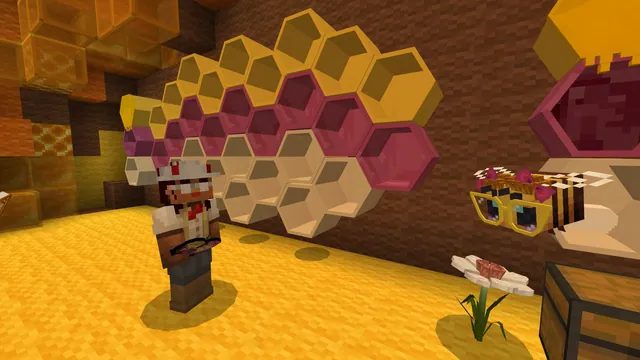
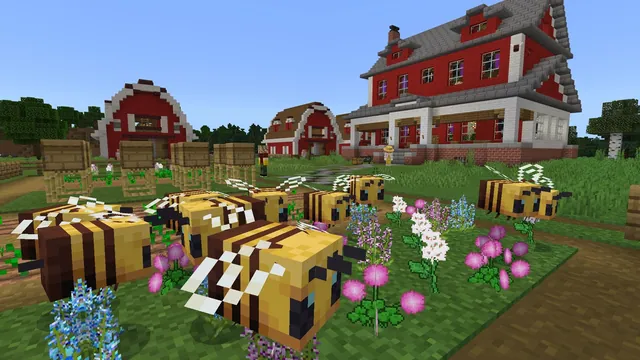
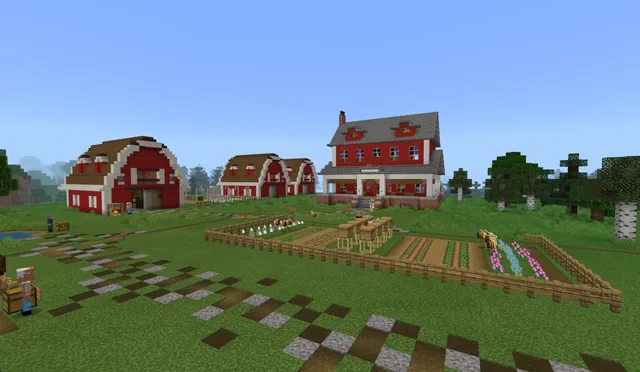
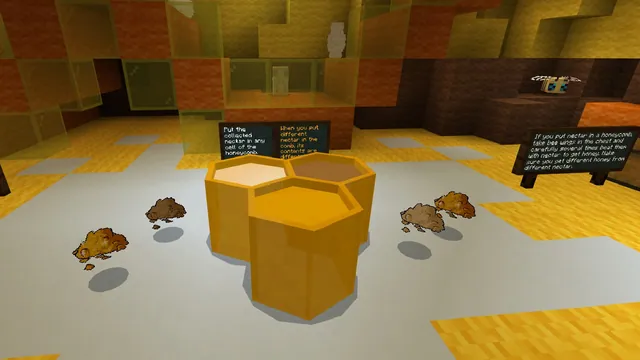
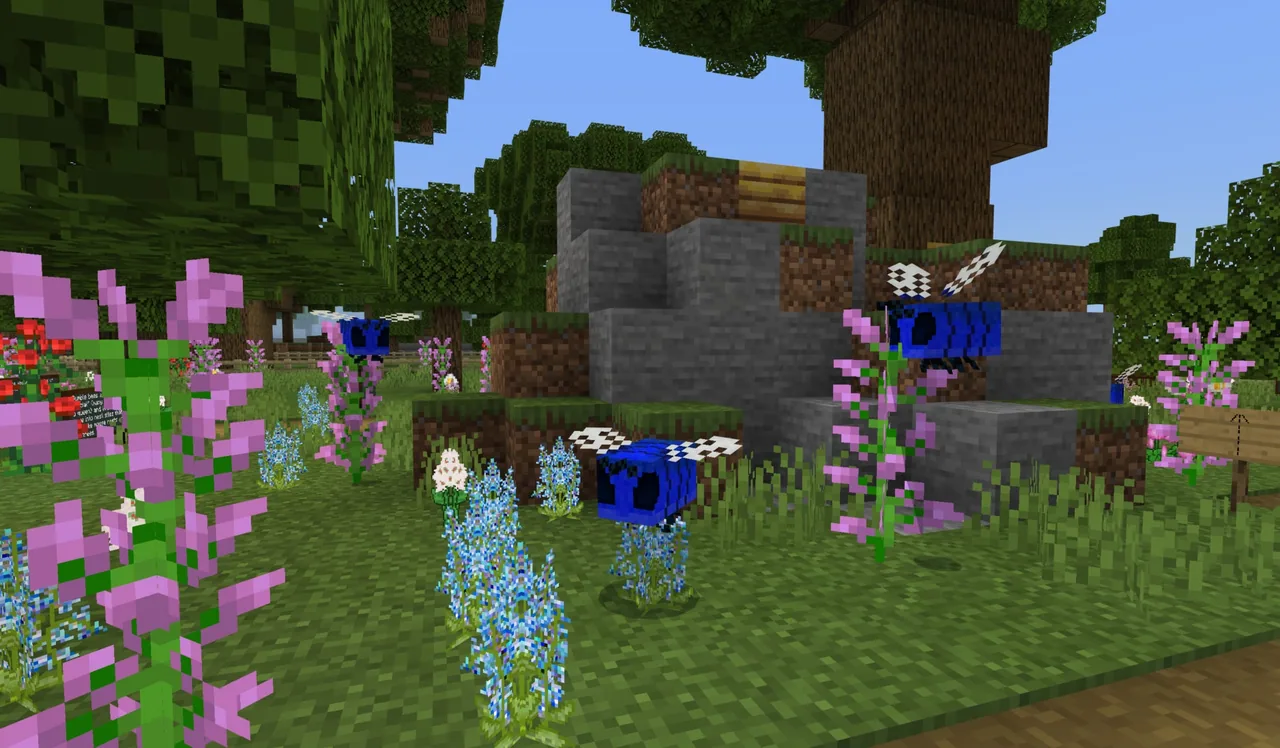
Using the Kids and Bees world, learners explore curated gardens to observe habitat features and speak with non-player characters. Students then apply their findings in an empty plot by digging ground nests, digging ponds, planting flowers, and releasing bees to observe active pollination.
Learning objectives
By the end of this lesson students will be able to:
- Identify the core habitat requirements and life stages of bees.
- Describe environmental threats that can endanger bee survival.
- Design and construct a functioning bee sanctuary in Minecraft featuring water, flowers, and nesting areas.
- Compare the collaborative structure of bee colonies to human families.
Blocks and items used in this lesson


Key vocabulary
- Habitat
- The natural home or environment where an organism finds food, water, and shelter to live.
- Colony
- A organized community of individuals of the same species living and working together.
- Pollination
- The transfer of pollen between flowers, which allows plants to produce seeds and fruit.
Before class
Lesson sequence
Suggested timing: about 85 minutes in total.
- Introduction15 min
Introduce the goal of designing a thriving Beetopia for bee colonies. Read the Bumblebee Conservation Trust lifecycle resource as a class to examine how bee needs change across seasons, and prompt students to brainstorm fundamental survival needs and environmental threats.
- Garden Exploration20 min
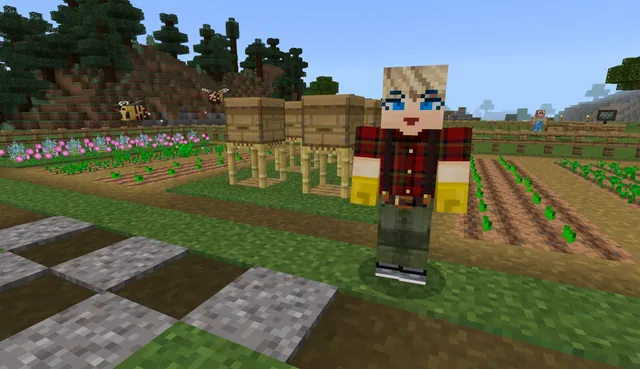
Direct students to enter the Kids and Bees world and travel to Beetopia. Students speak with Bee Girl and Beekeeper Sarah to study survival needs, then visit Carl at the Sweat Bee Garden and tour the Bumble Bee Garden while recording findings using a camera, quill, and pen taken from garden chests.
- Mid-Lesson Check-In10 min
Pause gameplay and refocus on the classroom. Lead a brief discussion about what students observed in the gardens, emphasizing life cycle stages, required habitat elements, and dangers to bee health.
- Habitat Construction25 min
Send students back into the game to an open field next to either garden. Working individually or in small teams, students use shovels to hollow out ground nests, plant flowers, and dig ponds before releasing bees to watch them gather pollen and return to their nests.
- Group Reflection15 min
Form new small groups and distribute the Building Beetopia worksheet. A student scribe records group choices regarding habitat design, followed by a whole-class share where groups explain how bee colonies resemble human families.
Assessment: success criteria
- Student accurately lists the four stages of a bee life cycle.
- Student names essential survival requirements including flowers, water, and nest sites.
- Student identifies common factors and threats that risk bee survival.
- Student's completed in-game habitat successfully attracts bees that collect pollen and return to nests.
Differentiation
Allow students to build in small collaborative groups so peers can assist with digging ponds and planting flowers.
Assign the optional creative writing exercise described in the Teacher's Guide to extend learning.
Knowledge check
5 questions to check understanding after the lesson. Tap an answer to see if it is right; the score appears at the end.
1Which NPC introduces students to Beekeeper Sarah in Beetopia?
Answer: B. The lesson directs students to speak with the NPC Bee Girl, who then introduces Beekeeper Sarah.
2What tools are retrieved from chests for recording observations during garden exploration?
Answer: B. Students are invited to take a camera, quill, and pen from the chest to record what they learn.
3What tool do students use in the empty field to dig ground nests?
Answer: D. The activity states that students can dig holes with shovels to make nests in the ground.
4What reading source is shared with the class during the opening activity?
Answer: C. The class reads the Bumblebee Conservation Trust's page on the Bumblebee Lifecycle to begin the lesson.
5What comparison do students discuss and share with the class during the final group wrap-up?
Answer: A. Representatives from each group share one way in which bee colonies are like human families.
Resources
- Lesson package (.zip)Everything the author attached to this lesson in one download.
- Building Beetopia Worksheet
- Kids & Bees: Habitat Teacher's Guide
- Lesson worldOpens the world page in Minecraft Education (sign-in with a school account may be needed).
Part of the Build with Bees curriculum
This is lesson 8 of 11 in Build with Bees.
- BUILD WITH BEES: ANATOMY
- BUILD WITH BEES: BEE A HERO
- BUILD WITH BEES: BEE NESTS
- BUILD WITH BEES: BEE TREASURES
- BUILD WITH BEES: BEESWAX
- BUILD WITH BEES: BUMBLE BUZZ
- BUILD WITH BEES: FARMING
- BUILD WITH BEES: HABITAT
- BUILD WITH BEES: HONEY
- BUILD WITH BEES: LIFE CYCLE
- BUILD WITH BEES: POLLINATION
Frequently Asked Questions
Can students work together during the building phase?
Yes, students can construct their bee-friendly gardens individually or in collaboration mode with a small group of classmates.
What should students build in their empty field to support bees?
Students should dig ground holes for nests using shovels, add water ponds, and plant flowers so bees can pollinate and return to their nests.
Adapted from BUILD WITH BEES: HABITAT by Sarah Red-Laird on Minecraft Education, last updated Jul 21, 2025. This classroom version, the timings and the quiz were written by 9Minecraft Education.