- Type
- Lesson plan
- Grade
- Primary (Grades 3-5)
- Ages
- Ages 8-10
- Duration
- about 1.6 hours (suggested)
- Skills
- CharacterCitizenship
How can agricultural practices support rather than diminish bee populations?
Overview
Bee populations have experienced significant declines since World War II due to modern agricultural habits and environmental challenges, making sustainable food production essential. In this lesson, students examine the factors harming bees and explore how regenerative farming practices can reverse these problems by restoring balanced ecosystems.
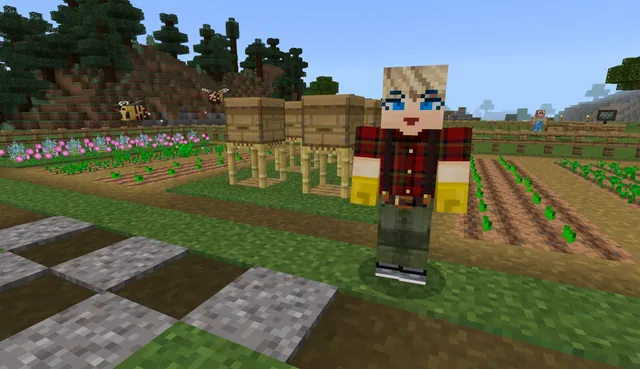
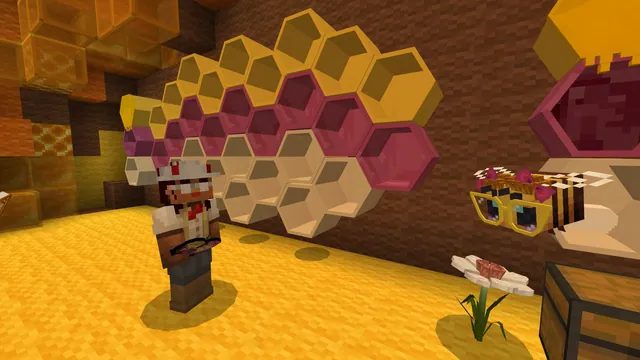
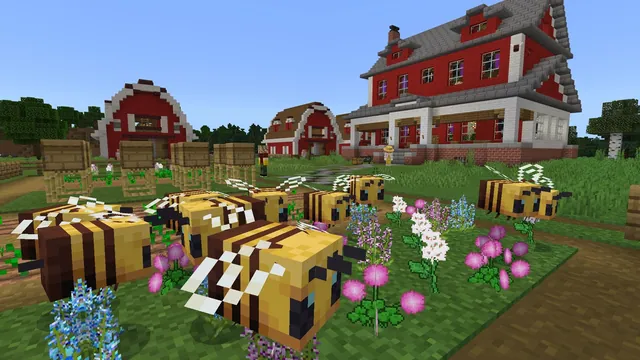
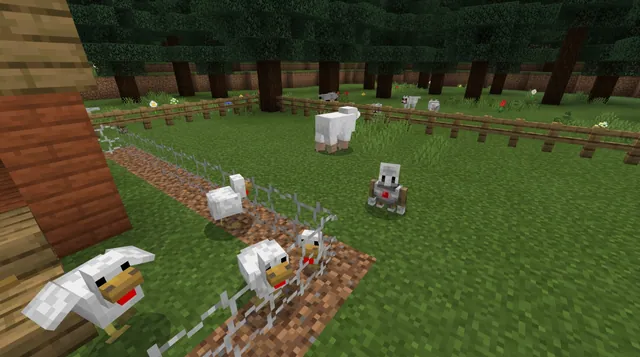
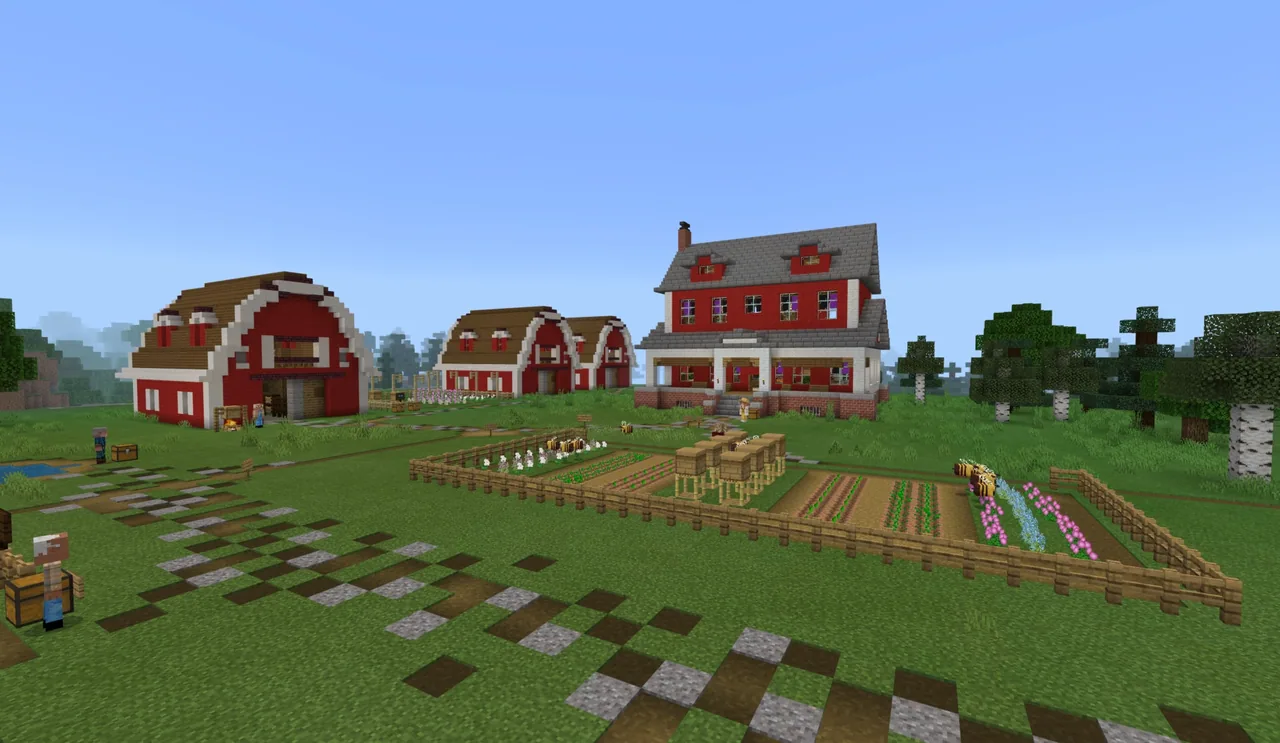
Using the Kids and Bees Minecraft world, learners visit an example farm guided by Poppy and read instructional blackboards before consulting Caesar and Thurgood. Students then apply these ecological principles by designing and constructing their own bee-friendly farms in an open agricultural area.
Learning objectives
By the end of this lesson students will be able to:
- Identify major human and environmental causes of honey bee decline.
- Explain how regenerative farming techniques can help solve pollinator habitat loss.
- Analyze a bee-friendly demonstration farm and instructional blackboards inside Minecraft.
- Design and build an agricultural space in Minecraft that supports bee health.
Blocks and items used in this lesson


Key vocabulary
- Regenerative Agriculture
- Farming practices that restore soil health, foster biodiversity, and support local ecosystems.
- Monoculture
- The practice of growing only one single crop over a large area of farmland.
- Cover Crop
- Plants such as clover, alfalfa, or buckwheat grown to protect and enrich the soil.
Before class
Lesson sequence
Suggested timing: about 95 minutes in total.
- Introduction: Video Analysis and T-Chart35 min
Draw a T-chart on the board labeled 'Disappearing Bees' and 'Regenerative Agriculture'. Watch Dr. Marla Spivak's TED Talk to list factors causing bee decline in the left column. Then watch What is Regenerative Agriculture? to list sustainable farming methods in the right column.
Guide students to draw connections between the problems and solutions, such as linking monocultures and food deserts to planting diverse floral varieties.
- Minecraft Exploration: Demonstration Farm15 min
Load the Kids and Bees world and send students to the farm area. Have them meet Poppy for a tour of the bee-friendly demo farm and instruct them to read all nearby blackboards explaining regenerative concepts.
- Minecraft Building: Bee-Friendly Farm25 min
Direct students to the open farm field where they can speak with Caesar and Thurgood. After reviewing the instructional blackboards, students work individually or in small teams to construct their own bee-friendly farm incorporating diverse food sources.
- In-Class Activity: Bee Habitat Musical Chairs20 min
Set up chairs in an outward-facing circle and attach habitat signs such as dandelions, clover cover crops, milkweed, flowering hedgerows, and ponds. Run the musical chairs activity to reinforce the variety of habitats and forage bees need to thrive.
Assessment: success criteria
- Student accurately matches specific bee decline issues to regenerative agriculture solutions on the class chart.
- Student describes how bee health and agricultural sustainability are related.
- Student constructs a Minecraft farm that features bee-friendly practices observed on the blackboards.
- Student lists human actions that support pollinator health.
Differentiation
Allow students to work with a partner and revisit Poppy's demonstration farm for visual reference while building.
Challenge students to integrate multiple specific cover crops and habitat types from the musical chairs list into their farm designs.
Knowledge check
5 questions to check understanding after the lesson. Tap an answer to see if it is right; the score appears at the end.
1Which farming condition was identified as creating food deserts for bees?
Answer: A. The lesson connects monocultures and food deserts with the problem of disappearing bees.
2Which character gives students a demonstration of a bee-friendly farm in Minecraft?
Answer: C. Students meet Poppy in the farm area for a demonstration of a bee-friendly farm.
3Who do students speak to when they reach the empty farm field?
Answer: B. Students walk over to the empty field to talk to Caesar and Thurgood about farming.
4Which combination of plants is listed as a cover crop sign for the habitat activity?
Answer: D. The source specifies clover, alfalfa, and buckwheat cover crop as one of the habitat sign options.
5According to the introductory discussion questions, when did bees begin their notable decline?
Answer: C. The introductory questions ask why bees began to decline after World War II.
Resources
- Lesson package (.zip)Everything the author attached to this lesson in one download.
- Kids & Bees: Farming Teacher's Guide
- Lesson worldOpens the world page in Minecraft Education (sign-in with a school account may be needed).
Part of the Build with Bees curriculum
This is lesson 7 of 11 in Build with Bees.
- BUILD WITH BEES: ANATOMY
- BUILD WITH BEES: BEE A HERO
- BUILD WITH BEES: BEE NESTS
- BUILD WITH BEES: BEE TREASURES
- BUILD WITH BEES: BEESWAX
- BUILD WITH BEES: BUMBLE BUZZ
- BUILD WITH BEES: FARMING
- BUILD WITH BEES: HABITAT
- BUILD WITH BEES: HONEY
- BUILD WITH BEES: LIFE CYCLE
- BUILD WITH BEES: POLLINATION
Frequently Asked Questions
Can students work in groups during the Minecraft building portion?
Yes, the farm construction activity in the empty field can be completed individually or collaboratively in small groups.
What materials are needed for the active in-class game?
You will need chairs arranged facing outward in a circle and prepared signs featuring bee habitat items like clover, dandelions, milkweed, apple orchards, and ponds.
What world should be loaded for this lesson?
You should load the Kids and Bees Farm world, developed by Lifeboat in partnership with the American Beekeeping Federation's Kids and Bees program.
Adapted from BUILD WITH BEES: FARMING by Sarah Red-Laird on Minecraft Education, last updated Jul 21, 2025. This classroom version, the timings and the quiz were written by 9Minecraft Education.