- Type
- Lesson plan
- Subject
- ScienceArt, Music & Design
- Grade
- Primary (Grades 3-5)
- Ages
- Ages 8-10
- Duration
- about 3 hours (suggested)
- Skills
- CollaborationCreativity
How do rockets generate the power to send astronauts into space and connect with the International Space Station?
Overview
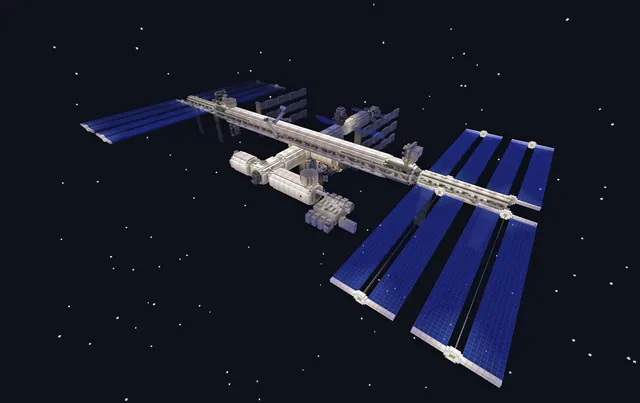
Astronauts journeying to the International Space Station must reach an orbit over two hundred miles above Earth using spacecraft propelled by rocket engines. In this multi-day lesson, students discover how rocketry works, exploring the combination of fuels needed for liftoff and the delicate maneuvers required to dock with an orbiting station.
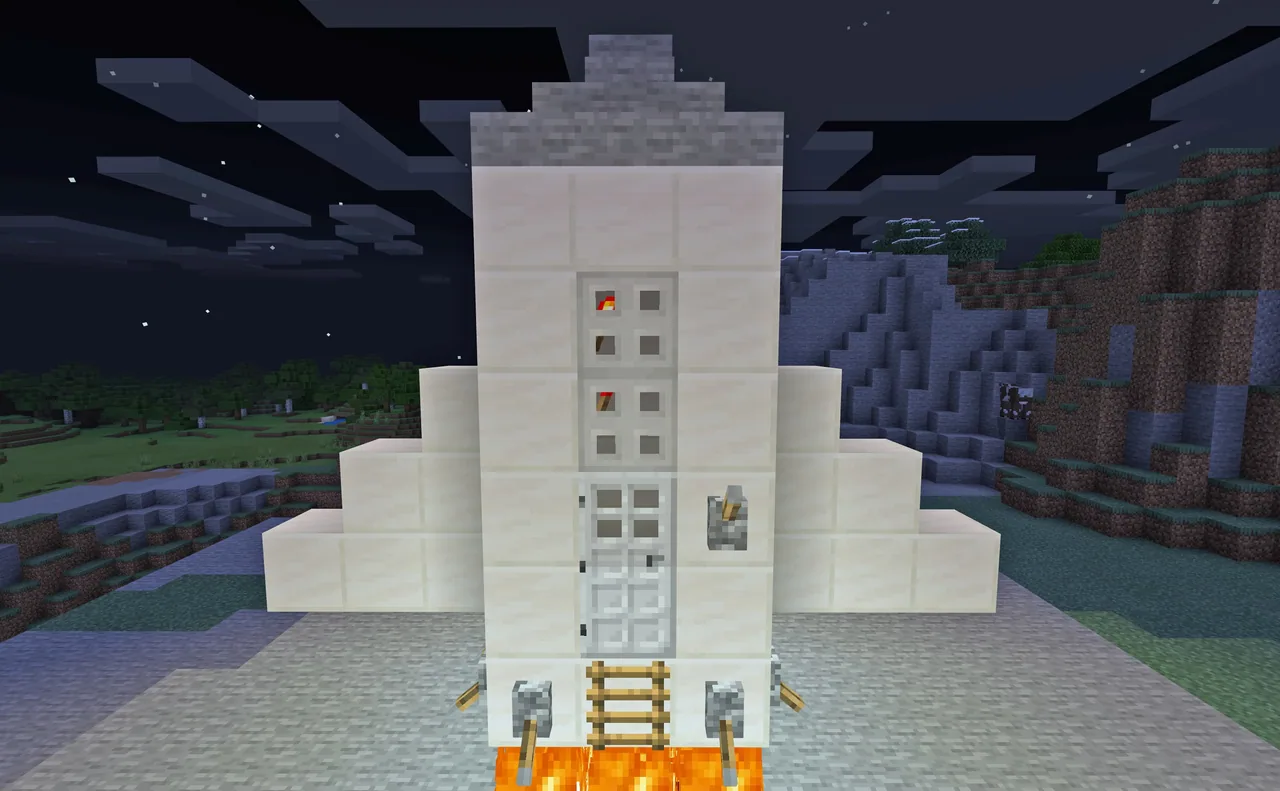
Learners apply these scientific principles directly by designing, building, and launching physical bottle rockets using solid and liquid household fuels. The unit culminates in the digital environment, where students import the Spaceships Minecraft Challenge world to engineer their own custom rocket designs during a timed creative build and gallery walk.
Learning objectives
By the end of this lesson students will be able to:
- Explain how rockets transport astronauts to the International Space Station and dock upon arrival.
- Describe how solid and liquid propellants work together to launch a rocket.
- Build and launch a functional model bottle rocket using baking soda and vinegar.
- Design and construct an original rocket inside the Spaceships Minecraft Challenge world.
Blocks and items used in this lesson


Key vocabulary
- International Space Station (ISS)
- A large research station orbiting 210 to 250 miles above Earth where astronauts live and conduct science experiments.
- Docking
- The careful procedure of connecting a visiting spacecraft securely to the space station while in orbit.
- Solid Fuel
- A solid propellant used in rockets, represented in the classroom experiment by packets of baking soda.
- Liquid Fuel
- A liquid propellant used in rocket engines, represented in the classroom experiment by vinegar.
Before class
Lesson sequence
Suggested timing: about 180 minutes in total.
- Explore Space Travel and Rocket Propulsion60 min
Begin by screening NASA shuttle launch footage to introduce the topic of rocketry. Explain that the International Space Station orbits between 210 and 250 miles above Earth, requiring high-powered rockets to deliver astronauts and cargo. Watch a video illustrating how spacecraft make this journey and dock with the station, then prompt students to reflect on the feelings and challenges of spaceflight.
Introduce the concept that rockets rely on both solid and liquid fuels. Explain that teams will test these principles with baking soda and vinegar. Place learners into small groups of two to four to research optimal rocket shapes and draw preliminary sketches for their bottle rocket designs.
- Construct and Launch Bottle Rockets70 min
Student groups construct their physical bottle rockets using water bottles, duct tape, and popsicle sticks or straws as stabilizers. Once builds are complete, head outside to a clear testing area. To maintain safety, the teacher inserts the prepared baking soda satchels and vinegar into the bottles before inserting the cork.
Students stand at a safe distance, wearing safety goggles if available, and observe each launch. Students record observational notes on flight height and distance using clipboards to evaluate which designs achieved the best performance.
- Digital Rocket Engineering Challenge50 min
Review the results from the outdoor launches, discussing which structural choices contributed to successful flights. Students then import and launch the Spaceships Minecraft Challenge world on their devices.
Start a 20- to 30-minute build timer, during which students translate their rocketry knowledge into designing an original spacecraft inside the game. When the timer concludes, conduct a classroom gallery walk so learners can inspect and celebrate one another's rocket creations.
Assessment: success criteria
- Student participation during class discussions regarding the ISS, rocket fuels, and docking procedures.
- Effective group collaboration during the sketching, building, and outdoor testing of the water bottle rocket.
- Completion of an original spacecraft build within the designated time in the Spaceships Minecraft Challenge world.
- Optional assessment of an imaginative narrative recounting a voyage to space aboard their custom-built rocket.
Differentiation
Prepare extra baking soda packets in advance and provide clear physical assembly models so students can focus their energy on decorating and stabilizing their rockets.
Select top-performing physical rockets to modify and relaunch outdoors, or write an extended fictional journal describing a space mission aboard their Minecraft spaceship.
Knowledge check
5 questions to check understanding after the lesson. Tap an answer to see if it is right; the score appears at the end.
1About how far above Earth does the International Space Station orbit?
Answer: B. The lesson outlines that astronauts travel to the ISS located approximately 210 to 250 miles above Earth.
2Which two household substances simulate solid and liquid rocket propellants in this lesson?
Answer: A. Baking soda wrapped in tissue represents solid fuel, while vinegar represents liquid rocket fuel.
3Who is responsible for adding the fuel satchels and vinegar into the bottle rockets during the launch?
Answer: C. The lesson specifies that the teacher should handle inserting the satchels and vinegar into the bottles for safety.
4Which Minecraft world do students load for their digital design session?
Answer: D. Students import and open the Spaceships Minecraft Challenge world to construct their custom rockets.
5How do students share and review their finished Minecraft spacecraft builds?
Answer: B. Once the build timer finishes, learners participate in a gallery walk to view each other's spaceships.
Resources
Part of the International Space Station curriculum
This is lesson 6 of 8 in International Space Station.
- Bone Loss in Space
- Filtering Water on the International Space Station
- International Space Station
- Invisible Forces at Work
- Plants vs. Gravity
- Rockets Away!
- Seeing Earth from the International Space Station
- Solar Panel Setback
Frequently Asked Questions
What safety precautions are necessary for the outdoor bottle rocket launch?
The teacher should directly handle pouring the vinegar and inserting the baking soda satchels. Students should remain at a safe distance from the launch zone and wear protective goggles or safety glasses if they are available.
How long should students be given to build their rocket in Minecraft?
Set a timer for 20 to 30 minutes for the building phase inside the Spaceships Minecraft Challenge world, leaving time afterward for the student gallery walk.
Adapted from Rockets Away! by Phygital Labs on Minecraft Education, last updated Jul 28, 2025. This classroom version, the timings and the quiz were written by 9Minecraft Education.