- Type
- Lesson plan
- Subject
- Science
- Topics
- ScienceEarth and Space
- Ages
- Ages 8-13
- Duration
- about 3.5 hours (suggested)
How can we apply the engineering design process to build an effective water filtration system for extreme settings on Earth or in space?
Overview
Clean water is critical for survival whether people are living on Earth or traveling aboard the International Space Station. In this engineering-focused unit, students explore how astronauts reclaim and purify water in orbit, analyze the engineering design process, and test everyday filtration materials such as coffee filters, gravel, and cloth to see which materials remove sediment most effectively.
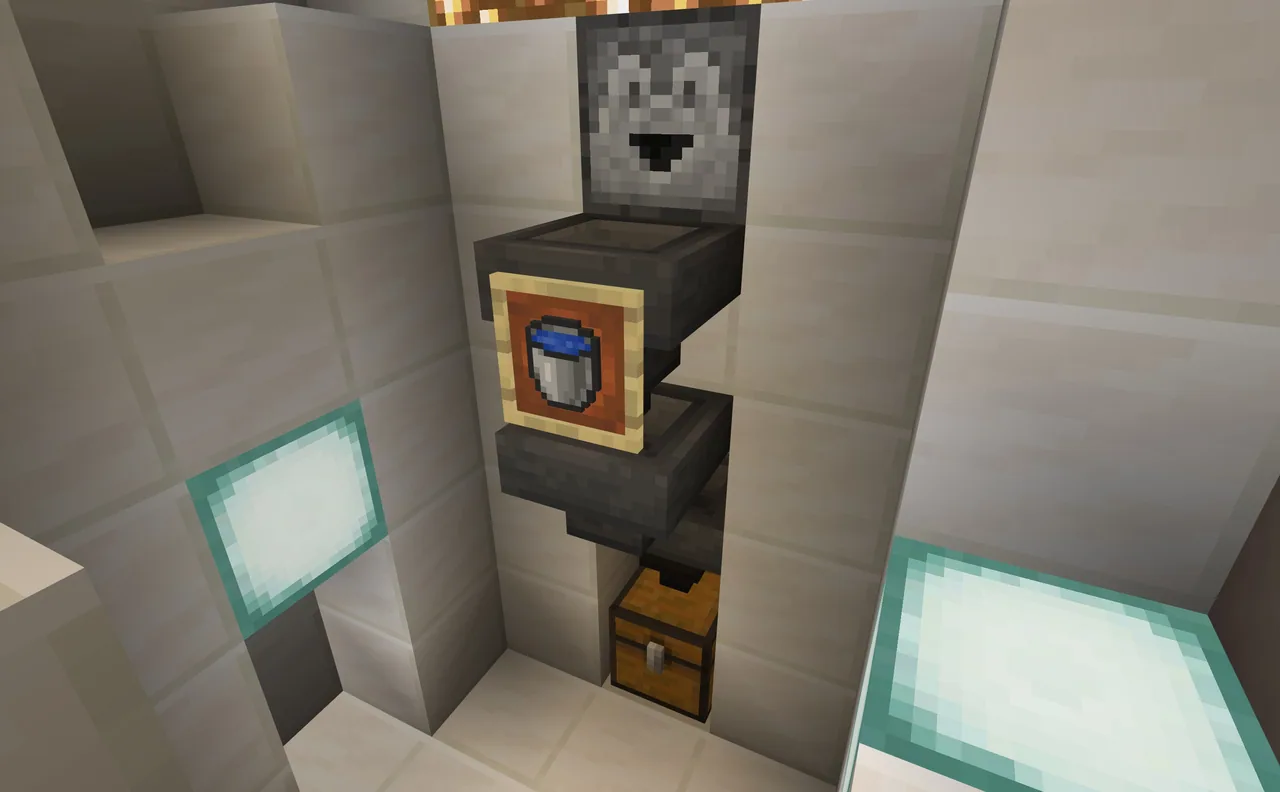
Minecraft Education serves as a prototyping stage between the initial laboratory experiments and final makerspace construction. Learners identify an environment on Earth or in space requiring clean water, sketch their plan, pick a matching biome from the library, and construct a detailed virtual filtration device complete with in-game slate labels before building a physical version from recyclable items.
Learning objectives
By the end of this lesson students will be able to:
- Explain how astronauts clean and recycle water on the International Space Station.
- Follow the engineering design process while testing household materials in a physical water filter experiment.
- Prototype and label a water filtration system inside an appropriate Minecraft biome.
- Construct and present a physical filtration device built from recyclable makerspace materials.
Blocks and items used in this lesson


Key vocabulary
- Water Filtration
- The process of removing dirt, particles, and impurities from water to make it clean.
- Engineering Design Process
- A step-by-step method used by engineers to solve problems, test ideas, and improve designs.
- Prototype
- An early model or digital build of a design used to test and refine an idea before final building.
- International Space Station (ISS)
- A large spacecraft orbiting Earth where astronauts live, work, and recycle limited resources like water.
Before class
Lesson sequence
Suggested timing: about 210 minutes in total.
- Inquiry and Astronaut Context30 min
Begin with a K-W-L chart asking students how astronauts get clean water aboard the ISS and record initial ideas on chart paper. Screen the STEMonstrations water filtration video and the Crash Course Kids engineering process video to connect space recycling to the formal steps of engineering.
- Hands-On Filtration Lab60 min
Demonstrate three different filtering methods using muddy water to show visible differences in clarity. Present the design constraints and available supplies to student groups, have them complete a component identification sheet, and let them test their own physical filter assemblies using cut bottles, test tubes, and household materials while logging their results.
- Minecraft Prototyping60 min
Have students review their lab discoveries and select a specific Earth or space environment where filtered water is required. Students sketch their concept on graph paper, obtain teacher approval, and then build their filtration system in an appropriate Minecraft biome, labeling each material component with slates before recording an explanatory screencast.
- Physical Build and Presentation60 min
Students use makerspace and recyclable materials to fabricate a physical version of their Minecraft prototype. Learners present their finished projects to the class or their original lab teams, explaining how their design works and showing screencast videos using printed QR codes.
Assessment: success criteria
- Group design challenge sheet accurately lists selected materials, constraints, and test results from the lab.
- Minecraft build contains a clear filtration setup placed in a logical biome with slates labeling the materials.
- Student screencast clearly explains the purpose of the device and how water moves through each filtration layer.
- Final physical model corresponds to the Minecraft prototype and is successfully shared in a group or whole-class presentation.
Differentiation
Provide a pre-selected set of three physical filter layers and a simple Minecraft template so students can focus on placing slate labels and testing water flow.
Introduce strict budget or material quantity limitations during the design challenge, prompting students to calculate cost efficiency alongside water clarity.
Knowledge check
5 questions to check understanding after the lesson. Tap an answer to see if it is right; the score appears at the end.
1Why do astronauts aboard the International Space Station need specialized filtration systems?
Answer: C. Astronauts must recycle and filter limited water supplies to survive in space.
2What should students complete before building their water filter in Minecraft?
Answer: A. The lesson requires students to plan on paper and get teacher approval before opening Minecraft.
3How do students identify the materials used within their Minecraft filtration prototype?
Answer: B. The plan states students label the materials used in their prototype using slates.
4What was the purpose of testing materials like coffee filters, cotton balls, and gravel in Day 1?
Answer: B. The hands-on lab lets groups test different household materials to observe how well they filter muddy water.
5How can teachers connect students' digital Minecraft models to their physical makerspace displays?
Answer: A. The lesson suggests printing Flipgrid screencast QR codes and attaching them to the physical models.
Resources
Part of the International Space Station curriculum
This is lesson 2 of 8 in International Space Station.
- Bone Loss in Space
- Filtering Water on the International Space Station
- International Space Station
- Invisible Forces at Work
- Plants vs. Gravity
- Rockets Away!
- Seeing Earth from the International Space Station
- Solar Panel Setback
Frequently Asked Questions
What should I do if my students cannot access Flipgrid for screencasting?
You can have students present their Minecraft prototypes live to a partner or use Minecraft's built-in camera and portfolio tools to export photos with text descriptions instead.
How dirty should the water be for the filtration experiment?
Mix plain soil and sand into tap water until it is noticeably murky, but avoid adding dangerous chemicals or outdoor contaminants so the lab remains safe to handle in the classroom.
Which biomes work best for the Minecraft build?
Students can pick any biome from the Minecraft Library that matches their scenario, such as a desert biome for arid Earth regions, a badlands biome, or an extreme environment representing space exploration.
Adapted from Filtering Water on the International Space Station by Phygital Labs on Minecraft Education, last updated Jul 28, 2025. This classroom version, the timings and the quiz were written by 9Minecraft Education.