- Type
- Lesson plan
- Ages
- Ages 6-13
- Duration
- about 60 min (suggested)
Why does a glass of soda go flat over time while natural carbonation at Soda Springs continues bubbling?
Overview
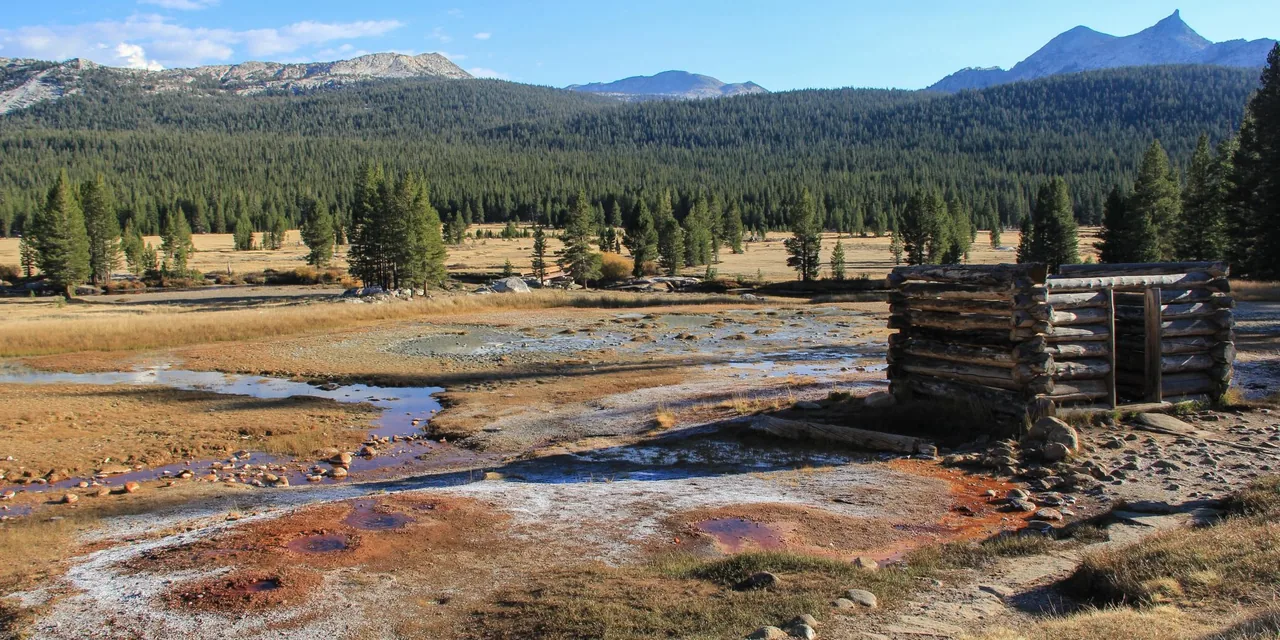
Along the historical Oregon Trail, travelers encountered Soda Springs, a striking natural landmark where bubbling spring water naturally emerged from the ground. While thirsty pioneers were eager to sample the fizzy water, drinking too much often made them ill. This phenomenon provides an engaging entry point for exploring the chemistry behind carbonation in everyday life and in nature.
In this lesson, students investigate how carbonation forms by observing a regular carbonated drink in a glass and contrasting it with the continuous geological processes at Soda Springs. Students discover that while commercial drinks eventually go flat after exposure to air, natural springs remain carbonated as long as rising groundwater contacts sodium carbonate deposits in the earth.
Learning objectives
By the end of this lesson students will be able to:
- Identify the geological and chemical components necessary to produce natural carbonation.
- Observe and record the behavior of carbon dioxide bubbles in a poured beverage over time.
- Compare the temporary fizz of bottled beverages with the continuous bubbling of Soda Springs.
- Explain why Soda Springs was a unique and sometimes challenging stop for Oregon Trail travelers.
Blocks and items used in this lesson
 Water Bucket
 Soul Sand
 Camera
 Book and Quill
Key vocabulary
- Carbonation
- The presence of dissolved carbon dioxide gas forming bubbles in a liquid.
- Sodium Carbonate
- A mineral compound found in the earth that reacts with rising spring water to create natural fizz.
- Soda Springs
- A natural spring location along the Oregon Trail famous for its naturally carbonated water.
- Flat
- The state of a beverage after its dissolved gas bubbles have escaped into the surrounding air.
Before class
Lesson sequence
Suggested timing: about 60 minutes in total.
- Pioneer Hook and Introduction10 min
Introduce the Oregon Trail landmark known as Soda Springs. Share the historical context that travelers were amazed by the bubbling water, drank large amounts of it, and sometimes became sick as a result.
- Beverage Observation15 min
Pour a carbonated beverage into a clear glass. Direct students to observe and record what occurs at the bottom, middle, and surface of the liquid immediately after pouring.
- Scientific Investigation20 min
Discuss what causes the bubbles in commercial drinks and introduce the concept of dissolved gas. Explain how rising spring water at Soda Springs encounters sodium carbonate underground to produce bubbles naturally.
- Delayed Observation and Comparison15 min
Examine the glass of soda after several hours have passed. Guide students to notice that the drink has gone flat, and prompt them to compare this with why Soda Springs continues bubbling continuously.
Assessment: success criteria
- Student accurately notes bubble activity at the top, middle, and bottom of a freshly poured carbonated drink.
- Student identifies sodium carbonate in the earth as the key mineral source producing bubbles at Soda Springs.
- Student explains that bottled drinks lose their bubbles to the air, whereas Soda Springs continues bubbling as long as water reaches underground mineral deposits.
Differentiation
Provide a simple t-chart contrasting a glass of soda with Soda Springs to help learners organize their observations.
Ask advanced learners to write a short journal entry from the perspective of an Oregon Trail traveler describing their physical reaction to drinking the spring water.
Knowledge check
5 questions to check understanding after the lesson. Tap an answer to see if it is right; the score appears at the end.
1What mineral in the earth reacts with rising spring water to create bubbles at Soda Springs?
Answer: B. Rising groundwater comes into contact with sodium carbonate in the earth, which creates natural carbonation near the surface.
2Why do canned and bottled carbonated beverages eventually go flat after being poured?
Answer: A. Bottled drinks capture dissolved gas, but the bubbles leave the liquid once exposed to the air.
3How did travelers along the Oregon Trail react to finding Soda Springs?
Answer: C. Travelers were excited by the unique bubbly water, but overindulging frequently made them sick.
4When will Soda Springs naturally stop producing bubbles?
Answer: B. The spring will only cease bubbling when water no longer contacts the underground sodium carbonate deposits.
5What should students observe when a carbonated beverage is poured into a clear glass?
Answer: B. Students are guided to observe bubble movement on the surface, at the bottom, and throughout the middle of the glass.
Part of the The Oregon Trail curriculum
This is lesson 5 of 14 in The Oregon Trail.
- An Artist’s Perspective
- Barlow Road
- Build a Fort
- Cross, Float, or Hire
- Everlasting Bubbles
- How fast can you go?
- Make Your Mark
- Map the Journey
- Public Service Announcement
- Run, pony, Run!
- Supply and Demand
- Take it or leave it?
- Travel Guide
- Which Month Will You Leave?
Frequently Asked Questions
Does this lesson require a specific Minecraft Education downloadable world?
No special downloadable world file is provided in the source. Teachers can lead the observation activity using real carbonated water or integrate the historical science concept into existing Oregon Trail learning units.
How long should we wait between pouring the drink and the second observation?
The lesson suggests waiting a few hours so students can clearly see the contrast between a freshly poured bubbly beverage and one that has gone completely flat.
Adapted from Everlasting Bubbles by Minecraft Education on Minecraft Education, last updated Aug 27, 2025. This classroom version, the timings and the quiz were written by 9Minecraft Education.