- Type
- Lesson plan
- Subject
- Language Arts
- Topics
- Reading and Writing
- Grade
- Early years (Pre-K to Grade 2)Primary (Grades 3-5)Middle school (Grades 6-8)High school (Grades 9-12)
- Ages
- All ages
- Duration
- about 60 min (suggested)
- Skills
- CommunicationCreativity
How has the speed and method of sharing news transformed over time, and what could human communication look like in the next century?
Overview
In this lesson, students explore the rapid evolution of human communication by examining the historical contrast between the 1860s Pony Express and modern digital networks. By investigating how messages once traveled across vast distances via relay riders before being superseded by the telegraph, learners discover the powerful impact technology has on sharing news.
Working in teams of four, students project themselves a century into the future to imagine what might replace our current communication devices. Learners collaborate to build prototype models of their futuristic communication tools in Minecraft, carefully analyzing both the advantages and unintended pitfalls of their inventions before trading feedback with peers.
Learning objectives
By the end of this lesson students will be able to:
- Explain how the Pony Express operated and why it was replaced by the transcontinental telegraph.
- Compare communication methods used during the 1800s with modern tools like text messages and social media.
- Brainstorm and prototype an innovative communication tool designed for 100 years into the future.
- Evaluate the practical benefits and potential drawbacks of future communication technologies.
Blocks and items used in this lesson


Key vocabulary
- Pony Express
- A historic relay mail service operating between California and Missouri from 1860 to 1861 that used horseback riders to deliver letters quickly.
- Telegraph
- A system that transmitted encoded messages across long distances using electrical wires, completed across the continent in October 1861.
- Prototype
- An early working model or visual design used to test, demonstrate, and refine an idea.
Before class
Lesson sequence
Suggested timing: about 60 minutes in total.
- Historical Introduction and Discussion15 min
Begin by asking students how they share exciting personal news today, such as sending texts or posting online, and prompt them to consider how travelers during the Oregon Trail era managed. Share the history of the Pony Express, highlighting that lightweight riders were selected for bravery to carry mail at a gallop across 1,800 miles, including the announcement of Abraham Lincoln's election. Conclude by explaining how the completion of the telegraph in October 1861 brought the Pony Express to an end after roughly 18 months.
- Group Brainstorming10 min
Divide students into groups of four. Instruct each team to discuss what communication tools might replace our modern devices and brainstorm how humans might exchange information 100 years from now.
- Minecraft Prototyping25 min
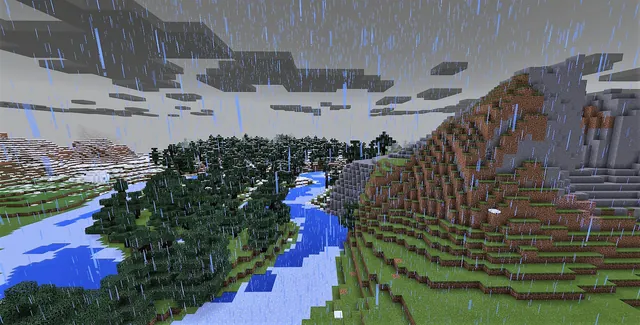
Groups enter a Minecraft world to build a three-dimensional prototype of their future communication tool. While building, students must identify specific benefits their tool provides to daily life as well as possible downsides or societal risks.
- Sharing and Peer Feedback10 min
Conduct a gallery walk or group presentations where each team demonstrates their Minecraft build. Encourage peers to evaluate each other's creativity, ingenuity, and analysis of potential drawbacks.
Assessment: success criteria
- Identifies key differences between 1800s communication methods and modern digital communication.
- Collaborates productively within a four-person group to conceptualize a future communication device.
- Constructs a recognizable prototype in Minecraft representing communication technology 100 years in the future.
- Identifies at least one distinct benefit and one potential downside of their group's invention.
- Provides meaningful, constructive feedback to other student groups.
Differentiation
Provide guiding questions or sentence starters to help students weigh the conveniences against the drawbacks of their future communication device.
Challenge students to design a fallback system within their prototype explaining how their tool functions if power networks or signals fail.
Knowledge check
5 questions to check understanding after the lesson. Tap an answer to see if it is right; the score appears at the end.
1Why were Pony Express riders specifically chosen to be light in weight?
Answer: A. Lighter riders ensured the ponies could maintain a gallop while carrying heavy mail bags over long distances.
2When did the first Pony Express rider set out from California toward Missouri?
Answer: B. The source notes that the first rider departed California for Missouri in April 1860.
3Which major event was carried across 1,800 miles by the Pony Express between telegraph lines?
Answer: C. One of the most important dispatches carried across 1,800 miles was the news of Abraham Lincoln's election.
4How frequently were fresh ponies swapped in during a Pony Express relay?
Answer: D. Ponies were switched every 10 to 15 miles, while individual riders rode between 30 and 100 miles.
5What development caused the Pony Express to close after about 18 months?
Answer: A. The Pony Express ended in October 1861 because completed telegraph lines could transmit messages much faster than horses.
Part of the The Oregon Trail curriculum
This is lesson 10 of 14 in The Oregon Trail.
- An Artist’s Perspective
- Barlow Road
- Build a Fort
- Cross, Float, or Hire
- Everlasting Bubbles
- How fast can you go?
- Make Your Mark
- Map the Journey
- Public Service Announcement
- Run, pony, Run!
- Supply and Demand
- Take it or leave it?
- Travel Guide
- Which Month Will You Leave?
Frequently Asked Questions
Is a pre-made Minecraft world file required for this lesson?
No special world download is required. Any standard flat or open creative world in Minecraft Education provides enough space for student groups to build their prototypes.
How can teachers support the discussion on drawbacks of future tools?
Encourage students to consider real-world concerns such as loss of personal privacy, technical failures, miscommunication, and screen fatigue when analyzing their designs.
What grades or age groups is this lesson suitable for?
The source designates this activity for all ages. Younger students can focus on the direct contrast between horse relays and digital text, while older learners can delve into technological ethics and societal impacts.
Adapted from Run, pony, Run! by Minecraft Education on Minecraft Education, last updated Aug 27, 2025. This classroom version, the timings and the quiz were written by 9Minecraft Education.