- Type
- Lesson plan
- Subject
- Math
- Topics
- Math & Economics
- Grade
- Early years (Pre-K to Grade 2)Primary (Grades 3-5)Middle school (Grades 6-8)High school (Grades 9-12)
- Ages
- All ages
- Duration
- about 60 min (suggested)
How do market competition and shifting consumer demand determine the success or failure of commercial enterprises?
Overview
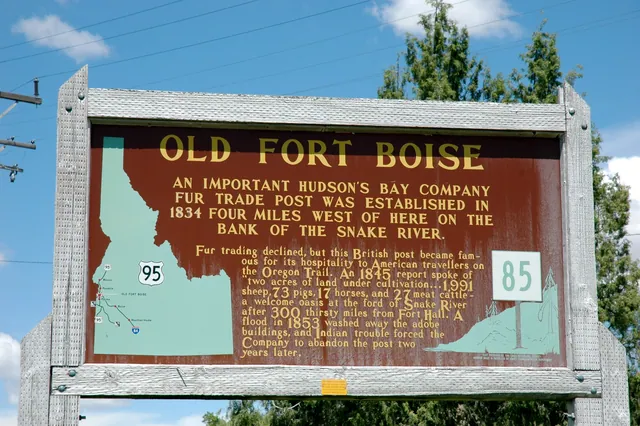
Between 1811 and 1840, fur traders seeking beaver pelts traveled west and established the rugged pathways that formed the Oregon Trail. These commercial ventures sparked aggressive rivalry among fur companies seeking exclusive territorial control. By examining this historical period, students explore how supply, consumer demand, and competitive strategies govern commercial success and market decline.
As an inquiry-driven unit from Minecraft Education, this lesson operates without a required pre-built world file, focusing instead on collaborative research, economic analysis, and guided discussion. Teachers can deliver this lesson as an independent conceptual study of trade, monopolies, and market forces, or pair it with open-world construction projects that model frontier trading posts and trail routes.
Learning objectives
By the end of this lesson students will be able to:
- Identify how western fur trading companies competed for territory and trade between 1811 and 1840.
- Define the economic concepts of monopoly, trade, and supply and demand using historical examples.
- Explain how shifting fashion trends in the East and Europe altered the demand for beaver pelts.
- Compare the historical competition and decline of the fur trade to modern-day business examples.
Blocks and items used in this lesson
 Book and Quill
 Leather
 Rabbit Hide
 Horse
 Chalkboard
 Chest
Key vocabulary
- Monopoly
- A market condition where a single enterprise dominates the supply of a good or service, limiting consumer choice and competition.
- Supply and Demand
- The economic model showing the relationship between the quantity of a product available and the desire of buyers for that product, which determines price.
- Trade
- The process of buying, selling, or exchanging goods and services between people, companies, or countries.
- Oregon Trail
- An early overland route west mapped and traveled on foot or horseback by fur traders between 1811 and 1840.
Before class
Lesson sequence
Suggested timing: about 60 minutes in total.
- Historical Introduction10 min
Introduce the early 19th-century fur trade, explaining how demand in Europe and the eastern United States led traders into the West between 1811 and 1840. Explain that these early foot and horseback routes laid the foundation for the Oregon Trail.
- Concept Research15 min
Direct students to research the primary fur trading companies of the West. Have them define the key economic terms monopoly and supply and demand using reference texts or dictionaries.
- Collaborative Team Analysis20 min
Organize students into small teams to discuss and record answers to the core questions:
- Why is holding a monopoly an advantage for a business?
- How did changes in fashion trends affect the supply and demand for animal furs?
- What modern business environments face competition similar to the fur companies?
- What modern industries or products show a market decline similar to the fur trade?
- Classroom Synthesis and Assessment15 min
Bring the class together to debrief findings. Guide a focused discussion on how businesses attempt to gain advantages over rivals and why the fur trade eventually declined as consumer preferences shifted.
Assessment: success criteria
- Students can explain clearly why a monopoly represents a commercial advantage.
- Students can articulate how shifting fashion trends altered demand and precipitated the decline of the fur trade.
- Students can describe specific tactics fur companies used to gain control over territory and competitor sales.
- Students can provide relevant modern examples of market competition and industry decline.
Differentiation
Provide student pairs with guided vocabulary cards and pre-selected reading excerpts that clearly highlight the reasons for the fur trade's decline.
Have advanced students research a specific modern corporation that lost market dominance due to changing consumer trends and present a comparison to early fur enterprises.
Knowledge check
5 questions to check understanding after the lesson. Tap an answer to see if it is right; the score appears at the end.
1Between which years was the Oregon Trail primarily established by early fur traders?
Answer: B. The source notes that the Oregon Trail was laid by traders from approximately 1811 to 1840.
2How was the Oregon Trail navigated during the era of the early fur trade?
Answer: C. According to the source, the trail established during this period was passable only on foot or horseback.
3What primary resource motivated fur traders to travel into the West?
Answer: A. Traders went west searching for beaver and other pelts that were highly valued in Europe and the eastern markets.
4What primary business advantage does a monopoly provide to an enterprise?
Answer: D. A monopoly gives an enterprise significant market advantage by limiting competition and controlling sales within an area.
5How did changing fashion preferences impact the fur trading economy?
Answer: A. Shifting fashion trends reduced consumer demand for fur, contributing to the industry's economic downturn.
Part of the The Oregon Trail curriculum
This is lesson 11 of 14 in The Oregon Trail.
- An Artist’s Perspective
- Barlow Road
- Build a Fort
- Cross, Float, or Hire
- Everlasting Bubbles
- How fast can you go?
- Make Your Mark
- Map the Journey
- Public Service Announcement
- Run, pony, Run!
- Supply and Demand
- Take it or leave it?
- Travel Guide
- Which Month Will You Leave?
Frequently Asked Questions
Do I need to download a specific Minecraft world to teach this lesson?
No. This lesson is an economics and history research plan that does not include or require a downloadable world file.
What age group is this economics lesson suitable for?
The source designates this activity for all ages, making it adaptable from upper elementary through high school economics or history units.
How does this lesson connect history to economics?
Students analyze the real-world historical fur trade along the Oregon Trail to observe market competition, monopolistic behavior, and shifts in supply and demand.
Adapted from Supply and Demand by Minecraft Education on Minecraft Education, last updated Aug 27, 2025. This classroom version, the timings and the quiz were written by 9Minecraft Education.