- Type
- Lesson plan
- Topics
- World LanguagesHistory
- Ages
- Ages 8-18
- Includes
- Quiz: 5 questionsLesson files
How did the monuments of ancient Rome reflect the society, leaders, and daily life of the empire?
Overview
In this project-based history and world languages lesson, students investigate the historical context, architectural design, and civic significance of key ancient Roman monuments. Working collaboratively in pairs, learners gather information such as Latin and English names, construction timelines, and associated historical figures to understand how these landmarks functioned in ancient society.
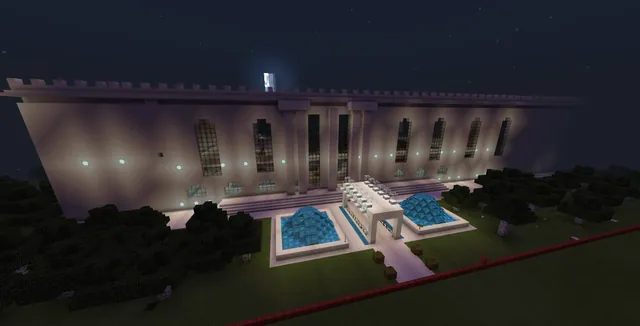
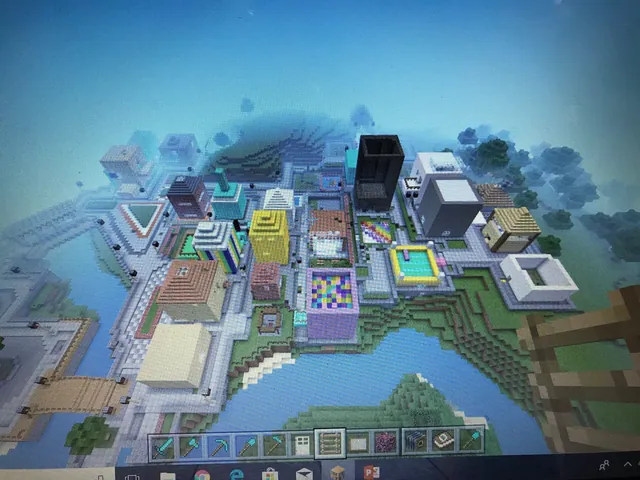
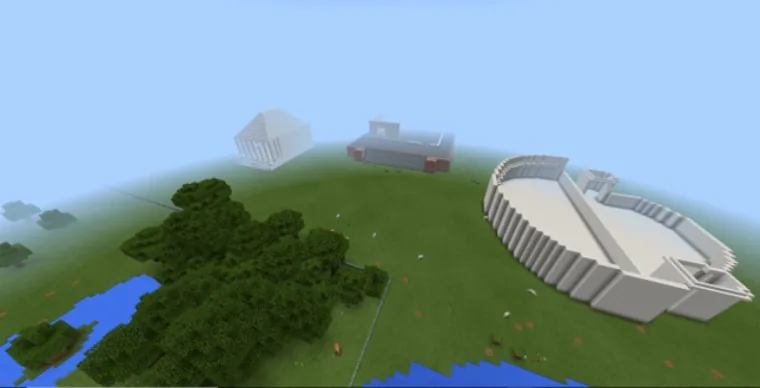
Students then turn their research into an interactive living museum within Minecraft. Each pair reconstructs their assigned monument as it appeared during antiquity, ensuring that both the interior and exterior are fully realized, positioned accurately in relation to other Roman structures, and identified with an in-game informational sign.
Learning objectives
By the end of this lesson students will be able to:
- Construct an authentic Minecraft model of an ancient Roman monument showing both interior and exterior details.
- Explain the historical purpose, distinguishing features, and modern significance of the monument.
- Position the building accurately in relation to surrounding Roman monuments.
- Collaborate equitably with a partner across both research and construction phases.
Blocks and items used in this lesson


Key vocabulary
- Monument
- A structure created to commemorate a person, event, or important civic function.
- Living Museum
- An interactive exhibition where historical environments are recreated for visitors to explore.
- Craftsmanship
- The quality of design, skill, and attention to detail shown in building something.
- Patron
- An individual, such as an emperor or official, who funds and commissions a public building.
Before class
Lesson sequence
- Monument Research
Introduce the project's guiding questions regarding Roman monuments, their purposes, and their builders. In pairs, students select their monument and complete the Monument Information Chart in their class notebook, collecting Latin and English names, construction and usage dates, building materials, purpose, historical figures, and sketches of the structure when in use.
- Minecraft Construction
Pairs determine the proper location of their structure relative to other Roman monuments in the shared world. Working together without dividing tasks, both partners build the monument as it appeared in ancient Rome, focusing on exterior and interior craftsmanship, recognizable features, and historical accuracy.
- Exhibition Signage and Review
Each team places a wooden sign directly in front of their monument and records the required research data on it. Students then tour the shared world to view their peers' reconstructions and evaluate how each monument functioned within ancient Roman society.
Assessment: success criteria
- Minecraft model reflects the monument's historical appearance with complete interior and exterior craftsmanship.
- Monument Information Chart and in-game wooden sign contain all required historical and architectural facts.
- Structure is correctly located relative to other Roman monuments in the world.
- Both partners contributed significantly to both the research and the in-game building process.
Differentiation
Provide reference sketches of the monument's original appearance and structured sentence starters for the notebook chart.
Encourage students to research and model secondary interior chambers or write additional Latin labels for key architectural elements.
Knowledge check
5 questions to check understanding after the lesson. Tap an answer to see if it is right; the score appears at the end.
1What information must be included on the wooden sign placed in front of the monument in Minecraft?
Answer: B. The guidelines state that students must write the information gathered on their research chart onto the wooden sign.
2According to the participation rubric, how should partners distribute their work?
Answer: B. The rubric forbids a divide-and-conquer strategy, requiring both students to contribute to research and building.
3What visual references are students expected to gather during their initial research?
Answer: C. The research requirements specifically instruct students to find pictures or sketches of the monument when it was in use, not modern ruins.
4How should each monument be positioned within the shared Minecraft world?
Answer: B. Students are instructed to construct the monument in the correct location in regards to the other monuments.
5Which component of the project is assigned the highest point value in the grading rubric?
Answer: C. The rubric allocates 50 points to the Minecraft model, 30 points to research, and 20 points to participation.
Resources
Frequently Asked Questions
Is there a pre-made world template available for this lesson?
No, there is no downloadable world provided with this lesson. Teachers can open a standard flat or open world where students coordinate spatial layout together.
Can one partner research while the other builds to save time?
No, the assessment criteria explicitly prohibit dividing tasks this way. Each student must take an active part in both the research phase and the Minecraft construction phase.
Adapted from Building Rome Brick by Brick by Mary Villaume on Minecraft Education, last updated Jul 10, 2018. This classroom version, the timings and the quiz were written by 9Minecraft Education.