- Type
- Lesson plan
- Grade
- Primary (Grades 3-5)
- Ages
- Ages 8-10
- Duration
- about 60 min (suggested)
When creating, is it simpler to build or to destroy?
Overview
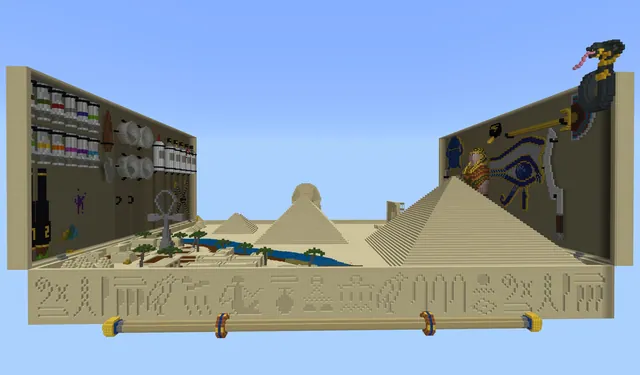
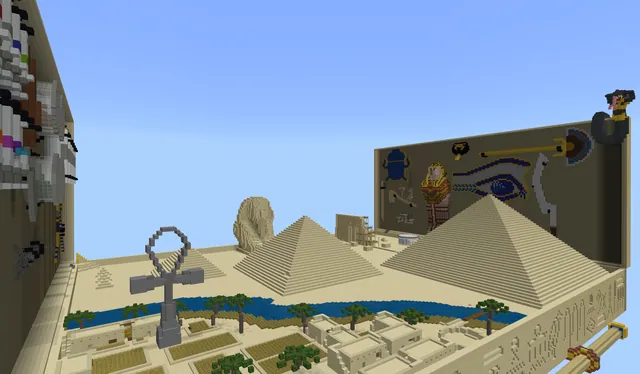
This lesson explores the architectural methods of Ancient Egypt by examining how structures were made either by adding materials together or by carving away from existing stone. Learners examine historical monuments including the Great Pyramids and the Great Sphinx to understand the planning, labor, and materials ancient civilizations needed to complete monumental projects.
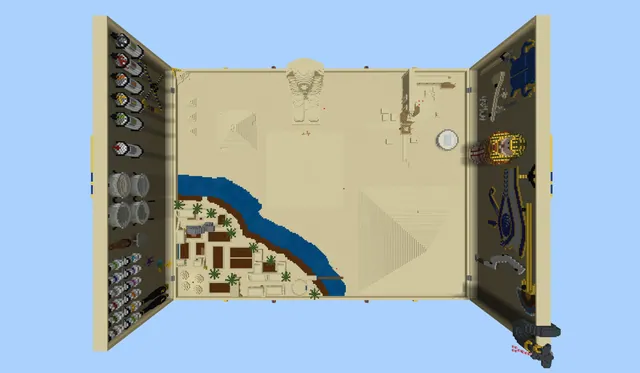
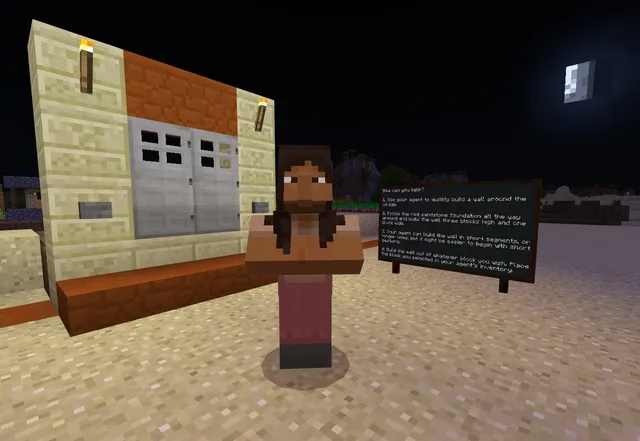
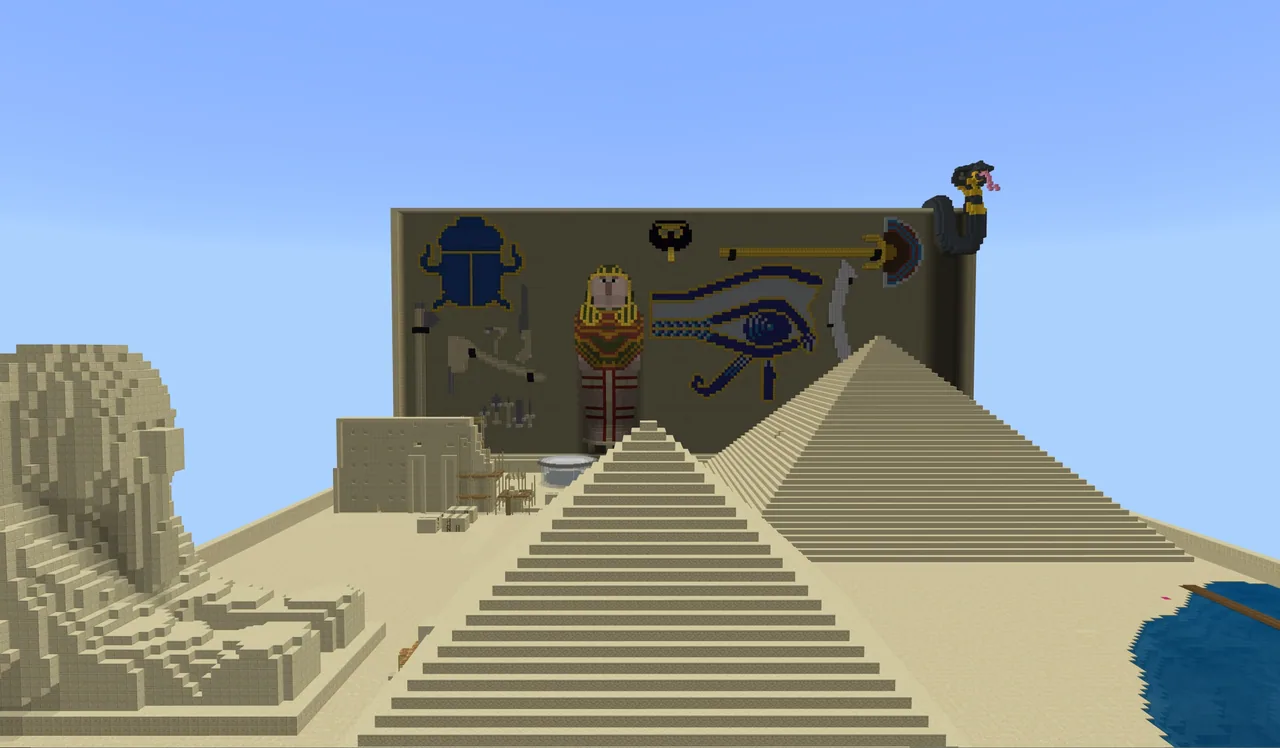
Inside the Minecraft Egypt world, students interact with non-player characters to investigate primary research questions and view digital recreations of historic landmarks. They then put architectural concepts into practice by programming the Agent to construct a pyramid with Code Builder or carving a sculpture out of a solid block of sandstone using only destructive mining.
Learning objectives
By the end of this lesson students will be able to:
- Contrast additive building techniques with subtractive carving methods.
- Analyze the construction differences between the Great Pyramids and the Great Sphinx.
- Construct a digital pyramid using Code Builder or carve a monument out of a sandstone block.
- Synthesize historical research by completing a comparative mind map.
Blocks and items used in this lesson


Key vocabulary
- Pharaoh
- A ruler or king of Ancient Egypt.
- Monolith
- A large single upright block of stone, often shaped into a monument.
- Carving
- Creating a sculpture or shape by cutting away or removing material from a solid form.
- Code Builder
- A Minecraft Education programming tool that uses block-based code to automate tasks.
Before class
Lesson sequence
Suggested timing: about 60 minutes in total.
- Hands-On Pyramid Building Warm-Up10 min
Distribute sugar cubes to student groups and instruct them to assemble a pyramid. Guide a discussion around the structural planning required to ensure stability, and have students align their pyramids to true north using a compass or mobile device.
- Investigating Pyramids in Minecraft10 min
Students launch the Egypt world and fly to the edge of the great pyramids to speak with the non-player character Shabaka. They read the linked article on building the pyramids and hold a class discussion examining why assembling a pyramid was such an immense physical challenge.
- Hands-On Subtractive Carving15 min
Discuss the difference between creating by adding parts versus creating by removing material. Provide students with Jell-o molds and tools to carve a class topic of interest, such as a superhero, sport, or historical face, followed by a desk cleanup using shaving cream and paper towels.
- The Great Sphinx and Mind Mapping10 min
Learners fly to the base of the Great Sphinx in Minecraft and interact with NPC Kosey to learn about the limestone monolith. After reviewing the provided reading, students create a mind map comparing how the pyramids were built versus how the Sphinx was carved.
- Minecraft Construction and Carving Challenge15 min
Students select one of two creative challenges: program the Agent in Code Builder using block-based code to build a pyramid, or use a fill command to generate a 25x25x25 sandstone block and carve a monument exclusively by destroying blocks under the honor system.
Assessment: success criteria
- Student articulates the functional difference between additive building and subtractive carving.
- Student creates a mind map comparing the materials, methods, and purposes of the Great Pyramids and the Great Sphinx.
- Student completes a monument by successfully coding the Agent or by adhering to the rule of only removing blocks during the carving challenge.
Differentiation
Allow students to work in pairs or small teams to complete their chosen Minecraft construction or carving activity.
Have students complete both the coding and carving challenges, or write an extended compare-and-contrast essay on the pyramids and the Sphinx.
Knowledge check
5 questions to check understanding after the lesson. Tap an answer to see if it is right; the score appears at the end.
1According to NPC Shabaka, why were the great pyramids originally built?
Answer: A. NPC Shabaka explains that the pyramids were built by a large workforce to serve as tombs for kings or pharaohs.
2What material was the Great Sphinx of Giza carved from according to NPC Kosey?
Answer: D. NPC Kosey notes that the Great Sphinx is the world's largest monolith statue, carved out of limestone.
3Which tool within Minecraft can students open by pressing C to program an Agent to build a pyramid?
Answer: B. Students open Code Builder by pressing C on keyboards or selecting the Agent icon on iPads.
4What rule must students follow during the Minecraft carving challenge?
Answer: C. The carving challenge uses the honor system where learners may only remove blocks from the sandstone mass.
5How are students asked to align their sugar cube pyramids during the physical warm-up?
Answer: B. The warm-up directs students to orient their sugar cube pyramid to true north with the aid of a compass.
Resources
- Lesson package (.zip)Everything the author attached to this lesson in one download.
- Egypt Toybox RubricResource
- Lesson worldOpens the world page in Minecraft Education (sign-in with a school account may be needed).
Part of the Ancient History curriculum
This is lesson 2 of 5 in Ancient History.
- Egypt Toybox Lesson 1 of 5
- Egypt Toybox Lesson 2 of 5
- Egypt Toybox Lesson 3 of 5
- Egypt Toybox Lesson 4 of 5
- Egypt Toybox Lesson 5 of 5
Frequently Asked Questions
What command generates the sandstone block for the carving activity?
Students press the forward slash key to open the command line and enter fill 154 34 41 179 54 16 Sandstone to create a block that is 25 blocks wide, 25 blocks deep, and 25 blocks high.
How does the lesson recommend managing the mess from the hands-on carving task?
The lesson suggests using shaving cream and paper towels to clean tables and desks after students finish carving their Jell-o molds.
How is student understanding evaluated in this lesson?
Teachers assess students using a four-point rubric focused on their mind map comparisons of pyramid and Sphinx construction, with an optional comparative essay extension.
Adapted from Egypt Toybox Lesson 2 of 5 by Phygital Labs on Minecraft Education, last updated Jul 16, 2025. This classroom version, the timings and the quiz were written by 9Minecraft Education.