- Type
- Lesson plan
- Subject
- Math
- Topics
- Math & Economics
- Grade
- Primary (Grades 3-5)
- Ages
- Ages 8-10
How can visual area models help us represent and solve multi-digit multiplication problems?
Overview
In this math lesson, students explore the connection between visual area models and multi-digit multiplication. By interpreting visual representations of numbers and calculating total products, learners develop a concrete understanding of base-ten operations.
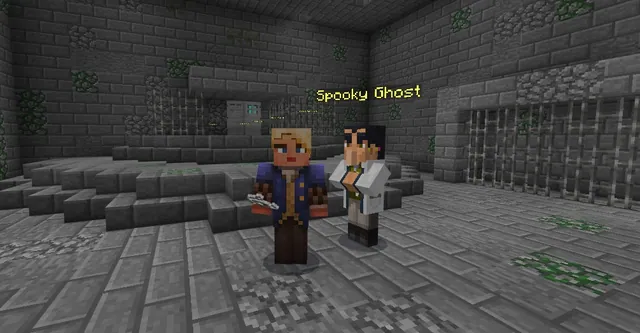
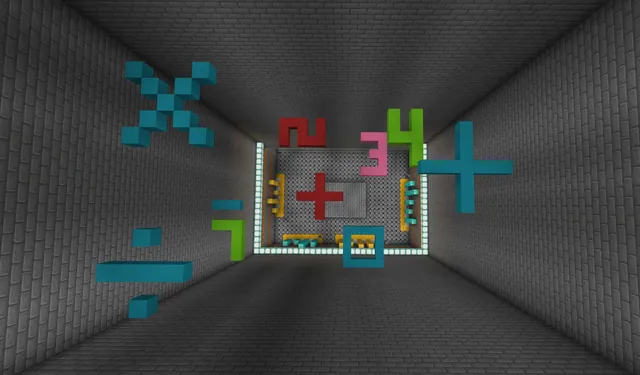
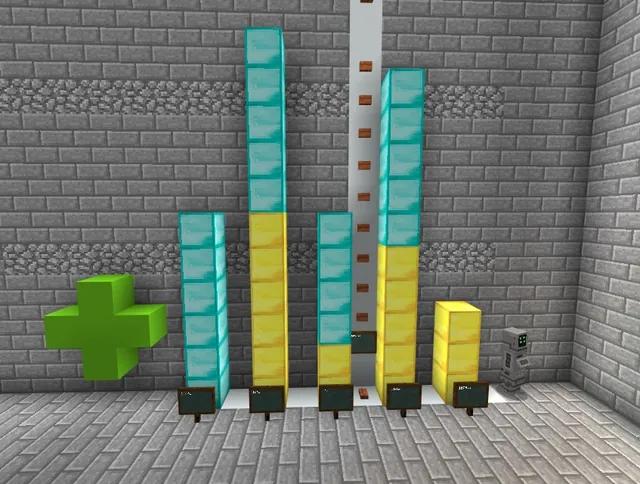
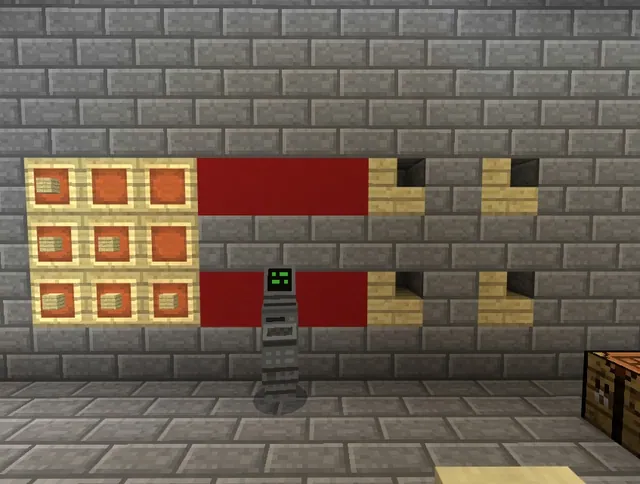
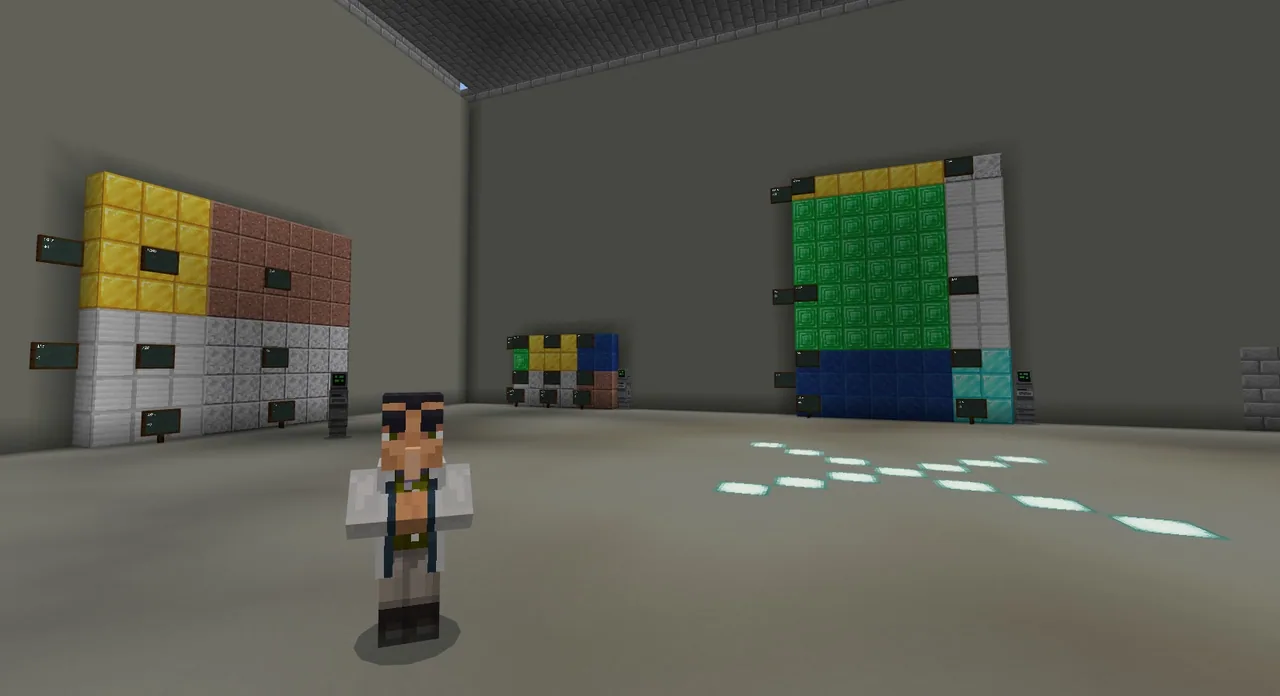
Using the single-player Decimal Dungeon Minecraft world, students speak to the Level 4 non-player character to begin their tasks. Players analyze four distinct block-built math models to solve a computer lock code, then construct their own spatial models based on assigned equations to progress through the dungeon.
Learning objectives
By the end of this lesson students will be able to:
- Identify the multiplication problem and product represented by a visual area model.
- Enter correct mathematical solutions into in-game computer locks to solve dungeon puzzles.
- Construct a 3D area model representing a given multi-digit multiplication equation.
- Explain how block structures correspond to factors and products in multi-digit operations.
Blocks and items used in this lesson


Key vocabulary
- Area Model
- A visual representation of multiplication where the dimensions represent factors and the total area represents the product.
- Multi-digit Multiplication
- Multiplying numbers that contain more than one digit using place value reasoning or algorithms.
- Product
- The total result obtained by multiplying two or more numbers together.
- Factor
- A number that is multiplied by another number to produce a product.
Before class
Lesson sequence
- Introduction & Guiding Questions
Introduce the lesson by discussing area models and how they help solve multi-digit multiplication. Prompt students with questions about whether these visual representations can also apply to decimals.
- Entering the Dungeon
Have students launch the single-player Decimal Dungeon world, navigate to the central Hub, and interact with the NPC named Level 4 to start the challenge.
- Challenge 1: Model Observation & Computer Lock
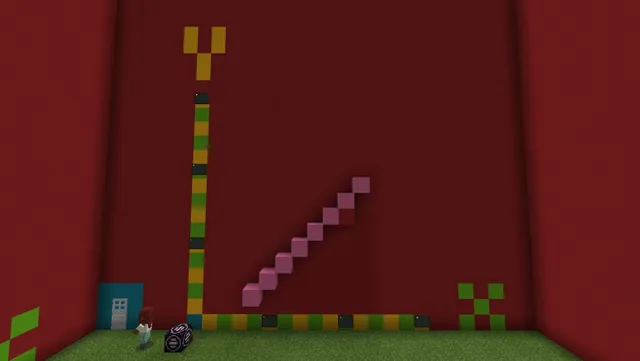
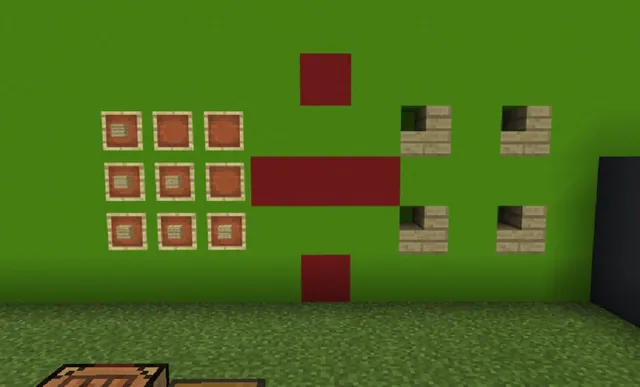
Students inspect four multi-digit mathematical models within the dungeon. They determine the factors and product for each model, entering their solutions into the computer lock to unlock the next area.
- Challenge 2: Building Math Models
Provided with specific multiplication equations, students build their own 3D area models using blocks to accurately represent the problem and verify the product.
- Reflection & Discussion
Gather students to explain their built models and discuss how decomposing numbers into area models assists in finding multi-digit products.
Assessment: success criteria
- Student correctly identifies the multiplication equation and product from four pre-built models.
- Student successfully inputs correct answers into the dungeon computer lock.
- Student builds an accurate physical area model in Minecraft for a given multi-digit equation.
- Student explains the relationship between the dimensions of their block model and the resulting product.
Differentiation
Allow students to work with smaller multi-digit factors and provide grid paper alongside their Minecraft build.
Challenge students to design a model representing multiplication involving decimal values or larger multi-digit numbers.
Knowledge check
5 questions to check understanding after the lesson. Tap an answer to see if it is right; the score appears at the end.
1Which non-player character (NPC) must students interact with to begin this lesson?
Answer: C. The source states that students must speak to the NPC named Level 4 to start this lesson.
2What is the primary task in Challenge 1 of the Decimal Dungeon?
Answer: B. In Challenge 1, students inspect four multi-digit math models, identify the problem and product, and answer questions in the computer lock.
3What are students required to do during Challenge 2?
Answer: D. In Challenge 2, students receive multiplication equations and must construct the corresponding math models.
4In an area model of multiplication, what does the total area or block count represent?
Answer: A. In an area model, the dimensions represent the factors and the total interior space represents the product.
5How can players move between different sections of the Decimal Dungeon world?
Answer: C. The source specifies that although the world is sequential, players can warp to any area from the starting Hub.
Resources
Part of the Grade 5 Math curriculum
This is lesson 3 of 13 in Grade 5 Math.
- The Decimal Dungeon - Part 1
- The Decimal Dungeon - Part 2
- The Decimal Dungeon - Part 3
- The Decimal Dungeon - Part 4
- The Decimal Dungeon - Part 5
- City Planning - Survival Roads
- Classifying Quadrilaterals
- Coordinate Planes in Minecraft
- Crafting Fractions
- Fraction World
- Fractions and Multiplication
- Javelin Line Plots
- Volume World
Frequently Asked Questions
Can students jump directly to this lesson if they have not completed Parts 1 and 2?
Yes, while the dungeon is laid out sequentially, students can warp directly to any level from the central Hub by talking to the Level 4 NPC.
Is this lesson intended for individual play or group collaboration?
The Decimal Dungeon world is designed as a single-player experience where each student explores, analyzes, and builds inside their own world instance.
How do students verify their answers in Challenge 1?
Students analyze the four pre-built models and submit their identified problems and products into an in-game computer lock mechanism.
Adapted from The Decimal Dungeon - Part 3 by Minecraft Education on Minecraft Education, last updated Sep 15, 2023. This classroom version, the timings and the quiz were written by 9Minecraft Education.