- Type
- Lesson plan
- Subject
- Math
- Topics
- Math & Economics
- Grade
- Primary (Grades 3-5)
- Ages
- Ages 8-10
How does multiplying a number by a value greater than, less than, or equal to 1 change the size of the product?
Overview
Understanding multiplication as a scaling operation helps upper-elementary students interpret how factors modify quantities without relying solely on rote arithmetic. By investigating what occurs when numbers are multiplied by whole values, fractions, or fractions equivalent to one, learners develop essential reasoning skills regarding resizing and numerical equivalence.Learning objectives
By the end of this lesson students will be able to:
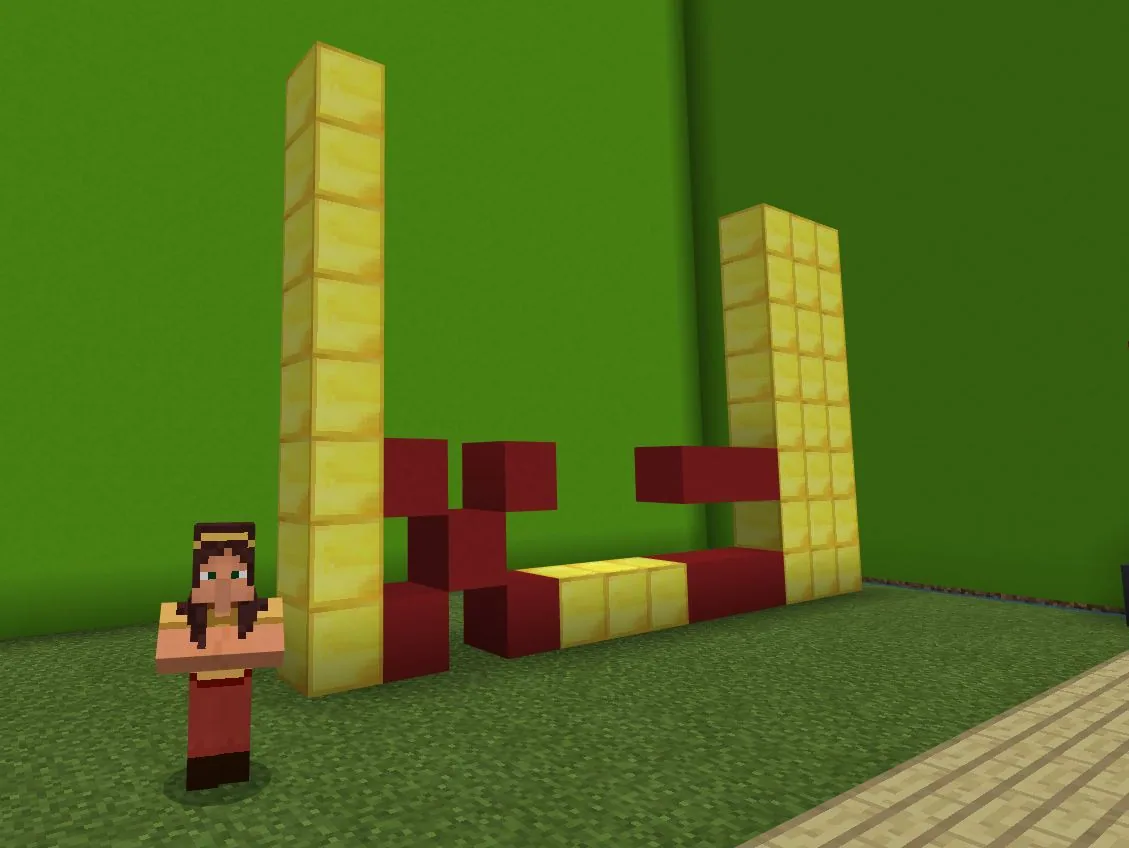
- Build visual block models that prove how products change when multiplied by values greater than, less than, or equal to 1.
- Compare product sizes to factor sizes without calculating the final product.
- Explain the effect of multiplying by a fraction equal to 1, demonstrating the concept of the Great 1.
- Record a concise screencast under four minutes communicating observations and mathematical patterns.
Blocks and items used in this lesson


Key vocabulary
- Scaling
- Resizing a number or quantity by multiplying it by a factor.
- Product
- The result obtained from multiplying two or more numbers together.
- Factor
- A number that is multiplied by another number to produce a product.
- Great 1
- A fraction where the numerator and denominator are equal, representing a value of one.
Before class
Lesson sequence
- Guiding Discussion
Introduce the driving questions to the class. Discuss what happens when an amount is multiplied by one, a number greater than one, or a fraction, introducing the idea of the Great 1 where the numerator and denominator match.
- World Exploration
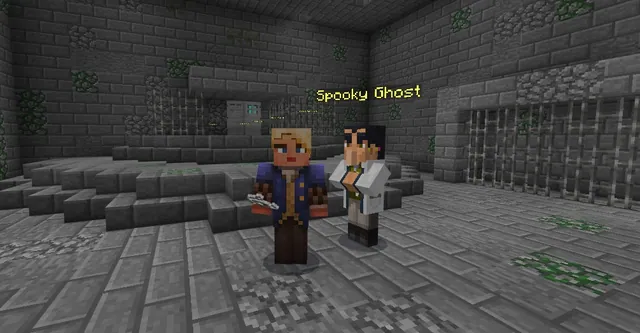
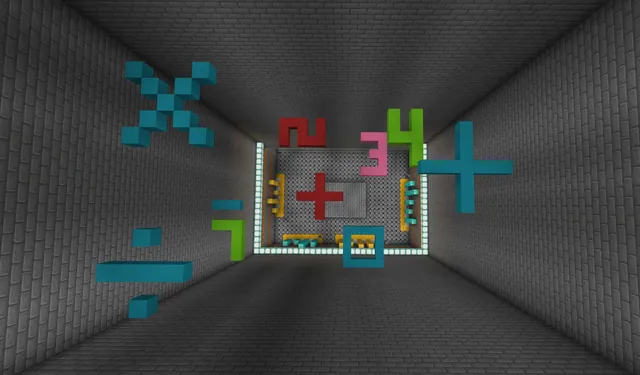
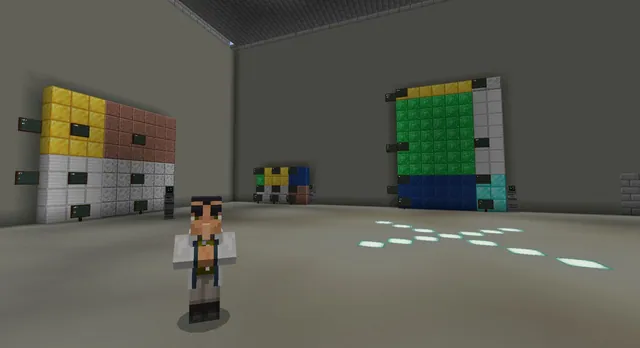
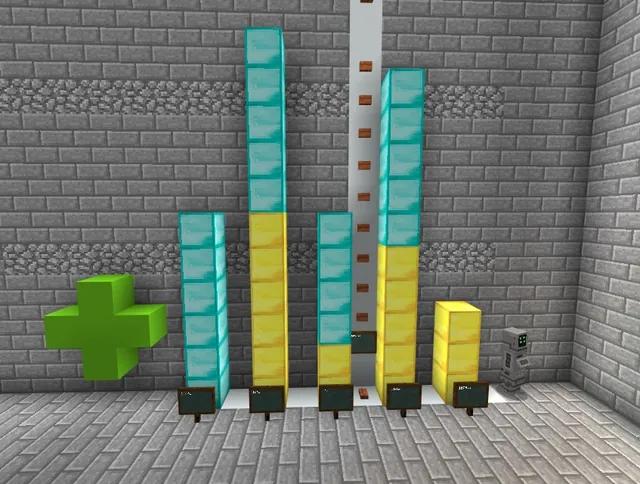
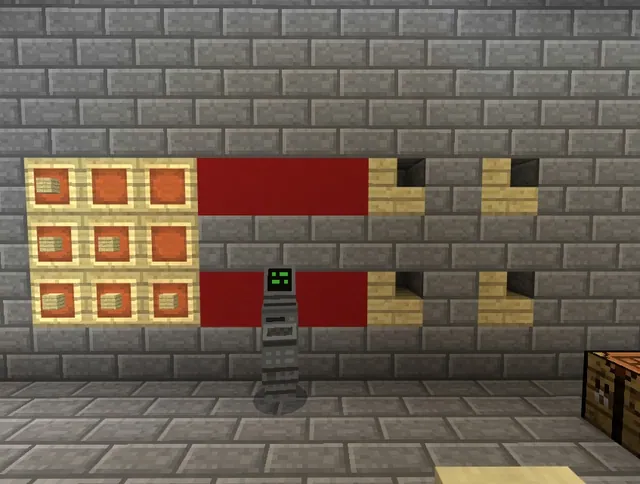
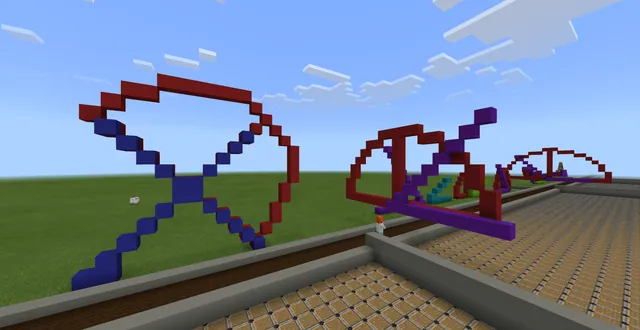
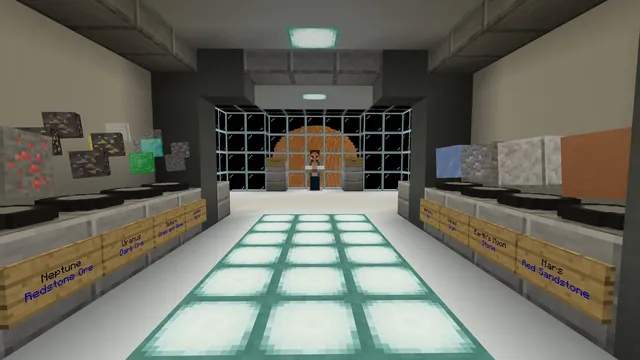
Direct students to launch the single-player Fractions and Multiplication world. Have them explore the provided visual examples that illustrate multiplication patterns.
- Math Model Construction
Students construct three distinct math models using blocks to represent:
- Multiplication by a number greater than 1
- Multiplication by a fraction less than 1
- Multiplication by a fraction equal to 1
- Screen Recording and Explanation
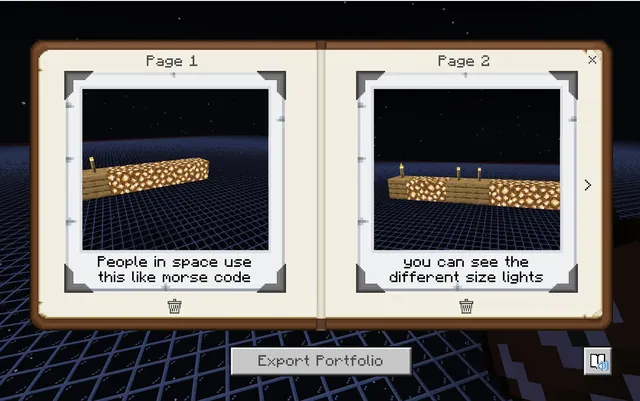
Learners launch their screen recording software to capture their models. Each student records a video under four minutes explaining how their models demonstrate scaling patterns relative to the original factor.
Assessment: success criteria
- Student constructs three accurate visual models showing multiplication by numbers greater than 1, less than 1, and equal to 1.
- Student correctly compares the product to the original factor without performing traditional long calculation.
- Student accurately explains how multiplying by a fraction equal to 1 preserves the value of the original number.
- Student submits an explanatory video under four minutes clearly describing their findings.
Differentiation
Provide visual reference cards showing fractions equivalent to one and allow students extra time to study the pre-built world examples before building.
Challenge students to model mixed numbers or demonstrate how fraction equivalence relates directly to multiplying by a fraction equal to one.
Knowledge check
5 questions to check understanding after the lesson. Tap an answer to see if it is right; the score appears at the end.
1What happens to a number when you multiply it by a fraction equal to 1, such as 4/4?
Answer: B. Multiplying by a fraction equal to 1 scales the number by 1, leaving its value unchanged.
2When you multiply an original number by a factor greater than 1, what can you predict about the product?
Answer: A. Scaling a quantity by any factor greater than 1 produces a product larger than the initial factor.
3What effect does multiplying a whole number by a fraction less than 1 have on the product?
Answer: C. Multiplying by a fraction less than 1 scales the initial value down, resulting in a smaller product.
4How many separate math models are students required to build in Minecraft?
Answer: C. Students are instructed to construct three models: one for greater than 1, one for less than 1, and one for equal to 1.
5What is the maximum allowed duration for the student explanation video?
Answer: D. The assignment specifies that the recorded explanation must be under 4 minutes long.
Resources
Part of the Grade 5 Math curriculum
This is lesson 11 of 13 in Grade 5 Math.
- The Decimal Dungeon - Part 1
- The Decimal Dungeon - Part 2
- The Decimal Dungeon - Part 3
- The Decimal Dungeon - Part 4
- The Decimal Dungeon - Part 5
- City Planning - Survival Roads
- Classifying Quadrilaterals
- Coordinate Planes in Minecraft
- Crafting Fractions
- Fraction World
- Fractions and Multiplication
- Javelin Line Plots
- Volume World
Frequently Asked Questions
Which screen recording options work best for this activity?
Students can press the Windows key + G to use the built-in Windows screen recorder, open Flipgrid screen recording, or use any standard screen capture application available in your school environment.
What is meant by the concept of the 'Great 1'?
The 'Great 1' refers to multiplying a number by a fraction where the numerator and denominator are the same, showing that scaling by 1 keeps the product equal to the initial value.
Adapted from Fractions and Multiplication by Minecraft Education on Minecraft Education, last updated Sep 15, 2023. This classroom version, the timings and the quiz were written by 9Minecraft Education.