- Type
- Lesson plan
- Ages
- Ages 8-13
- Duration
- 1 hour
- Level
- Beginner
How do scientific experiments and mathematical calculations help us understand physical forces and test the reliability of our data?
Overview
Scientific inquiry relies on collecting dependable data through structured testing and mathematical analysis. In this lesson, students explore core physics concepts by testing how forces and material properties influence motion and matter in controlled scenarios.
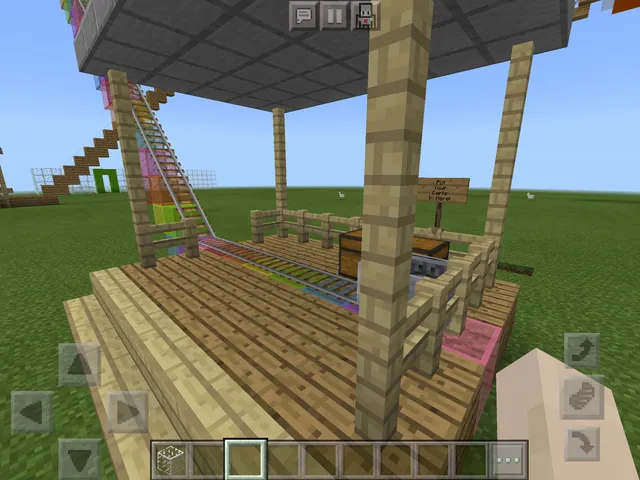
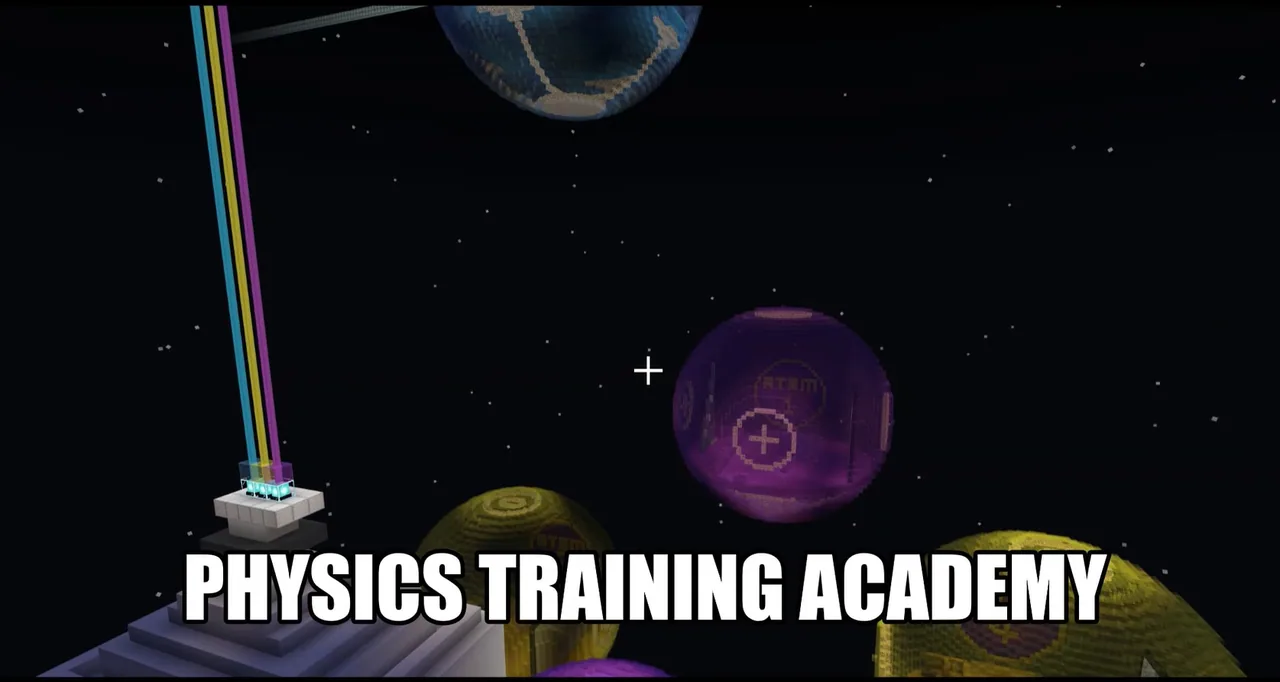
Using the Physics Training Academy world, student pairs navigate five dedicated testing zones. Learners operate in-game mechanisms, measure travel times with stopwatches, tally block distances, compute mean values, and build block-based graphs labeled with slates or signs to communicate their scientific findings.
Learning objectives
By the end of this lesson students will be able to:
- Conduct scientific investigations across five experimental testing zones in Minecraft.
- Measure time and distance data accurately using stopwatches and block counts.
- Calculate mean values and apply simple mathematical equations to validate test outcomes.
- Construct labeled in-game bar graphs using blocks, signs, or slates to communicate experimental results.
- Reflect on experimental limitations and compare virtual findings to physical real-world behavior.
Blocks and items used in this lesson


Key vocabulary
- Gravity
- The force that pulls objects toward one another, such as pulling falling blocks toward the ground.
- Friction
- The resistance encountered when one surface moves over another, altering the speed or distance of movement.
- Density
- The measure of how tightly matter is packed within an object, tested here through the durability and breaking power of different axes.
- Speed
- A measure of how fast an object moves over a given distance in a specific amount of time.
- Velocity
- The rate at which an object changes position in a specific direction over time.
- Mean
- The mathematical average obtained by adding a set of numbers together and dividing by the total count of numbers.
Before class
Lesson sequence
Suggested timing: about 60 minutes in total.
- Orientation at Base Station10 min
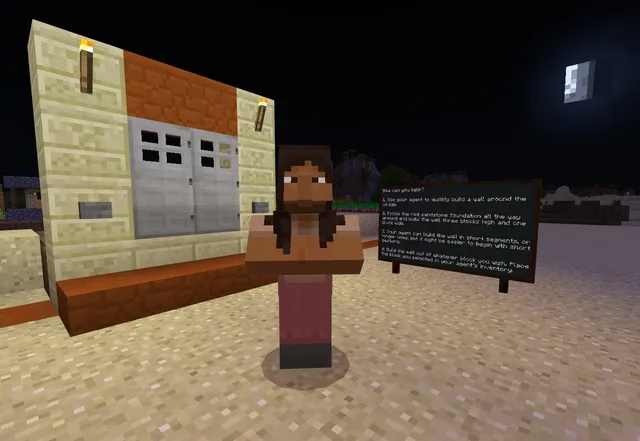
Pairs spawn inside the Training Academy Base Station. Students read the orientation boards and interact with the non-player character to review the investigation goals before selecting their first testing zone.
- Physics Zone Investigations25 min
Students visit five experimental areas in any order to complete distinct trials:
- Gravity: Drop blocks from multiple elevations and track falling behavior.
- Friction: Test how travel distance and speed change over differing floor materials.
- Density: Observe the breaking of a line of blocks using tools of varying densities.
- Speed and Velocity: Run minecart tracks while recording time and displacement data.
Partners collaborate at each station: one operates mechanisms while the other times trials and records figures.
- Data Analysis and Graph Construction15 min
Teams move to the analysis area to organize their raw numbers. Using calculators, students compute mean values and simple equations, then construct three-dimensional bar graphs with blocks, labeling axes and values using signs or slates.
- Reflection and Reporting10 min
Students document their findings and discuss experimental reliability. Learners assemble a final report using a Book and Quill, written paper portfolio, or recorded video walkthrough to explain what their data proves.
Assessment: success criteria
- Operates in-game testing mechanisms properly and follows instructions provided by Lab Technician NPCs.
- Records accurate numerical data including stopwatch times and block counts across all five zones.
- Applies simple mathematical equations and correctly computes the mean value of repeated trials.
- Constructs a three-dimensional block graph featuring clear titles, numerical values, and sign or slate labels.
- Explains experimental limitations and relates results to real-world physical forces in a final summary.
Differentiation
Pair learners with a designated role division where one partner manages in-world switches while the other tracks times, and supply structured arithmetic worksheets for calculating averages.
Challenge advanced students to evaluate sources of experimental error in their minecart and falling block trials and propose specific world redesigns to improve data accuracy.
Knowledge check
5 questions to check understanding after the lesson. Tap an answer to see if it is right; the score appears at the end.
1Where do students first spawn to begin their academy tasks?
Answer: B. The source notes that all students spawn in the Training Academy Base Station before picking their zones.
2How many experimental zones must pairs investigate across the academy map?
Answer: C. The curriculum specifies five experimental zones: gravity, friction, density, speed, and velocity.
3What tool or item should students have ready alongside their devices to help record time?
Answer: D. The preparation notes specify that learners need a stopwatch to time trials while their partner operates mechanics.
4How do students physically display their data trends in the analysis area?
Answer: A. The lesson directs students to build graphs out of blocks and attach titles and values with signs or slates.
5Which investigation tests how varying tools break a row of blocks?
Answer: B. The source specifies that density is explored by testing how the density of different axes affects breaking a row of blocks.
Part of the Physical Science curriculum
This is lesson 5 of 6 in Physical Science.
- Coaster-vation of Energy!
- Horizontal Projectile Motion
- Minecraft Micro Models
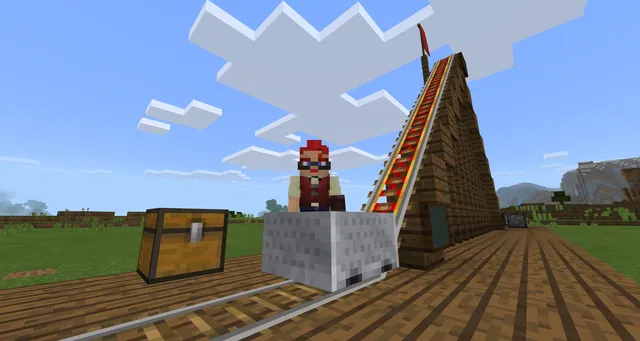
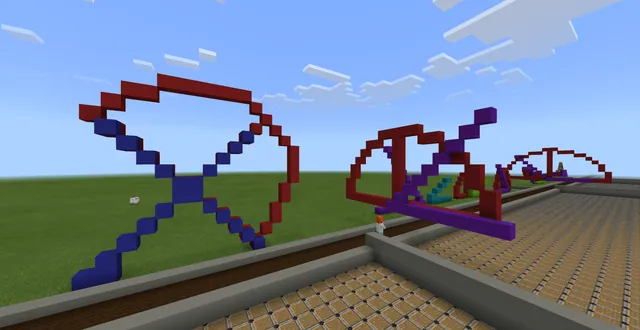
- Physics Coaster
- Physics Training Academy
- Physics:Roller Coaster World
Frequently Asked Questions
Do students have to complete the five zones in a rigid sequence?
No. Students can explore and complete the five physics zones in whatever order they choose after leaving the Base Station.
Can students work individually if devices cannot be networked together?
Yes. Students can work together on a single device taking turns with the controls and the stopwatch, or one student can host a partner over a local network.
What presentation formats are acceptable for student assessment?
Learners can compile their evidence into an in-game Book and Quill, write an external physical report, or record a video walkthrough explaining their graphs and conclusions.
Adapted from Physics Training Academy by Barri Mock on Minecraft Education, last updated Jul 21, 2025. This classroom version, the timings and the quiz were written by 9Minecraft Education.