- Type
- Lesson plan
- Ages
- Ages 11-18
- Duration
- 1 hour
- Level
- Beginner
How can we design an offshore wind farm that produces enough clean energy to power a community while protecting marine wildlife and human sea use?
Overview
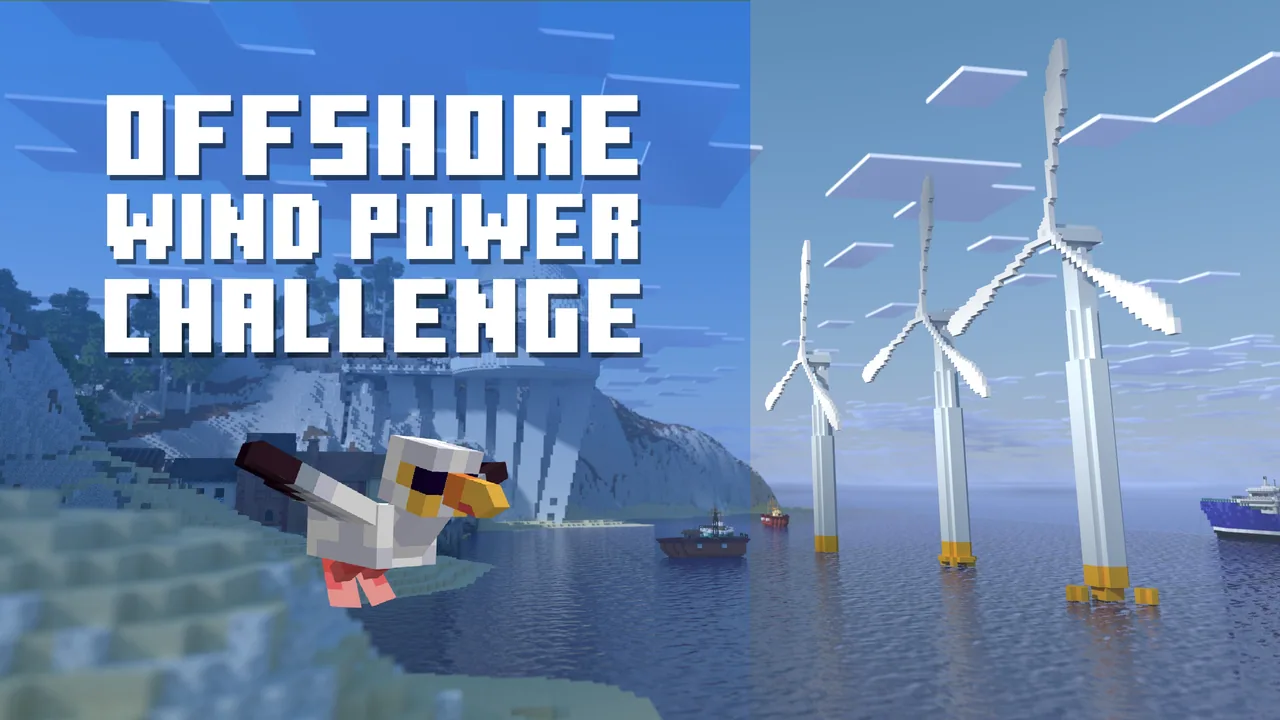
This lesson introduces students to renewable energy, sustainability, and green careers through the engineering of offshore wind power. Learners examine how wind turbines function and explore how to balance the transition to clean electricity with the practical needs of people, maritime operations, and ocean ecosystems.
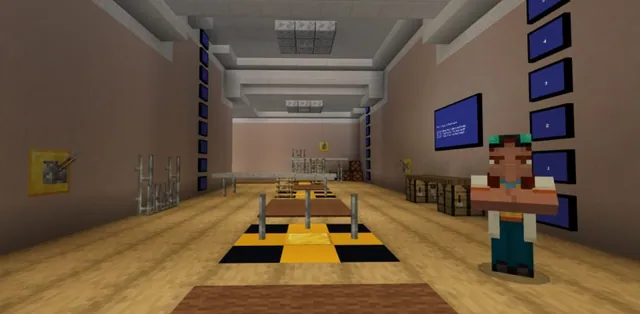
Using a custom Minecraft world created in partnership with The Crown Estate, students first tour an interactive museum to investigate turbine mechanics and engineering design. They then transition to the design centre, where they spend Green Coins to site turbines across the seabed, testing whether their array can cleanly power a coastal village without disrupting shipping lanes or fragile marine habitats.
Learning objectives
By the end of this lesson students will be able to:
- Explain how offshore wind turbines generate renewable energy using an engineering design process.
- Evaluate potential turbine locations based on cost, seabed suitability, shipping channels, and marine habitats.
- Manage a budget of Green Coins to purchase and position offshore wind infrastructure.
- Analyse and debate the viewpoints of various community and environmental stakeholders affected by wind farm developments.
- Assess whether an offshore wind farm layout successfully supplies enough power to a coastal village.
Blocks and items used in this lesson


Key vocabulary
- Offshore wind farm
- A collection of wind turbines constructed in bodies of water to generate electricity from ocean winds.
- Green Coins
- The in-game currency students budget and spend to purchase offshore wind turbines.
- Engineering design process
- A methodical series of steps used by engineers to research, create, test, and refine solutions.
- Stakeholder
- Any individual or group that has an interest in or is affected by a project, such as local residents or mariners.
- Seabed suitability
- The physical condition of the ocean floor determining whether it can securely support a turbine installation.
Before class
Lesson sequence
Suggested timing: about 60 minutes in total.
- Introduction and Museum Exploration15 min
Introduce renewable energy concepts and direct students into the in-game museum. Learners explore how wind turbines function, examine the engineering design process, and discover how turbine designs can be inspired by nature.
- Stakeholder Perspectives and Planning15 min
Working in pairs or small groups, students review the viewpoints of groups affected by the wind farm. They debate the interests of local coastal residents, commercial shipping routes, and marine ecosystems to prepare their placement strategy.
- Design Centre: Budgeting and Construction20 min
Students enter the design centre to purchase turbines using Green Coins. They position their turbines in the marine environment, balancing cost and seabed suitability against shipping lanes and wildlife, and test if their farm produces enough power for the village.
- Evaluation and Taking Action10 min
Gather the class to share wind farm results and evaluate how well each team balanced energy generation with environmental protection. Introduce the Taking Action Toolkit so students can connect their learning to nature recovery initiatives in their school or community.
Assessment: success criteria
- Students clearly explain the steps of the engineering design process and how turbines produce clean energy.
- Students manage their Green Coins budget to place turbines in viable seabed areas.
- Students account for shipping channels, local residents, and marine habitats in their farm placement.
- Students determine and verify whether their wind farm successfully generates adequate electricity for the coastal village.
Differentiation
Allow students to work in structured pairs to calculate turbine costs and provide the glossary worksheet for reference during siting decisions.
Challenge students to use the Taking Action Toolkit principles to outline an actionable nature recovery project for their own school grounds or local area.
Knowledge check
5 questions to check understanding after the lesson. Tap an answer to see if it is right; the score appears at the end.
1What in-game resource must students spend to purchase wind turbines?
Answer: B. Students are allocated Green Coins within the world to buy turbines based on budget and location.
2Which two core locations make up the lesson's Minecraft world?
Answer: C. The world is divided into an educational museum and an interactive design centre where students build their wind farm.
3Which environmental factor must students actively protect when choosing turbine sites?
Answer: D. The challenge requires students to generate renewable power while safeguarding marine habitats and wildlife.
4What tool helps students apply their green skills to community nature recovery outside the game?
Answer: A. The Taking Action Toolkit supports students in identifying local issues and designing nature recovery solutions.
5Which human and operational factor must be considered when placing offshore turbines?
Answer: B. Turbine placement requires balancing social impacts, including the needs of residents and navigation through shipping channels.
Resources
- Lesson package (.zip)Everything the author attached to this lesson in one download.
- Offshore Wind Power Challenge lesson oneLesson pack for ages 11 – 14. Students explore the importance of renewable energy and put the engineering design process in action.
- Offshore Wind Power Challenge lesson twoLesson pack for ages 11 – 14. Students consider and debate different perspectives on a proposed offshore wind farm.
- Lesson worldOpens the world page in Minecraft Education (sign-in with a school account may be needed).
Frequently Asked Questions
Can this lesson be taught outside the United Kingdom?
Yes. Although the background materials include facts and figures relevant to the UK, the concepts of renewable energy, marine protection, and engineering design apply internationally.
What are the CPD videos mentioned in the preparation notes?
The lesson includes two professional development videos that provide practical advice on using Minecraft in class, teaching sustainability, and facilitating the programme's activities.
Adapted from Offshore Wind Power Challenge by Adam Clarke on Minecraft Education, last updated May 23, 2025. This classroom version, the timings and the quiz were written by 9Minecraft Education.