- Type
- Lesson plan
- Subject
- Math
- Topics
- Math & Economics
- Grade
- Primary (Grades 3-5)
- Ages
- Ages 8-10
How can arithmetic number patterns be used to design and construct architectural buildings?
Overview
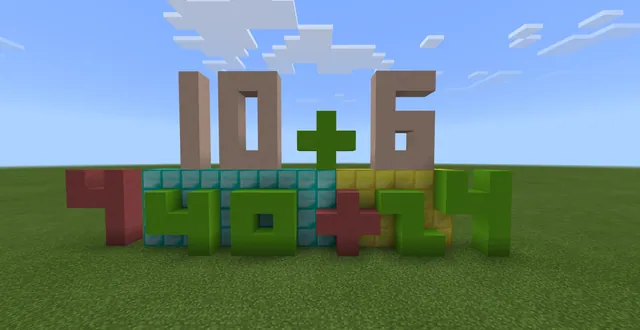
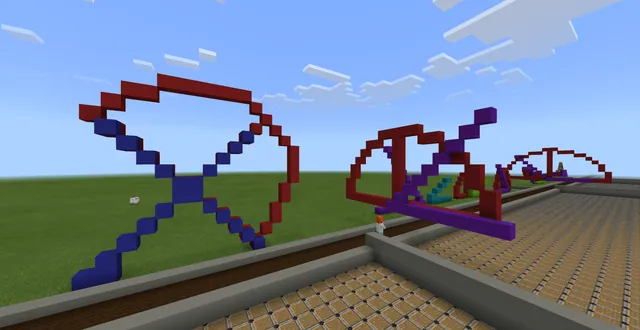
Arithmetic sequences and geometric patterns form a core foundation for architectural design. In this lesson, students explore how numerical rules create predictable visual patterns, examining how simple mathematical sequences translate directly into physical dimensions and structures.
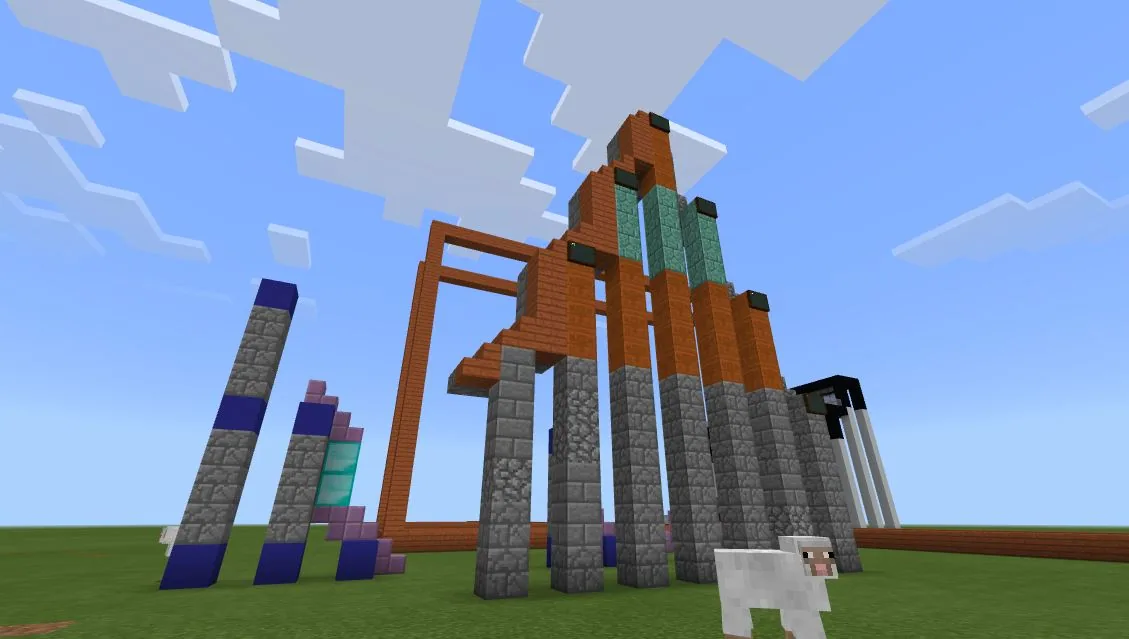
Inside a custom Minecraft Education world, learners study sample pattern towers and solve missing values on slates before building their own models. Using automated clone buttons, students transfer their designs across three designated build zones to develop a foundational math pattern into a framed building and finally a fully realized architectural work.
Learning objectives
By the end of this lesson students will be able to:
- Identify arithmetic rules and determine missing numbers within mathematical sequences.
- Construct a three-dimensional number pattern tower based on an arithmetic rule.
- Transform a mathematical model into a completed architectural structure across staged building zones.
- Analyze peer designs to determine underlying number rules and identify design strengths.
Blocks and items used in this lesson

Key vocabulary
- Arithmetic Pattern
- A sequence of numbers that changes by following a consistent addition or subtraction rule.
- Math Model
- A visual or physical structure built to represent mathematical rules and relationships.
- Clone Button
- An in-game button that duplicates a player's build into the subsequent construction area.
Before class
Lesson sequence
- Guiding Introduction
Present the lesson slideshow to introduce math models representing number pattern towers. Discuss the visual resemblance between the models and real-world buildings, prompting students to consider how mathematics is applied in construction.
- Part 1: Finding Number Patterns
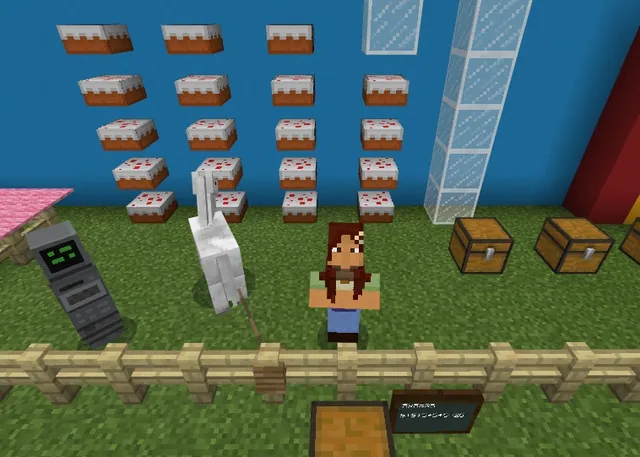
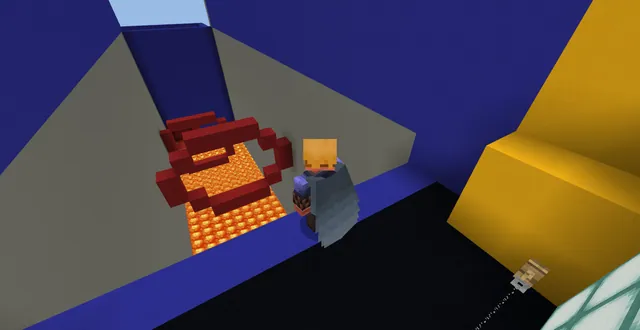
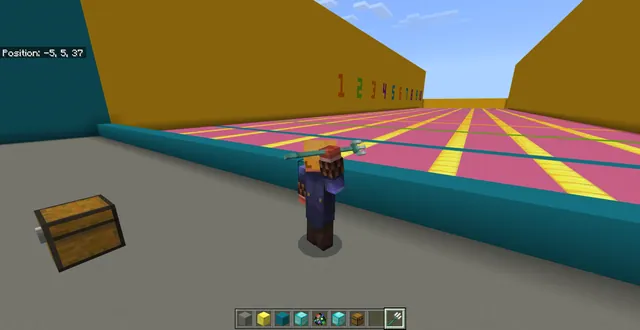
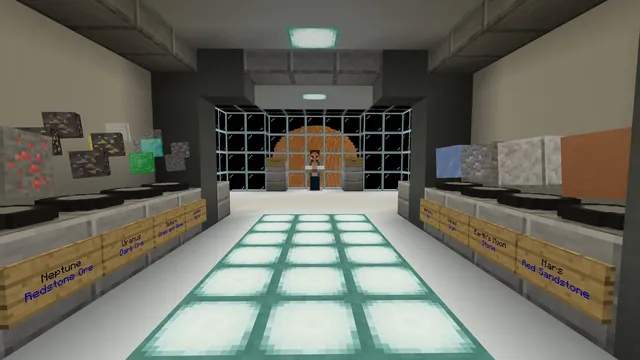
Students enter the Minecraft world to explore pre-built math models and calculate the next numbers in each sequence. They then read number sets provided on in-game slates and construct corresponding math models.
- Part 2: Explore the Architecture
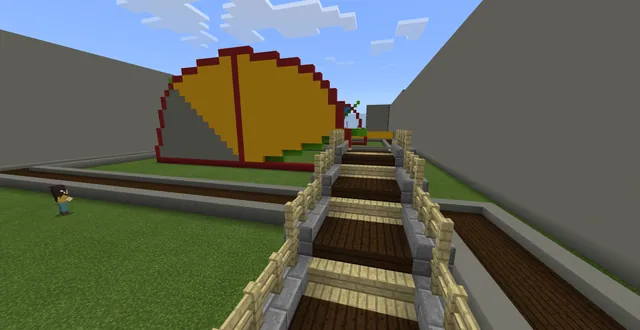
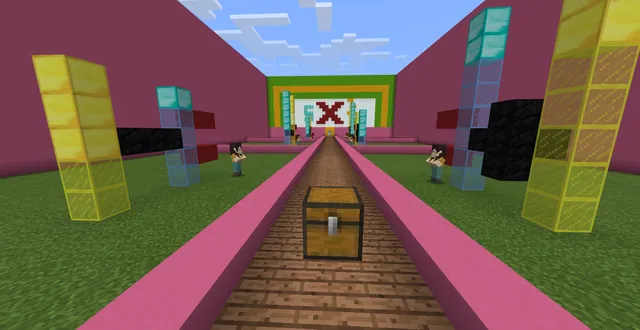
Students inspect sample architectural structures constructed from number pattern models to gather inspiration and design ideas for their own upcoming projects.
- Part 3: Staged Building
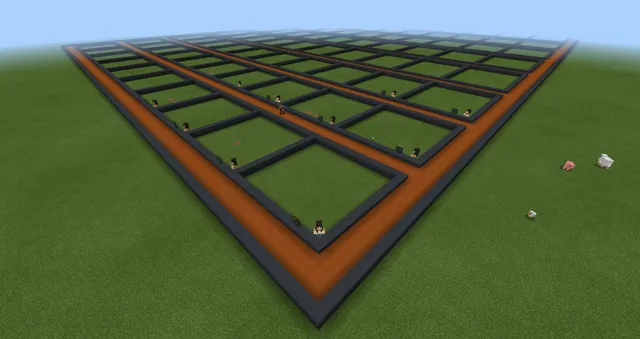
In the first building zone, students assemble a number pattern math model and press the clone button. In the second area, they complete the frame around the cloned model and press the clone button again. In the third area, students add finishing details to complete their architectural structure.
- Peer Review
Students switch devices or host their worlds for classmates to tour. Reviewers record their peer's math pattern, identify key design takeaways, and offer ideas for potential structural improvements.
Assessment: success criteria
- Student accurately determines missing numbers in world pattern challenges and explains the growth rule.
- Student builds a tower that accurately reflects their chosen arithmetic number pattern.
- Student successfully advances their model across all three construction areas using the clone buttons.
- Student observes secondary pattern traits, such as alternating even and odd values or multiples.
- Student participates in peer review by identifying a classmate's math pattern and offering constructive feedback.
Differentiation
Assign simple, low-increment rules on slates so students can easily visualize their pattern steps.
Prompt learners to observe secondary pattern characteristics, such as why terms alternate between odd and even numbers.
Knowledge check
5 questions to check understanding after the lesson. Tap an answer to see if it is right; the score appears at the end.
1What do students build first in the three-stage construction area?
Answer: B. Students begin in the first building area by constructing a math model of their chosen number pattern before moving forward.
2What happens when a student presses the clone button in a build zone?
Answer: A. Pressing the clone button copies the structure into the subsequent build area so the student can complete the next phase.
3If a sequence starts at 1 and follows the rule 'Add 3', what feature can be observed about the terms?
Answer: C. Starting at 1 and repeatedly adding 3 produces 1, 4, 7, 10, alternating between odd and even integers.
4Which question must students answer when evaluating a classmate's work during peer review?
Answer: D. The peer review requires students to identify their classmate's math pattern, share what they learned, and suggest improvements.
5How many progressive building zones are used to construct the final architecture?
Answer: C. The process uses three distinct zones: the initial math model, the framing zone, and the final architectural design zone.
Resources
- Slideshow
- Lesson worldOpens the world page in Minecraft Education (sign-in with a school account may be needed).
Part of the Grade 4 Math curriculum
This is lesson 14 of 19 in Grade 4 Math.
- Angles and Building Bridges
- Base Ten Puzzles
- Build a Two-Step Word Problem
- Build a Word Problem
- Elytra Flight Rounding
- Finding Factors
- Fractions in Minecraft
- Javelin Line Plots
- Lines, Angles & Architecture
- Long Division in Minecraft
- Math Bed Wars!
- Measurement Mini Game
- Multi Digit Multiplication
- Number Pattern Architecture
- Points, Lines, Rays & Droppers
- Regrouping Obstacle Course
- Subtraction + Regrouping
- Symmetry in Pixel Art
- Wither Battle Regrouping
Frequently Asked Questions
What materials are needed before launching the Minecraft world?
Teachers should share the provided lesson slideshow to review number pattern models and discuss connections between arithmetic sequences and architectural structures.
How are the three build areas managed in the world?
Students build step-by-step: area one holds the pattern model, an in-game clone button transfers it to area two for structural framing, and a second clone button moves it to area three for final detailing.
Adapted from Number Pattern Architecture by Minecraft Education on Minecraft Education, last updated Sep 15, 2023. This classroom version, the timings and the quiz were written by 9Minecraft Education.