- Type
- Lesson plan
- Subject
- Math
- Topics
- Math & Economics
- Grade
- Primary (Grades 3-5)
- Ages
- Ages 8-10
- Duration
- about 80 min (suggested)
How do we use angle measurements to design and construct functional structures like bridges?
Overview
Understanding geometric angles and how they combine is fundamental to structural engineering and architectural design. By investigating right, acute, and obtuse angles, learners discover how angular measurements help builders construct stable structures that satisfy real-world specifications.
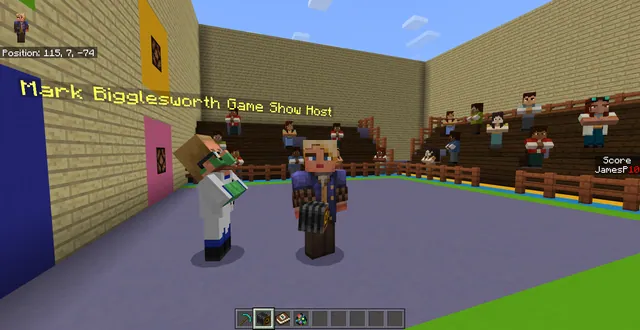
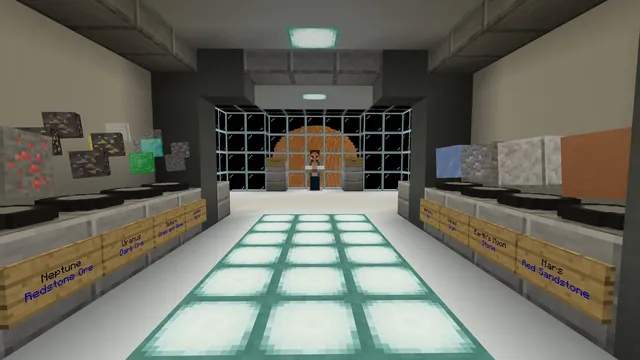
In this lesson, learners use Minecraft Education alongside physical protractors and graph paper. After examining and building angles within the virtual world and interacting with non-player characters to solve angle addition problems, students design a functional bridge that spans a river while maintaining necessary clearances for water traffic.
Learning objectives
By the end of this lesson students will be able to:
- Measure and sketch acute, right, and obtuse angles using graph paper and a protractor.
- Calculate angle totals through addition and subtraction of non-overlapping parts.
- Construct angles in Minecraft and measure a peer's build.
- Design a bridge spanning a 40-meter river with at least 7 meters of clearance based on calculated angles.
Blocks and items used in this lesson


Key vocabulary
- Acute angle
- An angle that measures less than 90 degrees.
- Right angle
- An angle that measures exactly 90 degrees.
- Obtuse angle
- An angle that measures more than 90 degrees but less than 180 degrees.
- Protractor
- A tool used to measure and draw angles in degrees.
- Decompose
- To break an angle down into smaller, non-overlapping parts.
Before class
Lesson sequence
Suggested timing: about 80 minutes in total.
- Paper and Protractor Warm-Up15 min
Introduce guiding questions about angles, degrees in a circle, and real-world applications. Students practice sketching and measuring right, acute, and obtuse angles on graph paper using protractors before opening the software.
- Observe and Build Angles20 min
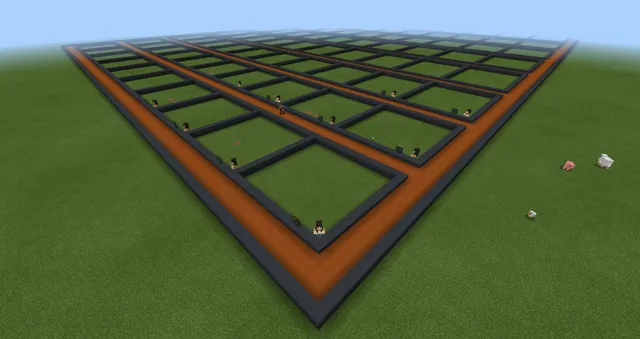
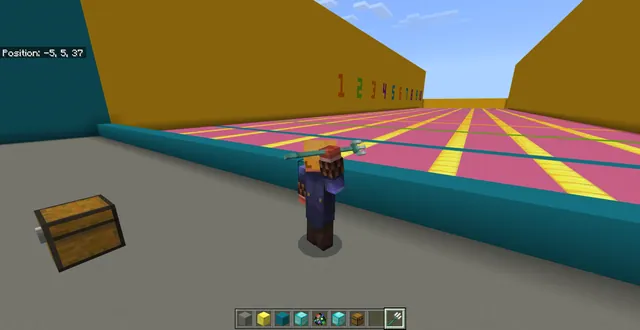
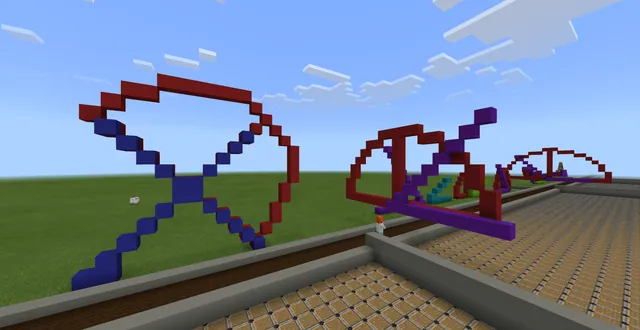
Students load the world file, explore the environment, and sketch and measure six in-game angles on their paper. Next, each student builds two original angles in-game and measures a partner's creations.
- Adding and Subtracting Angles15 min
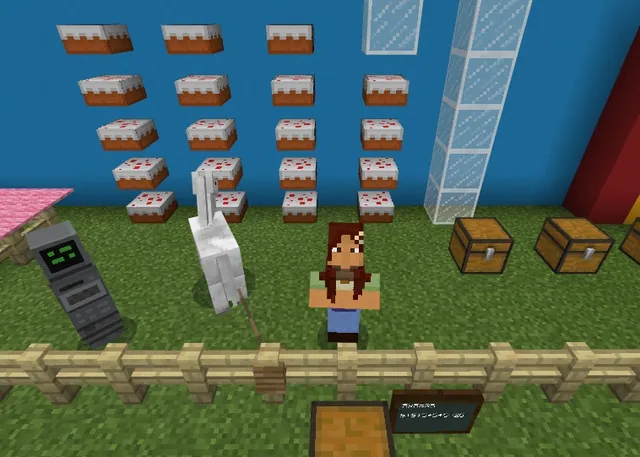
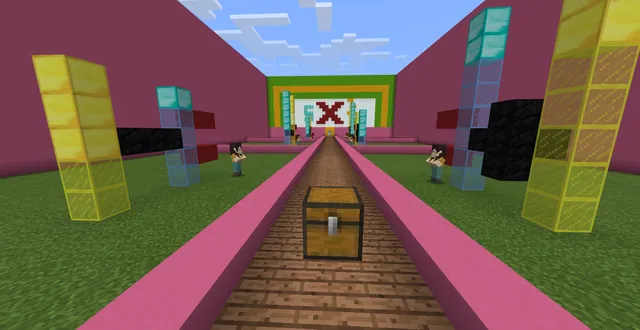
Students inspect virtual models demonstrating how angles combine and decompose, then interact with non-player characters to solve questions about adding and subtracting angles.
- Bridge Design Challenge30 min
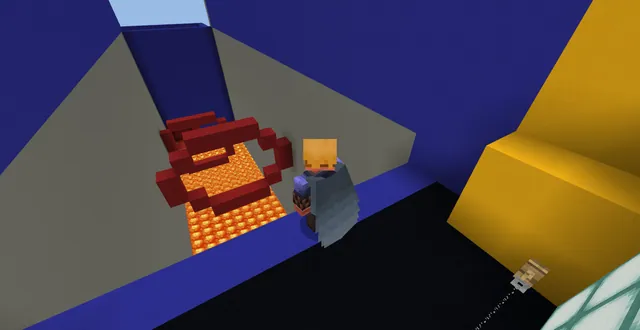
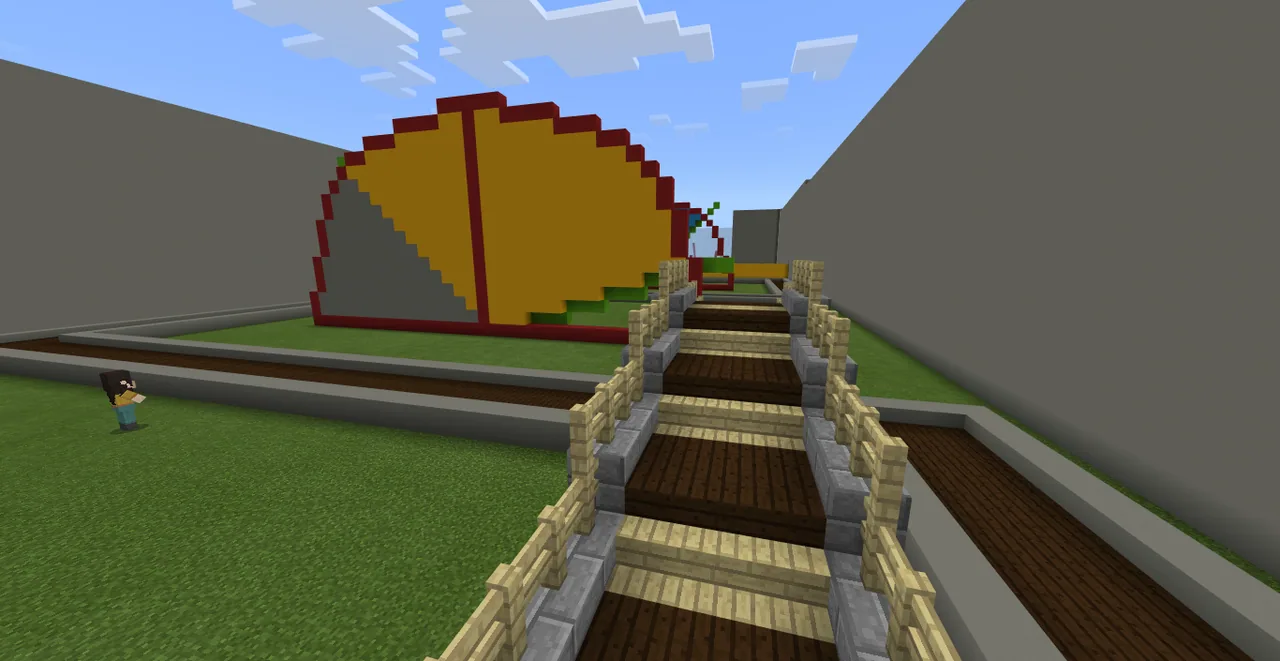
Students apply their geometric skills to build a bridge across a 40-meter river. The bridge must reach a minimum clearance of 7 meters so boats can sail underneath, and students must identify the angles used in their construction.
Assessment: success criteria
- Accurately sketches and measures acute, right, and obtuse angles using a physical protractor.
- Correctly solves addition and subtraction problems involving decomposed angles.
- Constructs custom angles in-game and verifies partner angle measurements.
- Builds a bridge across a 40-meter span that is at least 7 meters high and determines the angles used.
Differentiation
Provide pre-drawn baseline rays on graph paper to help students properly position and read their protractors.
Challenge students to incorporate multiple decomposed angles and perpendicular supports into their bridge trusses.
Knowledge check
5 questions to check understanding after the lesson. Tap an answer to see if it is right; the score appears at the end.
1What physical tool is used to measure angles in degrees on graph paper?
Answer: B. A protractor is the standard tool used to measure and sketch angles in degrees.
2Which type of angle measures less than 90 degrees?
Answer: D. Acute angles are defined as angles measuring less than 90 degrees.
3How high must the student-designed bridge be to allow boats to sail under it?
Answer: A. The design challenge criteria specify that the bridge must be at least 7 meters high.
4What is the length of the river that the bridge must cross?
Answer: B. The design challenge states that the river to be bridged is 40 meters long.
5When an angle is decomposed into non-overlapping parts, how is the total angle measure found?
Answer: C. Angle measurement is additive, meaning the measure of the whole is the sum of its parts.
Resources
Part of the Grade 4 Math curriculum
This is lesson 1 of 19 in Grade 4 Math.
- Angles and Building Bridges
- Base Ten Puzzles
- Build a Two-Step Word Problem
- Build a Word Problem
- Elytra Flight Rounding
- Finding Factors
- Fractions in Minecraft
- Javelin Line Plots
- Lines, Angles & Architecture
- Long Division in Minecraft
- Math Bed Wars!
- Measurement Mini Game
- Multi Digit Multiplication
- Number Pattern Architecture
- Points, Lines, Rays & Droppers
- Regrouping Obstacle Course
- Subtraction + Regrouping
- Symmetry in Pixel Art
- Wither Battle Regrouping
Frequently Asked Questions
What offline supplies are required for this lesson?
Teachers must supply graph paper, pencils, erasers, and standard protractors for each student to sketch and measure angles during the lesson.
How do non-player characters support learning in this activity?
In-game non-player characters present students with questions about adding and subtracting decomposed angles as they observe geometric models.
Adapted from Angles and Building Bridges by Minecraft Education on Minecraft Education, last updated Sep 16, 2023. This classroom version, the timings and the quiz were written by 9Minecraft Education.