- Type
- Lesson plan
- Subject
- Math
- Topics
- Math & Economics
- Grade
- Primary (Grades 3-5)
- Ages
- Ages 8-10
How can numbers between 1 and 100 be broken down into factor rectangles, and what patterns do their factors reveal?
Overview
Understanding factors and multiples is a foundational step in numerical reasoning. In this lesson, students investigate how whole numbers up to 100 can be factored into smaller parts. By organizing numbers on a 100 chart and sorting them into prime and composite categories, learners discover geometric and numerical relationships between factors and multiples.
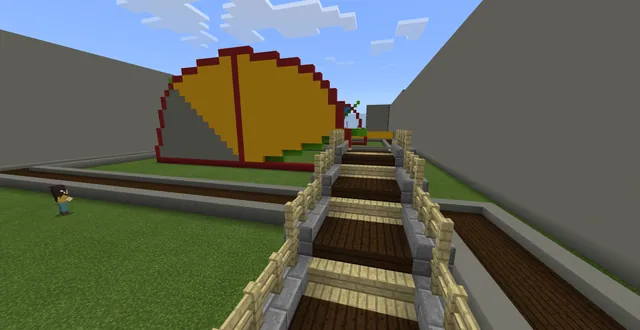
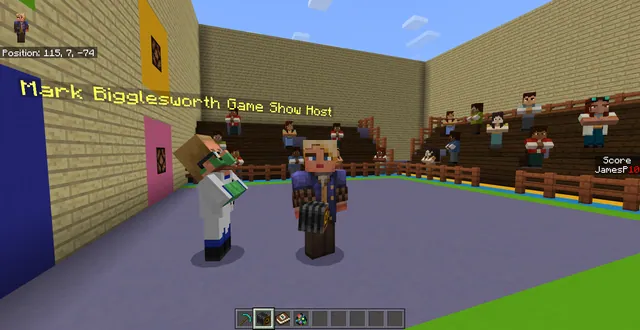
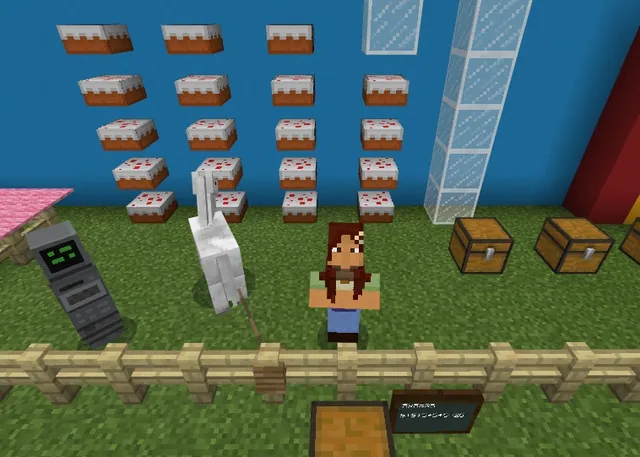
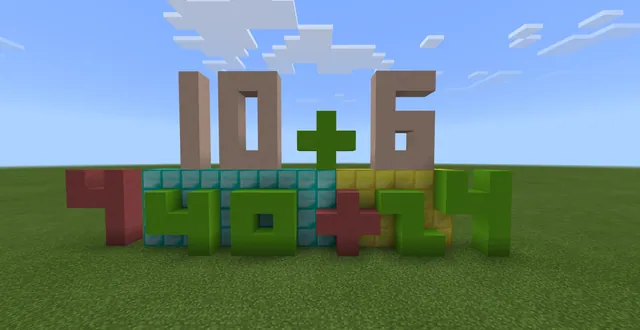
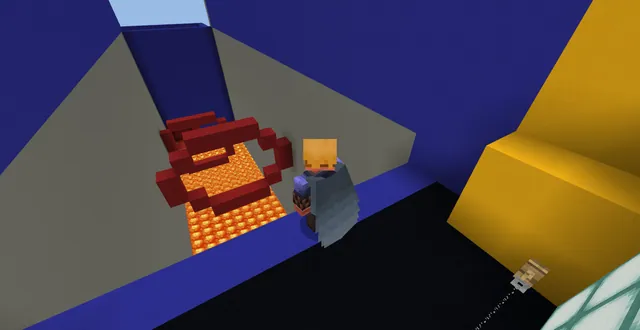
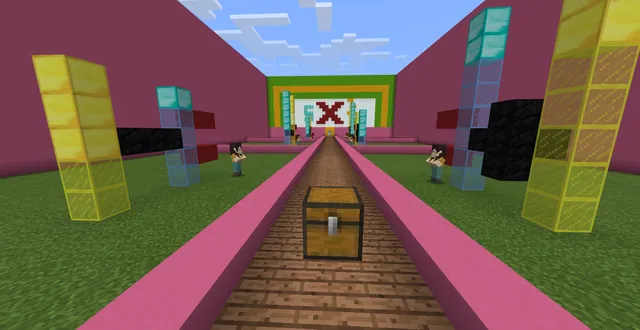
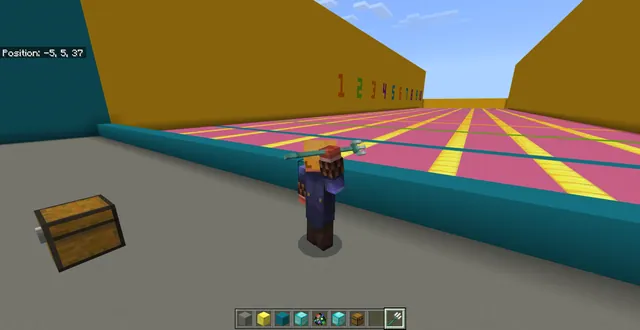
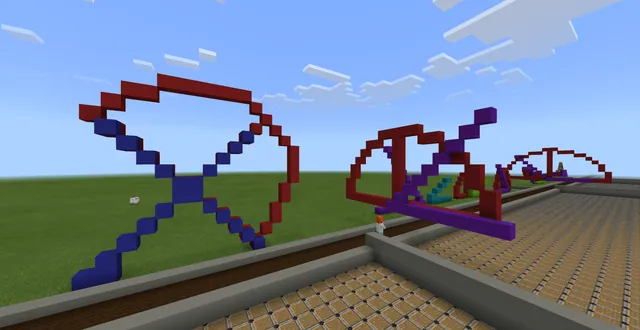
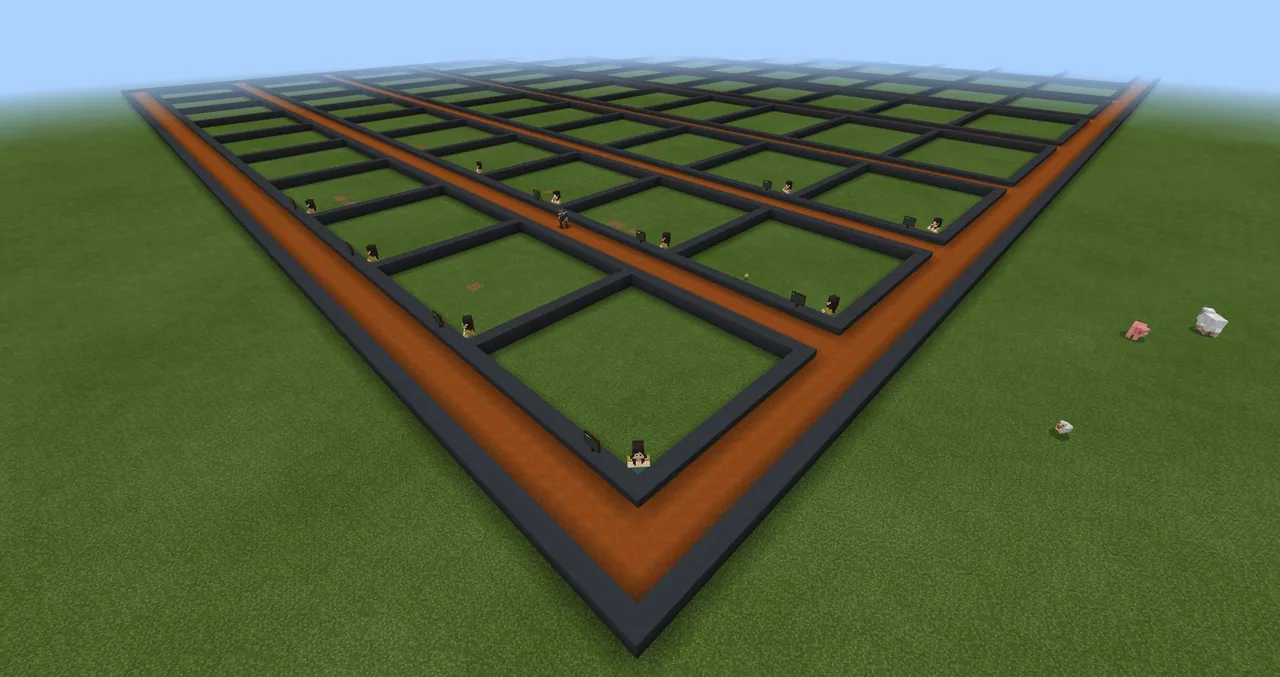
Using Minecraft Education, students bring these abstract concepts into three-dimensional space. Working in groups of three within a downloadable world, learners convert their paper chart data into physical rectangular arrays. Each rectangle demonstrates the dimensions of a factor pair, which students label with slates before conducting peer reviews of their teammates' work.
Learning objectives
By the end of this lesson students will be able to:
- Find all factor pairs for whole numbers from 1 through 100.
- Construct block rectangles in Minecraft representing factor pairs.
- Label factor dimensions accurately using in-game slates.
- Differentiate between prime and composite numbers based on rectangular models.
- Identify and explain factor patterns across 100 charts.
Blocks and items used in this lesson


Key vocabulary
- Factor
- A whole number that multiplies with another whole number to produce a given product.
- Factor Pair
- Two numbers multiplied together to equal a specific target number.
- Prime Number
- A number greater than 1 with only two factors: 1 and itself.
- Composite Number
- A number greater than 1 that has more than two factors.
- Multiple
- The product of a given number multiplied by an integer.
Before class
Lesson sequence
- Paper 100 Chart Mapping
Divide students into groups of three and distribute three paper 100 charts to each group. Assign one chart to each group member to identify factor patterns: Chart 1 covers 2, 4, 8, and 10; Chart 2 covers 3, 6, 9, and 12; and Chart 3 covers 5, 7, and 11.
- World Setup and Group Entry
Have each group of three open the attached Minecraft world so that each team works in its own separate space. Students prepare their building areas to construct the visual representations of their paper charts.
- Building Factor Rectangles
Students use blocks to build rectangles that represent the factors of each assigned number. After completing a rectangle, the builder places a slate next to it and records the factor dimensions.
- Peer Review and Analysis
Group members inspect each other's factor rectangles to ensure dimensions and slate labels are accurate. Students compare their builds to identify prime numbers, composite numbers, and common factor patterns across the 100 chart.
Assessment: success criteria
- Student accurately identifies prime and composite numbers between 1 and 100.
- Student explains the difference between prime and composite numbers.
- Student constructs rectangles that accurately reflect factor pairs for assigned numbers.
- Student labels factors correctly on in-game slates.
- Student identifies and explains patterns among numbers sharing common factors.
Differentiation
Allow learners to focus on smaller subsets of numbers on their paper chart before constructing rectangles in the world.
Challenge learners to find all possible rectangle configurations for numbers that have numerous factor pairs.
Knowledge check
5 questions to check understanding after the lesson. Tap an answer to see if it is right; the score appears at the end.
1Which numbers are mapped on Chart 1 during the paper activity?
Answer: A. The lesson outlines that Chart 1 is used to show factor patterns for 2, 4, 8, and 10.
2How are students organized when loading into the Minecraft world?
Answer: C. The source specifies that students get into groups of three and enter their own group world.
3What item do students use in Minecraft to record the factors next to their rectangles?
Answer: B. The student activities instruct learners to label the factors on the slate.
4What distinguishes a prime number from a composite number?
Answer: D. Prime numbers only have 1 and themselves as factors, whereas composite numbers have additional factors.
5Which numbers are mapped on Chart 3 during the paper activity?
Answer: A. The instructions state that Chart 3 displays factor patterns for 5, 7, and 11.
Resources
Part of the Grade 4 Math curriculum
This is lesson 6 of 19 in Grade 4 Math.
- Angles and Building Bridges
- Base Ten Puzzles
- Build a Two-Step Word Problem
- Build a Word Problem
- Elytra Flight Rounding
- Finding Factors
- Fractions in Minecraft
- Javelin Line Plots
- Lines, Angles & Architecture
- Long Division in Minecraft
- Math Bed Wars!
- Measurement Mini Game
- Multi Digit Multiplication
- Number Pattern Architecture
- Points, Lines, Rays & Droppers
- Regrouping Obstacle Course
- Subtraction + Regrouping
- Symmetry in Pixel Art
- Wither Battle Regrouping
Frequently Asked Questions
How does building rectangles help students understand factors?
Building rectangles allows students to see factor pairs as side lengths that form a given area, making the relationship between multiplication and area concrete.
How do students divide responsibilities in their groups?
Each of the three students in a group takes charge of one specific paper chart (Chart 1, Chart 2, or Chart 3) and builds the corresponding rectangles in their shared world.
What role does peer review play in this lesson?
Group members inspect each other's factor rectangles and slate labels to verify accuracy before analyzing overall factor patterns together.
Adapted from Finding Factors by Minecraft Education on Minecraft Education, last updated Feb 28, 2025. This classroom version, the timings and the quiz were written by 9Minecraft Education.