How can learning about our classmates' personal stories help us build an empathetic and supportive classroom community?
Overview
At the start of a term or group project, students enter the classroom with diverse backgrounds, individual concerns, and a need for genuine connection. This lesson guides learners to explore both shared interests and distinct differences, establishing a caring community built on mutual trust and understanding.
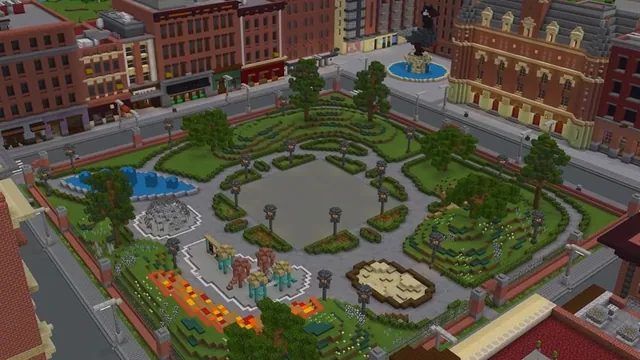
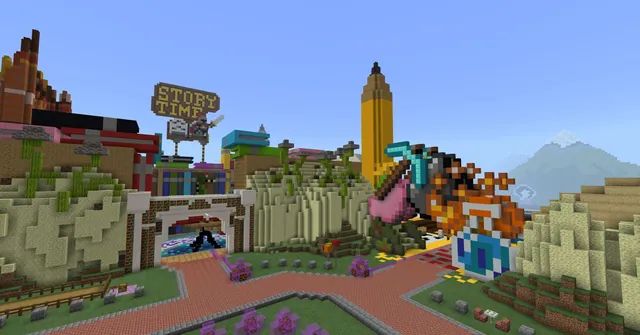
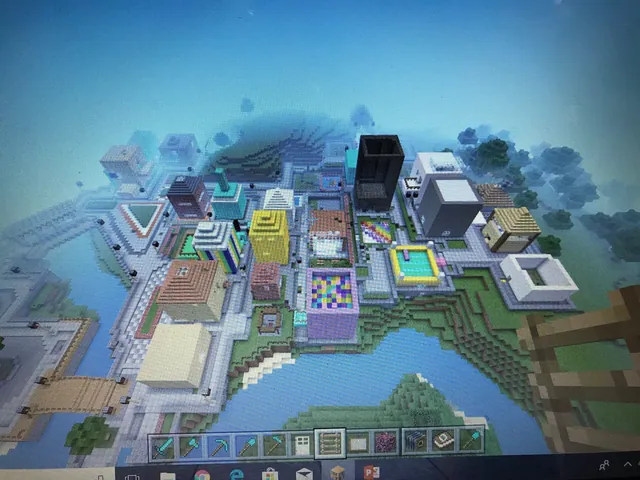
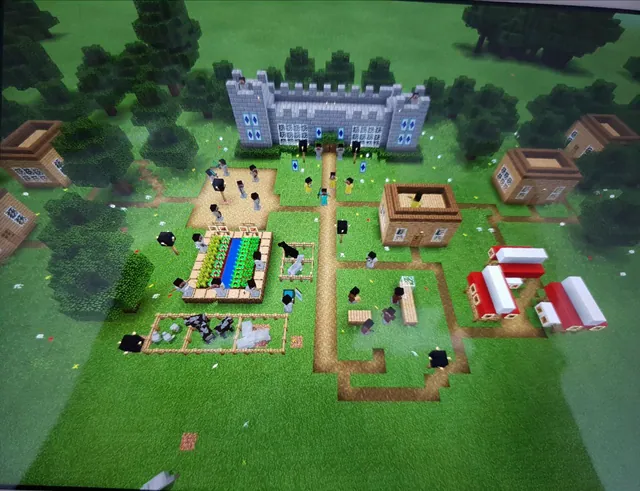
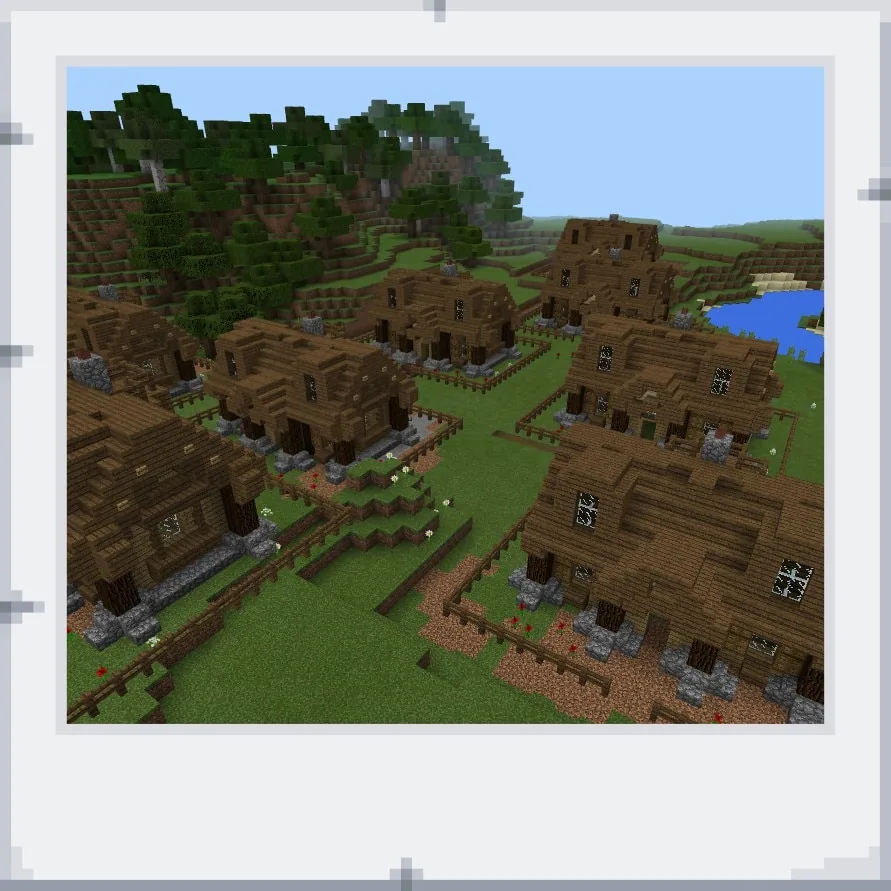
Using the Empathy Village map, each student moves into one of twenty similar houses connected by pathways. After placing slates containing answers to personal reflection prompts, students visit a peer's home to study their experiences and present that classmate's story to the group respectfully.
Learning objectives
By the end of this lesson students will be able to:
- Identify personal values, fears, and memories by recording responses on slates inside an assigned house.
- Examine and memorize personal information shared by a classmate within the village.
- Deliver a respectful presentation from the perspective of another student to demonstrate empathy and sensitivity.
Blocks and items used in this lesson

Key vocabulary
- Empathy
- The ability to understand, share, and show sensitivity toward the feelings and experiences of another person.
- Slate
- A writable Minecraft item used to display brief text messages and responses.
- Perspective
- A particular point of view or way of experiencing and interpreting the world.
Before class
Lesson sequence
- Introduction & Discussion
Introduce the concept of empathy and discuss what it means to build a caring classroom community. Prompt students to consider what they already know about their peers, what they share in common, and how they can show care for one another.
- Emily's Quest: House Assignment & Reflection
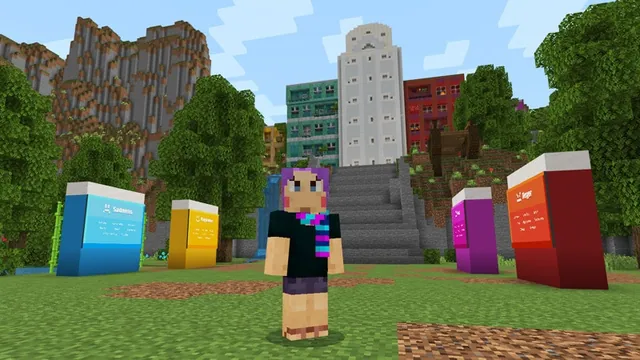
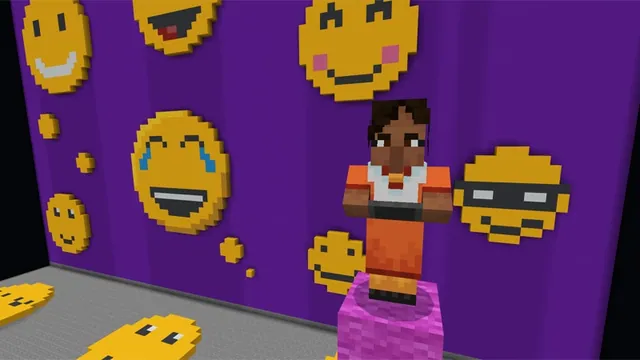
Students spawn in the town centre, meet Emily, and receive a randomly assigned village house. Inside their home, students place slates to record answers to reflection questions about their heroes, fears, proudest accomplishments, and favorite memories.
- Peer Exploration
Learners travel along the paths to an assigned classmate's home. Each student reads through the slates to study and memorize as much information as possible about that peer's background, viewpoints, and interests.
- Fred's Quest: Empathetic Presentations
Students complete Fred's Quest by presenting to the class while speaking from the perspective of their assigned peer. The goal is to highlight the best qualities of that classmate while demonstrating respect, care, and understanding.
Assessment: success criteria
- Complete the required self-reflection questions on slates within the assigned village home.
- Read, retain, and accurately recount key personal details shared by a peer.
- Deliver an oral presentation from the peer's point of view that reflects genuine empathy and respect.
Differentiation
Allow students needing extra help to select a smaller subset of reflection questions to answer on their slates.
Challenge advanced students to identify commonalities and differences between their own slate answers and their assigned peer's responses.
Knowledge check
5 questions to check understanding after the lesson. Tap an answer to see if it is right; the score appears at the end.
1Which writable item do students use to answer personal reflection questions in their house?
Answer: A. The preparation and activity instructions specify that students must be given access to slates to write their answers.
2Where do students first appear when entering the Empathy Village world?
Answer: B. The source notes that players spawn in the town centre before receiving an empty house.
3What character do students meet right after spawning into the map?
Answer: C. According to the lesson plan, players meet Emily immediately upon spawning into the map.
4How many similar houses make up the Empathy Village map?
Answer: D. The source states that the map consists of a small village of twenty similar houses connected by paths.
5What is the primary objective of Fred's Quest?
Answer: B. Fred's Quest asks students to present to the class as though they are that person, showing the classmate's best qualities respectfully.
Resources
- Lesson package (.zip)Everything the author attached to this lesson in one download.
- Emily's QuestThe first quest requires the students to move into a house and make it their own. They decorate it with slates showing who they are and what they like
- Fred's QuestThe final quest has a choice of delivery. The students read all the information in another house and get to know that person.
Part of the Social Studies and SEL curriculum
This is lesson 6 of 12 in Social Studies and SEL.
- Accessibility Park
- Build Your Emotion
- BuildAbility
- CyberSafe: Good Game
- Empathy Train
- Empathy Village
- Inspiring Self-Awareness
- Modeling Gratitude
- Reflect World
- Stranger in Crimwell Village
- Teacher Appreciation
- The Mindful Knight
Frequently Asked Questions
How many students can the Empathy Village map accommodate at once?
The village contains twenty similar houses joined by paths, making it ideal for groups of up to twenty students working individually or larger groups working in pairs.
Do students have to answer every reflection prompt provided in the source?
Teachers may curate or shorten the list of twenty-four sample questions based on grade level, available lesson time, and student comfort.
Adapted from Empathy Village by Lynne Telfer on Minecraft Education, last updated Jul 16, 2025. This classroom version, the timings and the quiz were written by 9Minecraft Education.