- Type
- Lesson plan
- Subject
- Social-Emotional Learning
- Ages
- Ages 8-13
- Duration
- 45 min
- Level
- Beginner
How can recognizing our emotions help us understand others and choose healthy ways to respond?
Overview
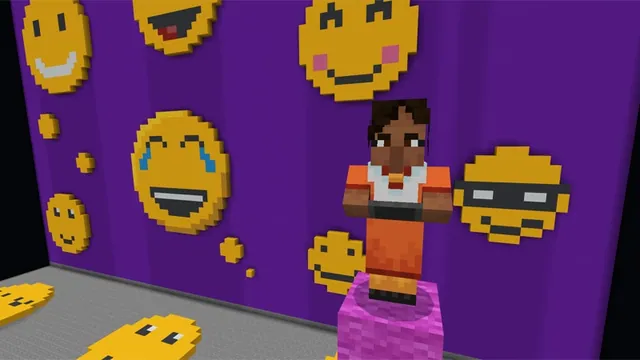
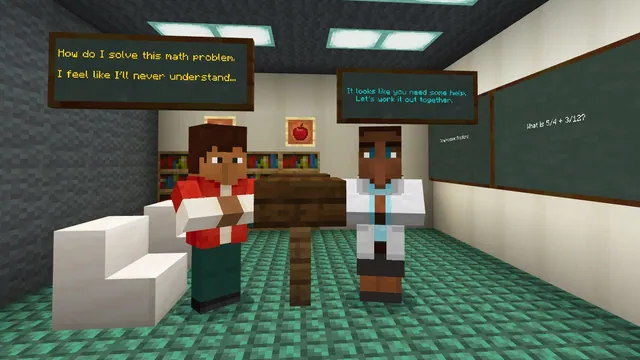
Social and emotional development relies on identifying complex feelings and learning healthy regulation strategies. In this lesson, learners connect in-game situations with real-world emotional experiences, discussing how specific emotions prompt different actions and discovering how to manage those responses effectively.
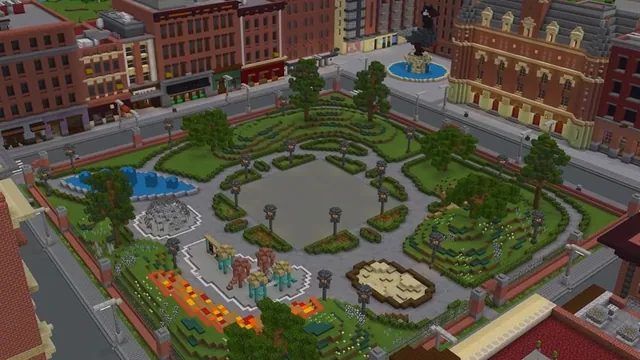
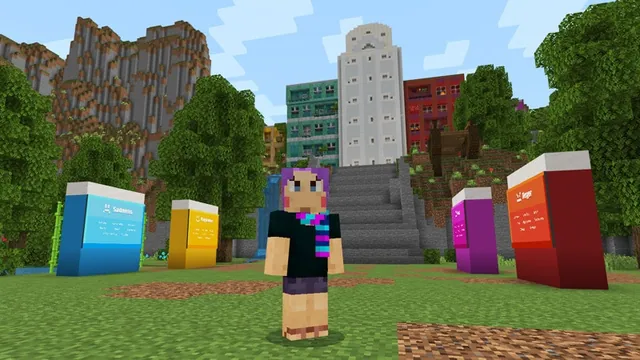
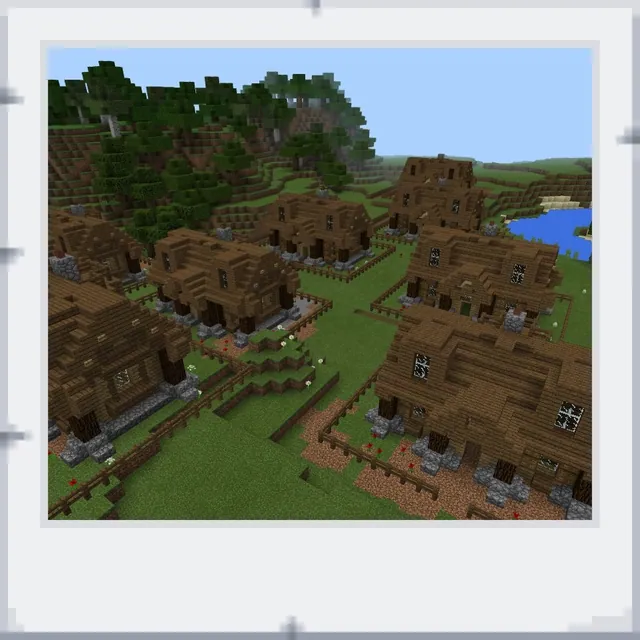
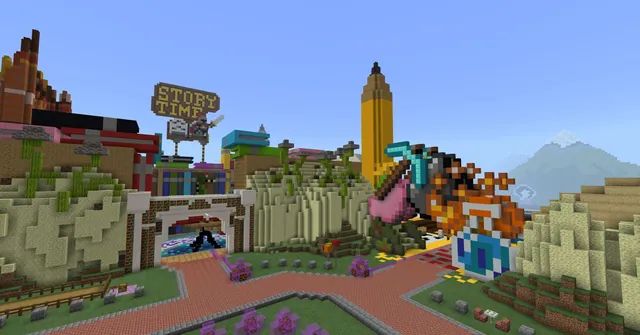
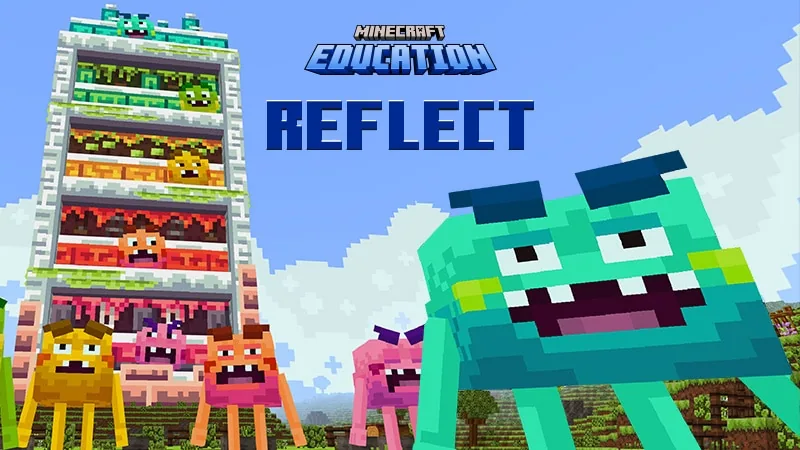
Students navigate a specialized village featuring five distinct emotion adventures. By following colored roads from the central village greeter to designated emotion homes, learners solve collaborative challenges and transition into offline reflection exercises such as journaling, listening circles, and perspective taking.
Learning objectives
By the end of this lesson students will be able to:
- Identify and name a wide range of emotions using descriptive vocabulary.
- Explain specific regulation strategies suited for navigating different emotional states.
- Demonstrate empathy by examining situations from other people's points of view.
- Collaborate with peers to overcome obstacles and solve problems in small groups.
Blocks and items used in this lesson


Key vocabulary
- Emotion regulation
- The ability to monitor, manage, and adapt how you react to different feelings.
- Empathy
- The ability to understand, share, and connect with the feelings of another person.
- Self-awareness
- Recognizing your own personal emotions, thoughts, and values.
Before class
Lesson sequence
Suggested timing: about 45 minutes in total.
- Introduction and Emotional Vocabulary10 min
Introduce emotional vocabulary and review key terms. Explain world orientation: if learners get lost, they should return to the greeter in the village center and follow the colored pavements to find each emotion home.
- Exploring Emotion Adventures20 min
Students enter the world individually or in teams to explore the five independent adventures. Players start each scenario by interacting with the sign posted outside the corresponding emotion home and working together to overcome challenges.
- Debrief and Targeted Activities15 min
Gather the class to list and discuss the feelings encountered during gameplay. Choose a targeted follow-up activity based on class needs, such as a one-minute breathing exercise, reflective journaling, small-group listening circles, or analyzing character points of view.
Assessment: success criteria
- Student names and describes a variety of emotions experienced during the lesson.
- Student identifies a practical coping or regulation strategy for a specific emotion.
- Student actively participates in peer discussions or listening circles by sharing and listening respectfully.
Differentiation
Pair students together and provide an emotions poster so they can point to visual feeling cues while working.
Have students write a detailed journal entry connecting their emotions to characters from literature or historical events.
Knowledge check
5 questions to check understanding after the lesson. Tap an answer to see if it is right; the score appears at the end.
1Where should players go if they get lost inside the world?
Answer: B. The prep notes state that lost players should return to the greeter in the center of the village.
2How many independent adventures are available in the Reflect world?
Answer: C. The world contains five different independent adventures corresponding to different emotion ranges.
3How do players start an adventure at an emotion home?
Answer: A. The orientation notes instruct players to start each adventure by interacting with the sign outside the home.
4What should a teacher do if students need to replay an adventure that was already completed?
Answer: C. Adventures cannot be redone without resetting, which requires creating a new instance from the template library.
5Which activity is suggested for small groups of two to five students working through feeling struggling?
Answer: A. Listening circles with groups of two to five students are specifically designated under the feeling struggling category.
Resources
- Lesson package (.zip)Everything the author attached to this lesson in one download.
- Downloadable Lesson PlanPDF of lesson plan.
- Reflect Educator GuideHow to use Reflect.
- Lesson worldOpens the world page in Minecraft Education (sign-in with a school account may be needed).
Part of the Social Studies and SEL curriculum
This is lesson 9 of 12 in Social Studies and SEL.
- Accessibility Park
- Build Your Emotion
- BuildAbility
- CyberSafe: Good Game
- Empathy Train
- Empathy Village
- Inspiring Self-Awareness
- Modeling Gratitude
- Reflect World
- Stranger in Crimwell Village
- Teacher Appreciation
- The Mindful Knight
Frequently Asked Questions
Can students repeat an emotion adventure after finishing it?
No, adventures cannot be replayed within the same world save. To play through an adventure again, you must create a fresh world using the Reflect World template from the in-game library.
Is multiplayer mandatory for this lesson?
No, while teamwork and collaboration are supported, the lesson and its five adventures can be completed independently by individual students.
Adapted from Reflect World by Minecraft Education on Minecraft Education, last updated Apr 25, 2025. This classroom version, the timings and the quiz were written by 9Minecraft Education.