- Type
- Lesson plan
- Ages
- Ages 11-13
- Duration
- about 1.5 hours (suggested)
- Skills
- Communication
- Includes
- Quiz: 5 questionsLesson files
How can communities design environments and adopt preventive habits to stop the spread of Dengue fever?
Overview
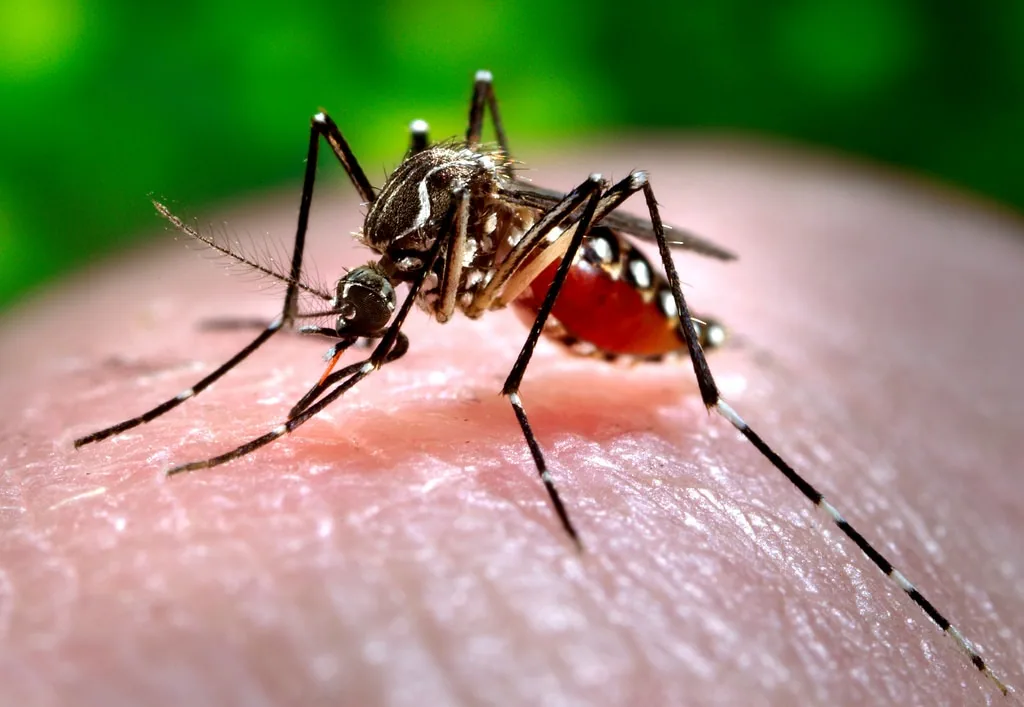
Dengue fever is a severe mosquito-borne viral illness that poses a critical health risk to nearly half of the world's population. Because the disease is transmitted by mosquitoes rather than from person to person, community-level habits—such as eliminating standing water, wearing protective clothing, and growing repellent vegetation—serve as primary lines of defense.
In this lesson, students analyze the causes and consequences of Dengue outbreaks before translating their findings into Minecraft Education. Working individually or in groups, learners design environmental models demonstrating an area before and after an outbreak, or construct simulated settlements that incorporate mosquito-deterring plants and public health safeguards.
Learning objectives
By the end of this lesson students will be able to:
- Explain how the Dengue virus is transmitted and identify methods to reduce mosquito habitats.
- Design a Minecraft model illustrating the before and after effects of a Dengue outbreak or long-term preventive efforts.
- Identify and model mosquito-repellent plants that can be grown around residential areas.
- Communicate an evidence-based call to action to help prevent the spread of mosquito-borne diseases.
Blocks and items used in this lesson


Key vocabulary
- Dengue Fever
- A painful, mosquito-borne viral disease that thrives in tropical regions and warm weather.
- Vector
- An organism, such as a mosquito, that carries and transmits an infectious pathogen to another living thing.
- Standing Water
- Stagnant, unmoving water where mosquitoes lay eggs and reproduce.
- Natural Repellent
- Plant-based oils or flora, such as citronella, lavender, or neem, that naturally deter insects.
Before class
Lesson sequence
Suggested timing: about 90 minutes in total.
- Engage and Build Background15 min
Introduce Dengue fever using introductory video clips while students settle in. Explain key biological facts: Dengue is transmitted by daytime-biting mosquitoes (often targeting areas below the elbows and knees), active mainly between August and October, and does not pass person to person.
- Collaborative Research and Discussion20 min
Organize students into small groups to examine prevention methods and environmental causes. Have groups discuss the impact of standing water, lifestyle habits, and mosquito-repelling plants such as citronella, catnip, lavender, basil, and rosemary. Record findings on a shared class chart.
- Minecraft Environmental Build40 min
Direct students to choose one of two modeling paths:
- Outbreak Impact: Model a local region illustrating the community before and after a Dengue outbreak.
- Preventive Planning: Build an environment incorporating repellent vegetation and drainage, or predict the local impact over 5 to 10 years if prevention fails.
- Documentation and Call to Action15 min
Have students capture screenshots or video screencasts showing their completed builds. Students draft a brief presentation or awareness message explaining their design choices and citing preventive measures to halt the disease.
Assessment: success criteria
- Minecraft build clearly demonstrates the chosen scenario (before-and-after outbreak effects or 10-year preventive projections).
- Model features accurate prevention elements, such as the removal of standing water or the placement of repellent plants.
- Screenshots or screencasts effectively showcase key features of the environment.
- Call to action clearly communicates evidence-based strategies for stopping Dengue transmission.
Differentiation
Provide a quick-reference checklist of mosquito-repelling plants and habitat risk factors for students to consult during planning.
Have students watch advanced research lectures on viral transmission and create a 30-second evidence-based awareness commercial for their school community.
Knowledge check
5 questions to check understanding after the lesson. Tap an answer to see if it is right; the score appears at the end.
1How is Dengue fever transmitted to humans?
Answer: A. Dengue is a mosquito-borne viral disease and does not spread directly from person to person.
2At what time of day do Dengue mosquitoes typically bite?
Answer: B. The mosquitoes that transmit Dengue typically attack during the day.
3Which action helps eliminate mosquito breeding sites around homes?
Answer: C. Mosquitoes require standing water to breed, so removing it reduces their habitat.
4Which plant is known to have natural mosquito-repellent properties?
Answer: D. Citronella, along with lavender, catnip, and basil, has natural insect-repelling qualities.
5During which months are Dengue mosquitoes generally observed to be most active?
Answer: B. Dengue mosquitoes are generally active from August to October and stop breeding when temperatures decline.
Resources
Frequently Asked Questions
Is a custom world download needed for this lesson?
No custom world file is required. Students can build in a standard creative world, flat world, or any biome representing their chosen region.
How can students represent repellent herbs in Minecraft?
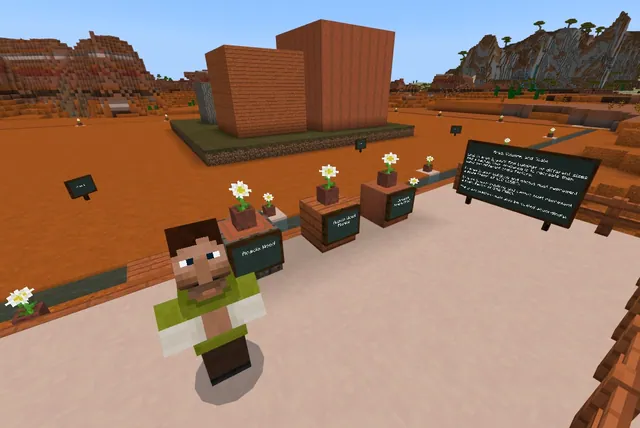
Students can use native flowers, shrubs, potted plants, and crop blocks to symbolize repellent plants like lavender, basil, rosemary, and citronella.
Adapted from DESTROY DENGUE by Arti Chopra on Minecraft Education, last updated Jan 13, 2022. This classroom version, the timings and the quiz were written by 9Minecraft Education.