- Type
- Lesson plan
- Subject
- History & Social Studies
- Topics
- History
- Ages
- Ages 8-13
- Skills
- CommunicationCreativity
How can artifacts, symbols, and informational displays effectively tell the story of Washington state from past eras to the present day?
Overview
In this lesson, students investigate key eras in Washington state history, exploring the heritage of Northwest Indigenous peoples, early explorers, settlers, and contemporary communities. Working as museum curators, learners select meaningful historical artifacts, compose informative signage, and develop a visual narrative that spans historical eras through modern times.
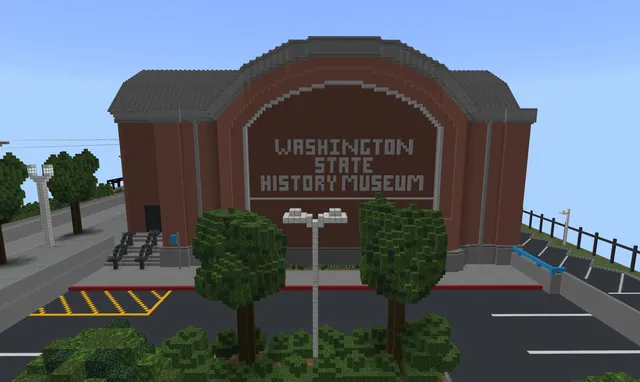
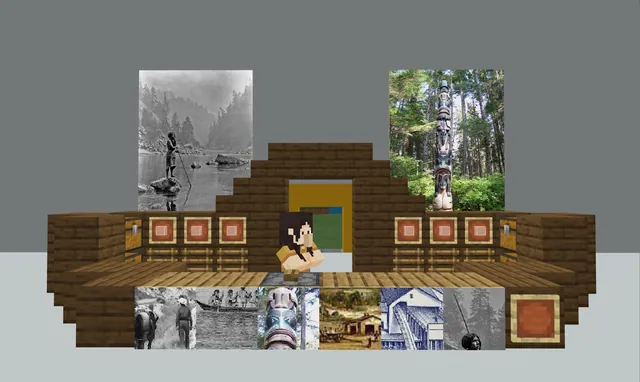
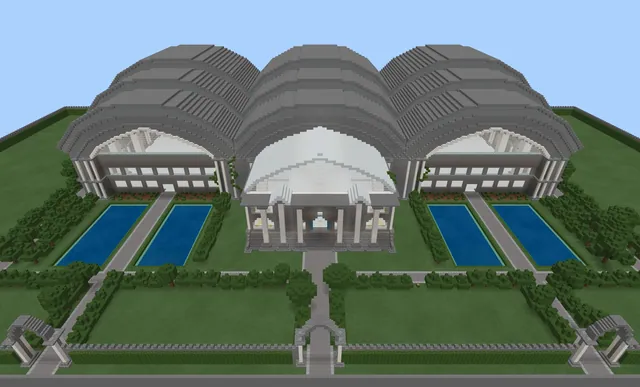
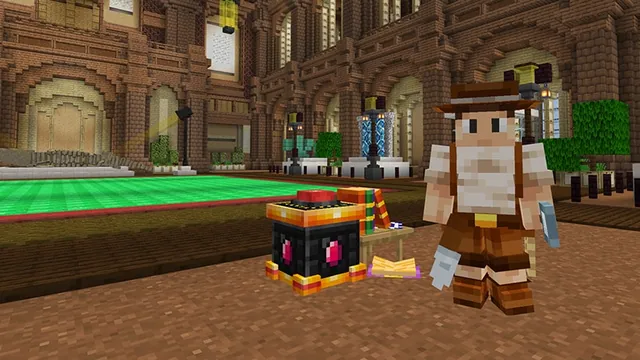
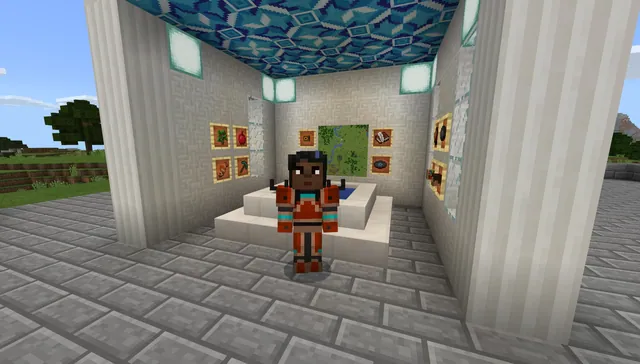
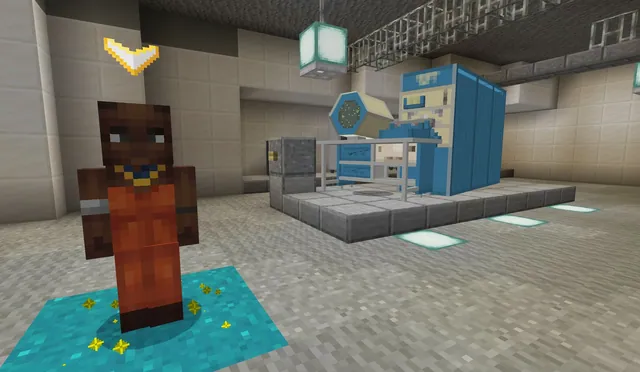
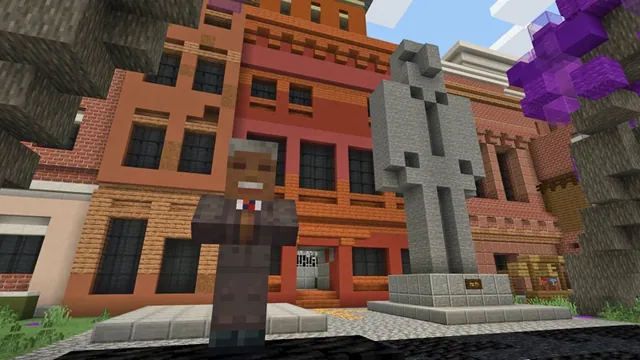
Inside the Minecraft Washington State History Museum world, students interact with non-player guides, create a custom symbol outside, and furnish empty gallery spaces. Learners place customized artifacts, label signs, and informational boards in designated exhibit rooms and the main lobby to demonstrate their historical understanding.
Learning objectives
By the end of this lesson students will be able to:
- Design three museum exhibits showcasing major eras in Washington state history.
- Select and construct artifacts that accurately represent specific historical periods.
- Create a custom symbol representing Washington state in the outdoor gallery.
- Construct an original display in the museum lobby illustrating the current time period.
Blocks and items used in this lesson


Key vocabulary
- Artifact
- An object made or used by humans that provides historical evidence about a time period.
- Curator
- A person in charge of managing, organizing, and caring for exhibits in a museum.
- Symbol
- A design, mark, or item used to represent an idea, group, or state.
- Informational Board
- An in-game board that provides background information and context to museum visitors.
Before class
Lesson sequence
- Museum Arrival and Symbol Design
Students meet the tour guide outside the museum, inspect the external symbol gallery, and design an original Washington state symbol to earn entry into the museum.
- Historical Research and Era Exhibits
Students meet the curator inside and are assigned three empty gallery rooms. Working individually or with partners, students research three distinct eras in Washington history, selecting key events to represent with custom artifacts and signage.
- Current-Era Display Planning
Students plan a display for the lobby representing modern Washington. Learners brainstorm and sketch symbols, community features, and current events that best reflect their present era.
- Lobby Exhibit Construction
Using their planning notes, students build their modern exhibit in the museum lobby, placing at least five representative artifacts, accompanying sign labels, and two descriptive informational boards.
- Museum Sharing and Peer Review
Learners share their completed builds through a PDF portfolio export, a Sway presentation, a narrated screen recording, or a synchronous visitor-mode gallery walk where peers leave positive comment cards.
Assessment: success criteria
- Student builds an exhibit containing at least five artifacts with matching descriptive sign labels.
- Exhibit includes at least two informational boards that welcome visitors and provide context on the era.
- Lobby display clearly represents modern Washington through community elements or current events.
- Student leaves positive feedback or notes on what they learned on peer comment cards.
Differentiation
Provide a pre-selected list of historical artifacts for each era, allow students to work in pairs, or reduce the number of required artifacts.
Require students to include additional artifacts and use detailed domain-specific vocabulary across all informational boards.
Knowledge check
5 questions to check understanding after the lesson. Tap an answer to see if it is right; the score appears at the end.
1Where inside the museum are students instructed to build their current-era exhibit?
Answer: A. The lesson directs students to plan and construct their modern-era display in the lobby of the museum.
2What must students do before the tour guide grants them entry into the museum?
Answer: B. Students explore the outdoor symbol gallery and create their own symbol before gaining entrance.
3According to the Exhibit 4 rubric, how many artifacts are required for a score of 3?
Answer: C. The rubric states that a level 3 exhibit is built with five artifacts and matching sign labels.
4Who greets students once they enter the museum to show them the three empty exhibit rooms?
Answer: A. Once inside, the curator greets the students and reveals the three empty exhibit rooms.
5Which role should classmates use during a synchronous gallery walk so they cannot modify each other's worlds?
Answer: D. Joining worlds as visitors ensures students can walk through exhibits without altering any builds.
Resources
- Lesson package (.zip)Everything the author attached to this lesson in one download.
- WA State History Museum RubricResource
Part of the Museum Builds curriculum
This is lesson 3 of 10 in Museum Builds.
- WA State History Museum Part 1
- WA State History Museum Part 2
- WA State History Museum Part 3
- Create Your Own Museum
- Dynamic Dioramas
- Museum of Me
- Museum of Scale
- Museum of Wales
- The Great Tech Story
- The Hall of Inventions
Frequently Asked Questions
What methods can students use to submit or share their finished exhibits?
Students can export a PDF portfolio for Teams submission, assemble screenshots into a Sway presentation, record a narrated screen walkthrough, or host a live gallery walk with classmates joined as visitors.
What are the core requirements for an exhibit to be considered complete on the rubric?
A proficient exhibit includes five constructed artifacts with matching descriptive sign labels, alongside two informational boards that introduce the era and give background details to guests.
Adapted from WA State History Museum Part 3 by Phygital Labs on Minecraft Education, last updated Jul 14, 2025. This classroom version, the timings and the quiz were written by 9Minecraft Education.