- Type
- Lesson plan
- Grade
- Early years (Pre-K to Grade 2)Primary (Grades 3-5)Middle school (Grades 6-8)High school (Grades 9-12)
- Ages
- All ages
- Duration
- 1 hour
- Level
- Beginner
How do language, culture, and settlement design reflect the connections of Māori communities to their environment and ancestors?
Overview
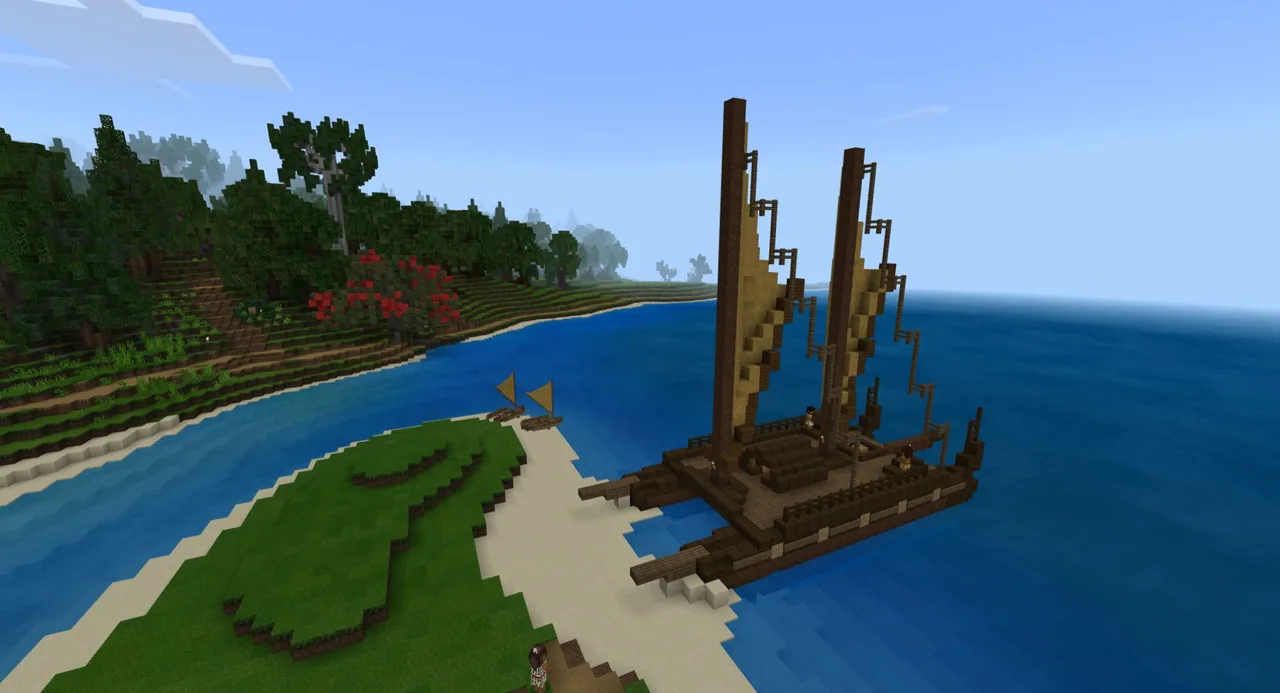
For centuries, voyagers navigated across the Pacific Ocean to settle in Aotearoa (New Zealand), developing kinship communities known as hapū. These communities maintain profound relationships with their ancestors, ancestral voyaging canoes (waka hourua), mountains, waterways, and settlements. This cultural context forms the foundation of Te Ao Māori, shaping traditions, daily communal living, and the indigenous language.
In the Ngā Motu world, students arrive by waka hourua at an offshore island settlement and step into a fortified village (pā). Guided by interactions with local whānau, students discover traditional structures, practice pronunciation with Hinemoa at the river, construct utilities in designated plots, and document their language learning using the in-game portfolio.
Learning objectives
By the end of this lesson students will be able to:
- Pronounce te reo Māori vowels, consonant combinations, and vocabulary accurately using game-based activities.
- Compile a personal te reo Māori glossary in the in-game portfolio complete with images and definitions.
- Investigate the design, food systems, and communal functions of a traditional fortified settlement (pā).
- Construct historical pā utilities and structures within riverside building plots based on in-game observations and research.
Blocks and items used in this lesson


Key vocabulary
- Ngā Motu
- The Islands; the Māori name for the game world.
- Waka Hourua
- A traditional ocean-going voyaging canoe used to travel across the Pacific.
- Hapū
- A kinship community or sub-tribe.
- Whānau
- Family or extended family group.
- Pā
- A fortified Māori village settlement.
- Te Reo Māori
- The indigenous Māori language of Aotearoa.
Before class
Lesson sequence
Suggested timing: about 60 minutes in total.
- Arrival and Village Exploration10 min
Students spawn aboard the waka hourua off the mainland of Aotearoa and journey ashore to the pā. Introduce the driving question and instruct students to wander through the settlement, noticing how communal areas, living spaces, and food stores are laid out.
- Pronunciation Practice with Hinemoa15 min
Direct students down to the open-air riverside learning space to meet Hinemoa. Students participate in pronunciation games, arranging letters to hear the unique sounds of vowels, vowel pairs, and consonant-vowel combinations in te reo Māori.
- Personal Glossary Creation20 min
Students interact with whānau throughout the pā who share vocabulary words. Students document terms that interest them by taking photos, conducting external research to confirm meanings, and logging words with captions in their in-game portfolios. If a term is not visible in-game, students may build a representative model to photograph.
- Pā Research and Plot Construction15 min
Working in riverside plots, students construct historical pā utilities and structures based on what they observed in the village and learned through research. Conclude by having students share one vocabulary term and explain the function of their plot build to a peer.
Assessment: success criteria
- The student maintains a personal portfolio glossary containing captured images, Māori terms, and correct definitions.
- The student demonstrates proper pronunciation of basic te reo Māori vowels and consonant-vowel combinations.
- The student builds and explains a functional pā structure or utility within their assigned plot.
Differentiation
Provide a pre-selected vocabulary list and partner students to practice letter sounds together with Hinemoa.
Encourage students to research and build advanced pā infrastructure, including separate food storage and cooking areas, or incorporate concepts of Ngā Atua Māori.
Knowledge check
5 questions to check understanding after the lesson. Tap an answer to see if it is right; the score appears at the end.
1What does the phrase 'Ngā Motu' mean in English?
Answer: B. Ngā Motu translates directly to 'The Islands' in the Māori language.
2What type of vessel brought Māori ancestors across the Pacific Ocean to Aotearoa?
Answer: A. Ancestors of the Māori voyaged across the Pacific on great double-hulled vessels called waka hourua.
3Where in the world do students practice pronouncing te reo Māori letters and syllables?
Answer: C. Hinemoa offers pronunciation lessons and games in an open-air learning space down by the river.
4What is a pā in traditional Māori culture?
Answer: D. A pā is a fortified village community where whānau lived and worked.
5How do students record and define new Māori words during the lesson?
Answer: A. Students compile their personal glossary by capturing pictures and adding word meanings as captions in the in-game portfolio.
Resources
Part of the Indigenous Culture curriculum
This is lesson 5 of 6 in Indigenous Culture.
- A Pacific Northwest Coast Experience: Part 2
- A Pacific Northwest Coast Experience
- Indigenous Stories
- Manito Ahbee Aki
- NGĀ MOTU - THE ISLANDS
- Pimachiowin Aki - The Land That Gives Life
Frequently Asked Questions
What should students do if a word they want to add to their glossary is not in the village?
Students can research the term using outside resources, construct a model of that object in the riverside plots, and take a photo of their build for their portfolio.
Where do students build their pā structures and utilities?
Designated building plots are located down by the river where students can safely construct and showcase their models.
What specific language skills does Hinemoa teach?
Hinemoa runs activities focusing on vowels, consonants, vowel pairs, and consonant-vowel combinations to develop correct pronunciation and stress patterns.
Adapted from NGĀ MOTU - THE ISLANDS by Whetu Paitai on Minecraft Education, last updated Jul 14, 2025. This classroom version, the timings and the quiz were written by 9Minecraft Education.