How do Pacific Northwest Coast Peoples use traditional ecological knowledge to harvest resources sustainably and support community well-being?
Overview
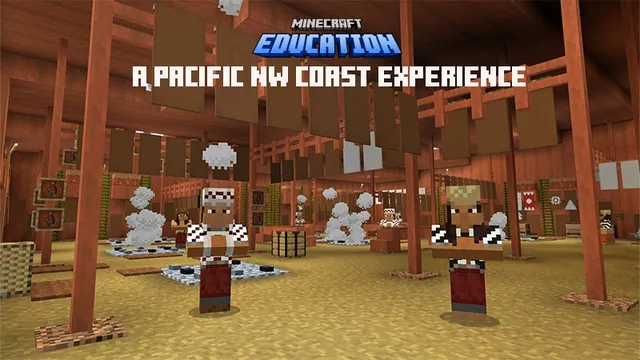
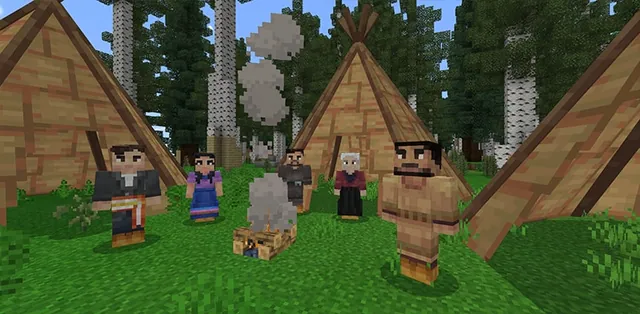
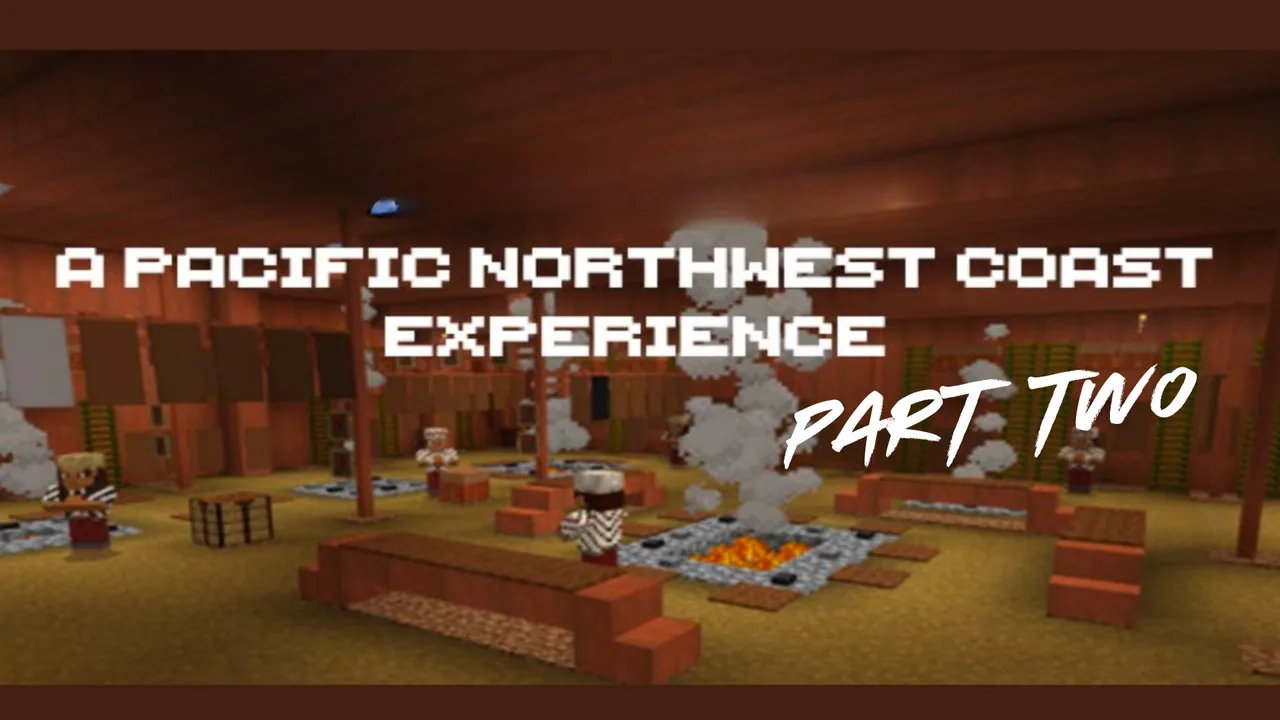
Students step into a Pacific Northwest coastal community to learn directly from elders and knowledge keepers. By engaging with Indigenous traditional ecological knowledge, learners discover how local communities sustainably manage land and marine resources to prepare for winter, guided by First People's Principles of Learning.
Using Minecraft Education, students arrive at a big house, read arrival protocols, and examine plants, animals, and geography. They complete seasonal harvest tasks such as harvesting cedar bark, catching salmon, digging clams, and trading oolichan oil, documenting their reflections using in-game cameras and books before applying their knowledge to village build challenges.
Learning objectives
By the end of this lesson students will be able to:
- Explain how traditional ecological knowledge maintains balance between human needs and coastal ecosystems.
- Perform traditional seasonal harvest tasks alongside community knowledge keepers to help prepare for winter.
- Document observations of coastal flora, fauna, and geography using the in-game camera and book and quill.
- Design and build a self-sustaining coastal settlement using understandings gained from traditional practices.
Blocks and items used in this lesson


Key vocabulary
- Traditional Ecological Knowledge
- Generations of Indigenous understanding about local environments, plants, animals, and natural cycles.
- Tree of Life
- A term used for the western red cedar, which provides bark, planks, and essential materials for coastal life.
- Gillnetting
- A traditional fishing method that catches salmon with nets in a respectful, planned manner.
- Oolichan
- A small, oily fish processed for valuable grease and oil traded along inland trail routes.
Before class
Lesson sequence
Suggested timing: about 190 minutes in total.
- Arrival and Environmental Exploration50 min
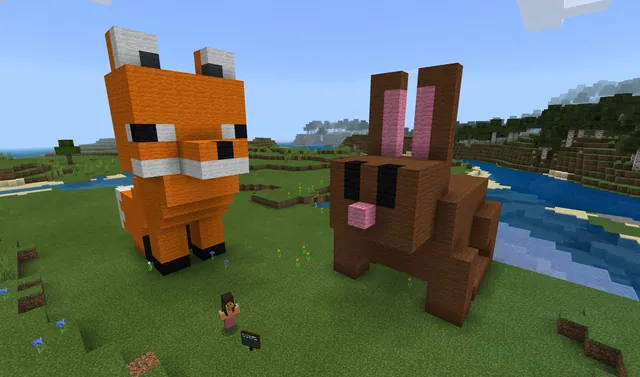
Students spawn at the big house and read community landing protocols on signs. Working individually or in groups, they explore the shoreline, forest, and settlement, photographing plants, animals, and geographic features.
- Classification and Local Comparison30 min
Students export their documented photos and notes from their book and quill. Together as a class, they organize their findings into categories (such as land animals, marine creatures, and plants) and compare the coastal environment with their own home region.
- Traditional Learning Tasks60 min
Students consult elders and knowledge keepers to complete seasonal tasks in any order: harvesting cedar bark and planks, gillnetting and smoking salmon, gathering camas and salmonberries, digging clams, diving for kelp, and trading oolichan oil along the grease trail.
- Sustainable Village Build Challenge50 min
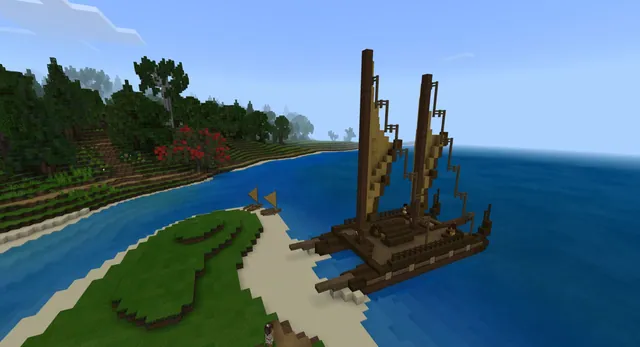
Applying what they learned about ecological balance, students travel further up the coast to construct a self-sustaining village that integrates traditional harvest, processing, and living practices.
Assessment: success criteria
- Student successfully completes harvest assignments alongside in-game knowledge keepers.
- Exported portfolio or PDF shows documented features of the coastal ecosystem with written reflections.
- Classroom discussion demonstrates reflection on First People's Principles of Learning and resource stewardship.
- Constructed village features structures and harvesting areas that reflect sustainable community living.
Differentiation
Allow students to focus on one traditional task at a time and pair them with a partner for in-game navigation and reading sign protocols.
Have students research external resource links and compare oolichan grease trail trading routes to modern trade systems in their final written reflection.
Knowledge check
5 questions to check understanding after the lesson. Tap an answer to see if it is right; the score appears at the end.
1What is the very first task students must complete upon starting the lesson world?
Answer: B. Students begin with the Arrival, Observe, and Explore task before undertaking any other learning tasks.
2Which tree is referred to as the 'Tree of Life' by Pacific Northwest Coast Peoples in this lesson?
Answer: C. The source identifies cedar as the Tree of Life, an integral resource for coastal communities.
3What item do students trade along the grease trail to obtain jade from the interior?
Answer: C. The source notes students follow the grease trail to trade oolichan oil for interior jade.
4How can students export their in-game documentation to share it with their teacher?
Answer: A. The source specifies that students can export a PDF from the book and quill or use full screenshots in PowerPoint.
5According to the First People's Principles of Learning highlighted in this lesson, what is a key quality of learning?
Answer: B. The source lists that learning is holistic, reflexive, reflective, experiential, and relational.
Resources
- Lesson package (.zip)Everything the author attached to this lesson in one download.
- Educator Quick Start Guide Pt2 (PDF)PDF Version
- Educator Guide Pt2 (PDF)PDF Version
Part of the Indigenous Culture curriculum
This is lesson 1 of 6 in Indigenous Culture.
- A Pacific Northwest Coast Experience: Part 2
- A Pacific Northwest Coast Experience
- Indigenous Stories
- Manito Ahbee Aki
- NGĀ MOTU - THE ISLANDS
- Pimachiowin Aki - The Land That Gives Life
Frequently Asked Questions
Do the seasonal harvest tasks need to be completed in a specific sequence?
No. Once learners finish the initial arrival and observation phase, the traditional tasks can be completed in any order that suits the class.
What grade levels can participate in this learning unit?
The lesson includes tasks adaptable for learners across grades 2 through 12, covering ages from 6 up to 18.
Which school subjects does this lesson plan address?
This activity covers History, Climate Science, and World Languages while reinforcing collaboration, communication, and project-based learning.
Adapted from A Pacific Northwest Coast Experience: Part 2 by Logics Academy on Minecraft Education, last updated Jul 14, 2025. This classroom version, the timings and the quiz were written by 9Minecraft Education.